 By admin
 Ever caught a glimpse of a tiny, dangling piece of skin and wondered what it was? Skin tags, medically known as acrochordons, are incredibly common and usually harmless. While they can be a source of mild irritation or self-consciousness, the good news is that understanding them and adopting gentle care practices can make a big difference. Let’s explore what skin tags are, why they appear, and simple ways to manage them.
What Are Skin Tags and Why Do They Appear?
Skin tags are small, soft, benign growths that hang off the skin. They are particularly common in adults over 40. You’ll often find them in areas where skin rubs against skin or clothing, such as:
- The neck
- Armpits
- Eyelids
- Groin area
- Under the breasts
Several factors contribute to their formation:
- Friction: From clothing or skin folds.
- Aging: Skin changes over time.
- Weight Changes: Can increase skin friction.
- Hormonal Shifts: Such as during pregnancy.
- Genetics: A family history can play a role.
- Metabolic Factors: Including insulin resistance.
It’s important to note that everyday factors like sweat, continuous friction, and inadequate skin hygiene can sometimes make existing skin tags more noticeable or irritated.
Gentle Home Care: Natural Ingredients for Skin Comfort
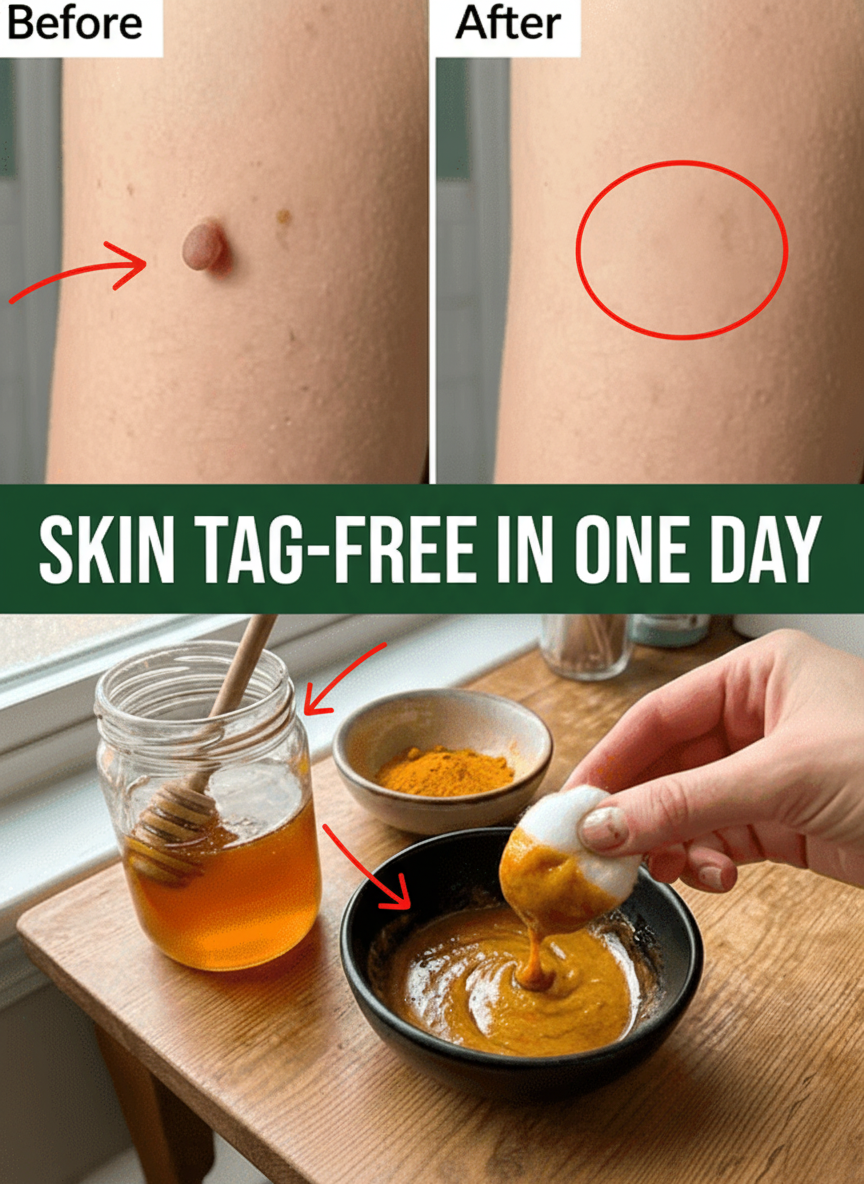
For centuries, various cultures have embraced natural ingredients for skin care. While these aren’t medical treatments for removing skin tags, they can support overall skin health and comfort when used gently. Two popular examples are honey and turmeric.
Honey: A Natural Soother
Renowned for its moisturizing and soothing properties, honey is often used to:
- Maintain skin hydration.
- Support the skin’s natural barrier.
- Provide natural antioxidant compounds.
Turmeric: For Skin Balance
Turmeric contains curcumin, a compound studied for its antioxidant and skin-calming benefits. In traditional routines, turmeric is used for:
- Supporting skin appearance.
- Helping reduce visible irritation.
- Promoting overall skin balance.
Remember, natural ingredients are for supportive skin care, not for immediate removal of growths.
A Simple Honey & Turmeric Routine
Many individuals incorporate a gentle honey and turmeric paste into their skincare regimen. Here’s how:
- Mix one teaspoon of raw honey with a small pinch of turmeric powder until a smooth paste forms.
- Gently clean the skin area with warm water.
- Apply a small amount of the paste to the surrounding skin.
- Leave it on for 10-15 minutes.
- Rinse with lukewarm water and pat dry.
This routine is often repeated two to three times per week. Always perform a patch test on a small, inconspicuous area first to check for any irritation before applying more broadly.
Home Care vs. Professional Medical Options
While gentle home routines can support skin comfort, it’s crucial to understand when professional medical advice is needed.
| Approach | What It Involves | When to Consider It |
|---|---|---|
| Home Skincare | Gentle natural ingredients, hygiene | For cosmetic comfort, general skin health |
| Dermatologist Evaluation | Professional skin examination | If unsure about a growth, or if it changes |
| Clinical Removal | Medical procedures (e.g., cryotherapy, excision) | If tags become irritated, painful, or for cosmetic removal by a professional |
Crucially: If a skin growth changes color, bleeds, grows rapidly, or becomes painful, seek immediate consultation with a healthcare professional. Skin tags themselves are rarely dangerous; the concern arises from irritation or improper self-removal attempts.
Everyday Habits for Skin Health and Irritation Prevention
Often, the most effective “treatment” is a set of simple daily habits that protect your skin:
- Keep skin folds clean and dry.
- Opt for loose, breathable clothing.
- Maintain a healthy weight to reduce skin friction.
- Moisturize areas prone to friction.
- Avoid scratching or pulling at skin tags.
By understanding skin tags and adopting these gentle care practices, you can promote skin comfort and health. Remember, when in doubt, a professional opinion is always best.