 By admin
 Silent Heart Attacks: 5 Subtle Signs You Can’t Afford to Miss
Ever chalked up extreme fatigue to a rough night, or dismissed persistent indigestion as just “something you ate”? What if these seemingly minor annoyances are actually your body’s quiet alarm bells, signaling something far more serious?
Welcome to the world of silent heart attacks, also known as silent myocardial infarctions. Unlike the dramatic, chest-clutching events often portrayed, these occur when blood flow to the heart is blocked, damaging the muscle, but without the unmistakable pain. Research indicates that a significant percentage of all heart attacks fall into this “silent” category, often discovered only after the fact or during a subsequent medical event.
The danger lies in their deceptive nature: many people overlook these subtle clues, attributing them to aging, stress, or a passing ailment. Recognizing these often-ignored signs early is paramount to getting timely medical help. Let’s explore what a silent heart attack entails and the crucial warnings it sends.
What Exactly Is a Silent Heart Attack?
A silent heart attack functions much like a conventional one: a blockage restricts blood and oxygen to a part of the heart muscle, leading to damage. The critical difference lies in its presentation. Symptoms are either so mild, brief, or unusual that individuals don’t associate them with a cardiac event. Studies, including those from the Cleveland Clinic and American Heart Association, suggest that 20-60% of heart attacks might be silent, with higher rates observed in groups like diabetics or women. You might feel “off” for days or weeks, allowing life to continue uninterrupted—until it can’t. This makes understanding its subtle language vitally important.
5 Subtle Signs of a Silent Heart Attack
1. Unexplained Fatigue That Lingers
One of the most frequently dismissed indicators is sudden, overwhelming tiredness disproportionate to your activity level. You might feel utterly drained after simple tasks like a short walk or climbing a few stairs, even after adequate rest. This profound fatigue often signals your heart is working harder with reduced blood flow. Many attribute it to stress, poor sleep, or aging. However, if this exhaustion is new, persistent, and without clear cause, it demands attention. Women, in particular, often report extreme fatigue as a primary symptom over classic chest pain.
2. Mild Chest Discomfort or Pressure (Not Always Pain)
Forget the crushing, agonizing pain of Hollywood. A silent heart attack might manifest as subtle pressure, tightness, fullness, or a heavy sensation in the center of your chest. This discomfort can come and go, last only a few minutes, or feel like mild indigestion or heartburn. Experts note it’s easily mistaken for acid reflux or muscle strain. Yet, even mild, recurring, or persistent sensations in this area, especially during rest or light activity, warrant immediate investigation. When it comes to your heart, it’s always better to be safe than sorry.
3. Shortness of Breath Without Obvious Cause
Do you find yourself unexpectedly winded after tying your shoes, or notice a subtle difficulty catching your breath while at rest? This isn’t always dramatic gasping; it can be a persistent feeling of breathlessness during everyday moments. Reduced oxygen delivery forces the lungs to compensate, leading to this symptom. People commonly blame it on allergies, being out of shape, or anxiety. But if this breathlessness is new, worsening, or accompanied by other signs, it could be a critical warning from your heart. Don’t wait for it to become severe.
4. Discomfort in the Jaw, Neck, Back, or Arms
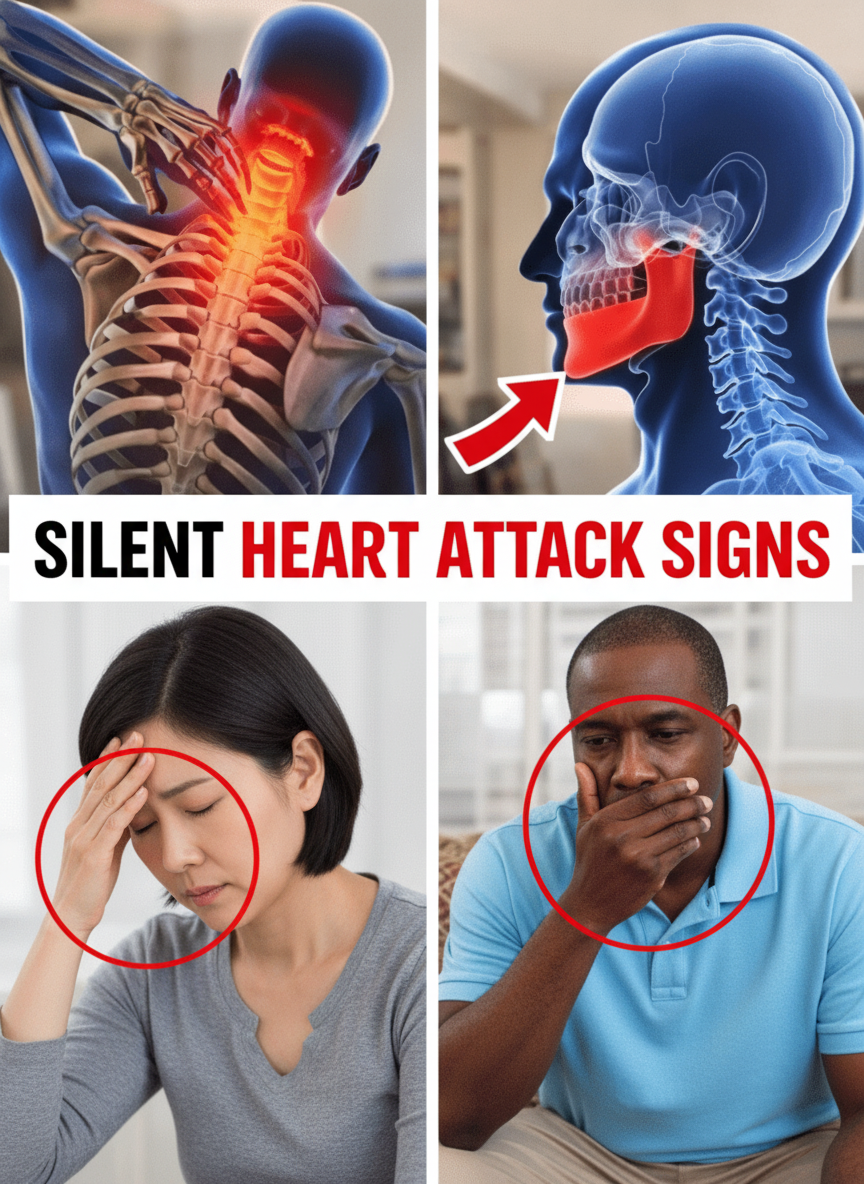
A nagging ache in your jaw mistaken for a toothache, tightness in your neck or upper back attributed to poor posture, or an unexplained soreness in one or both arms—these can all be silent heart attack clues. This radiating discomfort occurs because nerves from the heart share pathways with those in the upper body. While it might feel like a strained muscle or tension headache, and often comes and goes, recurring or unexplained pain in these areas, particularly if subtle in women, should not be ignored. Listen to your body.
5. Nausea, Indigestion, or Flu-Like Feelings
That queasy stomach, mild nausea, or a general “flu-ish” malaise without a fever is another red flag often overlooked. You might experience persistent bloating, heartburn that doesn’t subside, or simply feel “off” in your gut. Heart issues can indeed affect digestive function, leading to these symptoms. If these sensations are unusual for you, persist, or occur alongside other subtle signs, it’s crucial to consider your heart’s health. Don’t just reach for an antacid; reach for your doctor.
Ignoring these subtle signals can have severe consequences. If you experience any of these symptoms, especially if they are new, persistent, or combined, seek immediate medical attention. Your heart often whispers before it shouts. Listening closely could save your life.