 By admin
 Seniors, Take Note: The Vitamin Pair That Could Be Harming Your Health
Many older adults diligently take their daily vitamins, believing they are making a proactive choice for their well-being. But imagine an elderly individual, carefully taking their usual supplements, only to later notice unexplained bruising or prolonged bleeding from a minor cut. Often, these subtle signs are dismissed as “just getting old.” However, the truth can be far more surprising: sometimes, the issue isn’t age, but a problematic combination of supplements.
What many don’t realize is that certain vitamins, when taken together, can interfere with each other inside the body. This article will reveal a specific, little-known vitamin combination that experts advise seniors to approach with significant caution.
Why Some Vitamin Combinations Can Affect Your Blood
As we age, it’s common to increase supplement intake to support various aspects of health – from heart and immunity to bone strength. While this seems logical, not all nutrients work harmoniously. Some vitamins directly influence vital bodily functions, such as how your blood clots, how nutrients are absorbed, and even how medications work. When certain vitamins are combined, especially in high doses, they can disrupt these delicate processes.
A prime example, frequently highlighted by nutrition experts, is the interaction between Vitamin E and Vitamin K. Individually, both are essential nutrients. The concern arises not from their individual harm, but from their combined effect in supplement form, particularly at higher dosages. Research suggests that large amounts of Vitamin E can significantly interfere with Vitamin K’s crucial role in the blood clotting process. When this interference occurs, blood may take longer to clot properly. (Source: Verywell Health)
For older adults, who may already be on various medications or experiencing age-related circulatory changes, this interaction can have more profound implications.
The Critical Duo: Vitamin E and Vitamin K
Let’s delve deeper into this specific pair that often raises expert concern:
What Vitamin K Does
- Regulates Blood Clotting: Essential for proper blood coagulation. Without sufficient Vitamin K, even small cuts can bleed longer than normal.
- Supports Bone Health: Plays a role in bone mineralization.
- Aids Blood Vessel Function: Contributes to healthy blood vessel integrity.
What Vitamin E Does
- Potent Antioxidant: Protects cells from oxidative stress and damage.
- Boosts Immune Function: Supports the body’s natural defenses.
- Found naturally in foods like nuts, seeds, vegetable oils, and leafy greens such as spinach.
Why Their Combination Matters
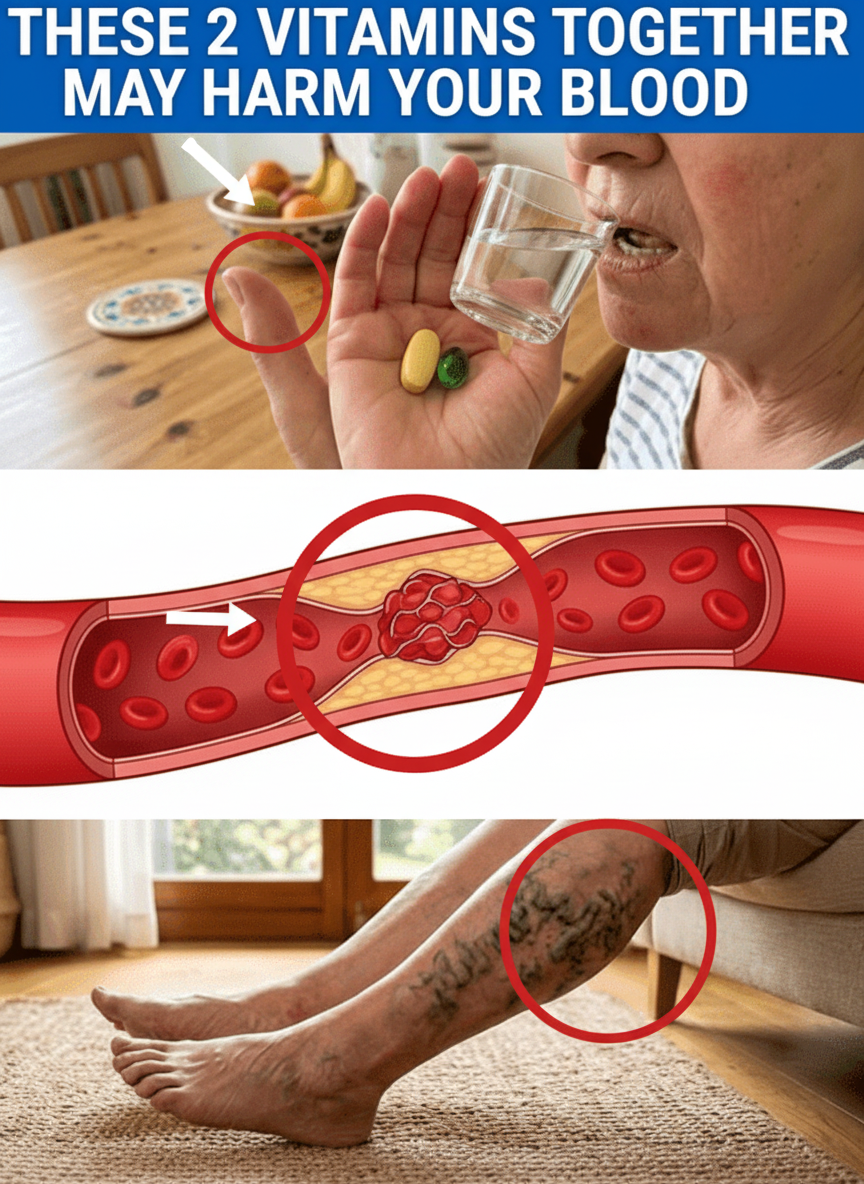
While both are vital, studies indicate that high doses of supplemental Vitamin E may reduce the activity of Vitamin K in the body. This potential interference can lead to:
- Increased bruising without apparent injury.
- Longer bleeding times from minor cuts or scrapes.
- Significant interactions with certain medications, particularly blood thinners (anticoagulants).
This doesn’t mean these vitamins are inherently dangerous for everyone. Rather, it underscores the importance of thoughtful supplementation, ideally under the guidance of a healthcare professional. For seniors, especially those managing existing health conditions or on prescribed medications, this combination warrants careful attention.
Signs Your Body May Be Sending a Warning
Sometimes, your body provides subtle hints that your supplement routine isn’t quite right. These signs are often easy to dismiss as typical aging. Be vigilant for symptoms such as:
- Frequent or unexplained bruising.
- Small cuts bleeding for an unusually long time.
- Persistent or unusual fatigue.
- More frequent nosebleeds than usual.
While these symptoms don’t automatically confirm a supplement issue, they are strong signals that it’s time to review your entire intake with a doctor or pharmacist. This is especially crucial if you’re taking multiple supplements simultaneously, which many older adults unknowingly do by combining multivitamins, individual vitamin capsules, and herbal supplements. The total dosage can quickly exceed safe levels.
It’s also important to remember that fat-soluble vitamins (A, D, E, and K) can accumulate in the body over time, as they are stored in fat tissue rather than being rapidly flushed out. (Source: Prevention) This cumulative effect makes balance and professional oversight even more critical.
Practical Tips for Safer Supplementation
To minimize unnecessary supplement risks, seniors can adopt these simple yet effective habits immediately:
- Read All Labels Carefully: Pay close attention to the dosage of each vitamin in all your supplements, including multivitamins and herbal remedies.
- Create a Comprehensive List: Keep an updated list of all medications, vitamins, and supplements you take.
- Consult Your Healthcare Provider: Discuss your entire supplement regimen with your doctor or pharmacist. They can assess potential interactions with your medications and existing health conditions, and advise on appropriate dosages or alternatives.
- Don’t Self-Prescribe High Doses: Avoid taking high doses of individual vitamins unless specifically recommended and monitored by a healthcare professional.
By staying informed and proactive, you can ensure your daily vitamin routine truly supports your health, rather than inadvertently creating risks.