 By admin
 Safely Identify Datura Plants: Your Comprehensive Guide for Garden and Neighborhood
Spending time outdoors brings joy to many families, yet encountering unfamiliar flora can sometimes raise unexpected concerns, especially when certain plants resemble common garden varieties or weeds. This uncertainty often leads to apprehension regarding potential risks from accidental contact, particularly for curious children or pets who freely explore their surroundings. Fortunately, acquiring specific knowledge about plants like Datura can empower you to cultivate safer environments around your home. Stay with us until the end, where you’ll discover an invaluable daily habit that transforms plant awareness into second nature for everyone in your household.
Understanding Datura Plants
Datura, a fascinating genus of flowering plants, belongs to the Solanaceae, or nightshade family. Several of its species are commonly found across diverse environments in the United States and globally. These resilient plants frequently colonize disturbed soils, such as roadsides, cultivated gardens, or vacant lots, thriving particularly well in warm climates. But there’s more to uncover about their distinctive appearance.
Botanical research indicates that Datura species grow as annual or perennial herbs, capable of reaching heights of up to 5 feet. Their branching stems may exhibit a purple tinge or a hairy texture, contributing to their unique look. The truth is, early recognition of these plants is crucial for maintaining a vigilant and safe outdoor routine. They are renowned for their prominent features, which we will detail in the following sections.
Key Identification Features of Datura
Pinpointing Datura requires close attention to its distinct characteristics, starting with its overall structure.
Leaves and Stems
Datura leaves are notably large, typically ranging from 3 to 8 inches in length. They often present a shape akin to a football or an egg, with margins that are either wavy or distinctly toothed. Their color is usually a deep green, and their texture can feel coarse to the touch. Here’s a compelling detail: when crushed, the leaves emit a strong, unpleasant odor, frequently likened to a combination of wet dog and stale peanut butter. The stems are robust and can vary in color from pale green to purple, with some species displaying a noticeable hairy texture. Furthermore, exercise caution with the plant’s sap, which can cause irritation to sensitive skin.
Flowers
The flowers are arguably Datura’s most striking feature, manifesting as large, trumpet-shaped blooms that either hang gracefully downwards or stand erect. They typically appear in shades of white, pink, or purple, characterized by their distinct pointed lobes. These vespertine flowers famously unfurl in the evening, releasing a sweet fragrance designed to attract nocturnal pollinators. Studies show they can measure up to an impressive 8 inches long, making them particularly eye-catching during dusk. The most captivating aspect? They frequently bloom from the warmth of summer right through to the cooler days of fall.
Fruits and Seeds
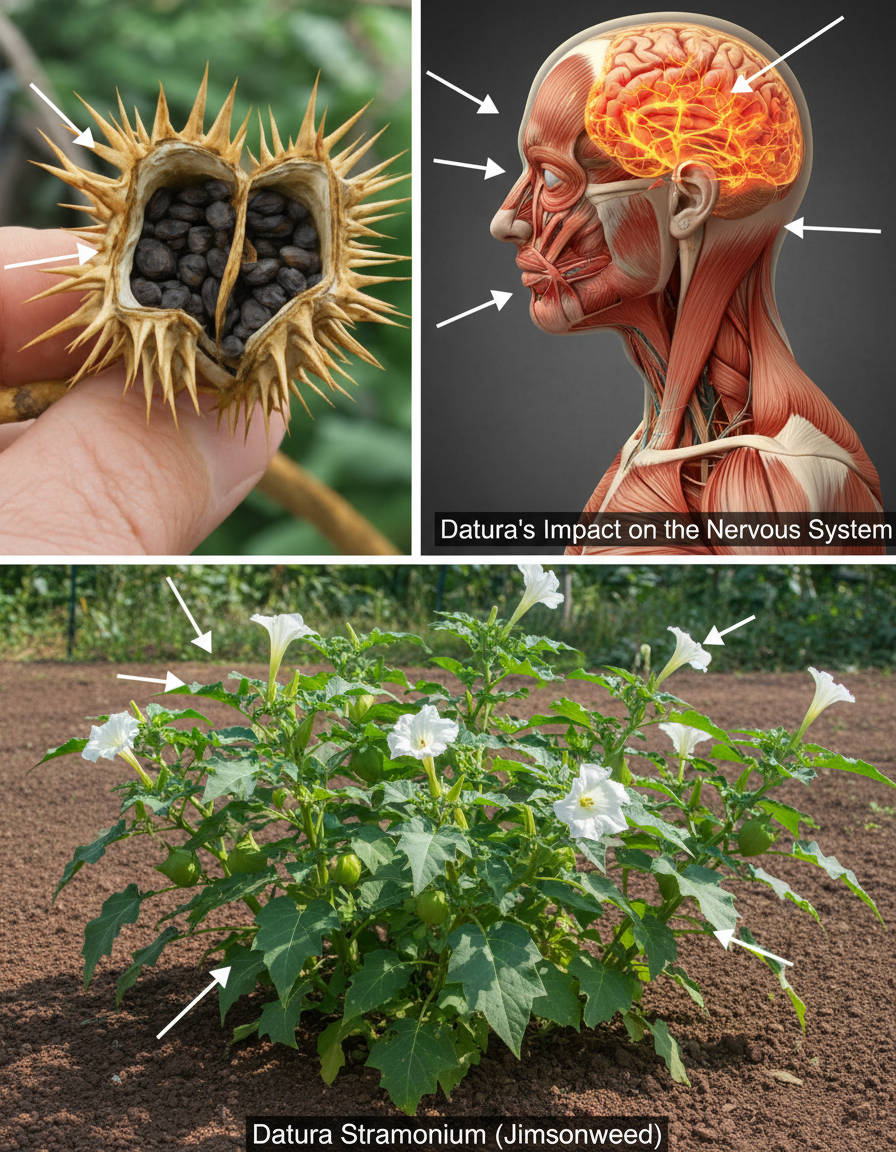
Datura fruits are unmistakable: globular capsules densely covered in sharp spines, a characteristic that earned the plant its common name, “thornapple.” When fully mature, these capsules naturally split into four segments, releasing numerous small, kidney-shaped seeds. Initially, these spiky seed pods are green, gradually turning brown as they dry out. However, a critical warning is essential here: while the seeds might superficially resemble tiny tomatoes, they are highly toxic and should never be handled casually or ingested.
Comparison with Look-Alikes
To avoid misidentification, it’s beneficial to differentiate Datura from plants with similar appearances. The following table provides a clear comparison:
| Feature | Datura | Morning Glory (Look-Alike) | Brugmansia (Related) |
|---|---|---|---|
| Flower Shape | Hanging trumpets with pointed lobes | Upright, funnel-shaped | Large, pendulous trumpets |
| Leaf Edges | Jagged, tooth-like | Smooth or slightly wavy | Broad, often wavy |
| Fruit | Spiky thornapple capsule | Smooth pod | Smooth or slightly spiny |
| Smell | Heavy, unpleasant when crushed | Mild or none | Sweet, pleasant |
| Stem | Purple-tinged, hairy | Green, smooth | Woody, tree-like |
This comparative analysis, grounded in botanical observations, vividly highlights the distinct traits of each plant.
Potential Health Considerations with Datura
All components of Datura contain potent compounds such as atropine, scopolamine, and hyoscyamine. Research consistently demonstrates that these alkaloids can profoundly affect the human body if ingested or absorbed through other means. Symptoms resulting from exposure might include a dry mouth, blurred vision, or an accelerated heartbeat, as frequently documented in medical reviews. The Centers for Disease Control and Prevention (CDC) has reported numerous instances of accidental exposures, underscoring the vital need for public awareness. Crucially, comprehensive knowledge significantly mitigates these inherent risks. Direct skin contact with the plant’s sap may induce irritation in certain individuals, making protective gloves a sensible precaution when handling. Studies from poison control centers reveal that the majority of reported incidents involve unintentional contact rather than deliberate ingestion.
Actionable Tips for Safe Identification
Implement these practical steps for a secure and accurate Datura identification:
- Observe from a distance: Maintain a safe distance; visually scan for its characteristic trumpet-shaped blooms and spiny seed pods, refraining from any physical contact.
- Note the location: Observe its preferred growing environments: sunny, disturbed locations such as garden edges, construction sites, or roadsides.
- Check for odor: Carefully waft your hand near the foliage to ascertain if the distinctive, unpleasant odor is present, ensuring no direct contact with the plant itself.
- Compare features: Utilize a reliable plant identification application or botanical guide to cross-reference its features with verified images.
- Document: Capture clear photographs of the plant for future reference or to share with horticultural experts for confirmation.
By following these guidelines, you can significantly enhance your ability to safely identify Datura and protect your household.