 By admin
 Living with persistent neck or back discomfort can make even the simplest daily activities feel like an uphill battle. Tasks such as turning your head while driving, sitting comfortably at a desk, or achieving a full night’s sleep often become significant hurdles, draining energy and severely limiting one’s quality of life. For many individuals suffering from degenerative disc disease (DDD) — a condition characterized by the gradual wear and tear of the spinal discs over time — conventional treatments like pain medication, physical therapy, or simple rest frequently offer only temporary or partial relief. This often leaves them seeking more advanced solutions that directly address the underlying structural changes within the spine.
In response to this unmet need, significant advancements in biomedical materials are opening up exciting new avenues. Researchers are actively exploring injectable hydrogels as a promising, minimally invasive strategy to support and potentially restore degenerated spinal discs. These innovative, gel-like substances are engineered to mimic the natural cushioning core of the disc (known as the nucleus pulposus). The goal is to help reinstate some degree of structural integrity and support without requiring major surgical intervention. But what exactly are these hydrogels, and how might they integrate into future treatment paradigms? Continue reading to delve deeper into the science behind this groundbreaking approach — and discover one practical step you can take today to foster your own spinal health.
Understanding Degenerative Disc Disease and Its Impact
Degenerative disc disease is not an acute illness but rather a progressive process where the spinal discs gradually lose their vital hydration, height, and inherent flexibility. This deterioration can manifest as chronic discomfort in the neck (cervical spine) or lower back (lumbar spine), sometimes accompanied by radiating symptoms that extend into the limbs. As these crucial discs thin and weaken, adjacent spinal structures experience increased pressure, contributing to stiffness, reduced range of motion, and persistent pain.
Scientific studies consistently indicate that disc degeneration is a common age-related phenomenon. However, not everyone develops significant symptoms or functional limitations. Factors such as individual lifestyle choices, postural habits, and genetic predispositions all play crucial roles in determining the severity and progression of the condition. Traditional treatment strategies primarily focus on managing symptoms, and typically include:
- Over-the-counter or prescription pain relievers to alleviate discomfort.
- Targeted physical therapy programs designed to strengthen supporting musculature and improve flexibility.
- Lifestyle modifications, including ergonomic adjustments, to reduce spinal stress.
While these conservative measures prove beneficial for many, a considerable number of patients continue to search for therapies that can more directly target and improve the structural integrity of the spinal disc itself.
Exploring Injectable Hydrogels: A Closer Look
Hydrogels are unique, water-rich, and biocompatible materials that can be precisely delivered into the body via a small needle. In the context of spinal care, they are specifically engineered to occupy the vacant spaces within degenerated discs, thereby offering immediate volume and essential mechanical support. Researchers highlight several key characteristics that make these materials particularly suitable for disc repair:
- Mimicry of Natural Disc Material: These hydrogels are designed to closely resemble the natural gel-like consistency of the nucleus pulposus, which is critical for maintaining optimal disc height and providing shock-absorbing cushioning.
- Minimally Invasive Delivery: The administration process involves injection under precise imaging guidance, often performed as an outpatient procedure, significantly reducing the invasiveness associated with traditional surgery.
- Biocompatibility: Composed of materials that the body generally tolerates well, these hydrogels possess the potential to integrate effectively with surrounding tissues over time, minimizing adverse reactions.
A comprehensive 2023 review published in the Journal of Biomedical Materials Research Part A (Li, Z., Mao, H., & Wang, J.) delves into various hydrogel formulations and innovative strategies for disc support, underscoring their significant potential as scaffolds within broader regenerative medicine approaches.
How Injectable Hydrogels May Transform Spinal Health
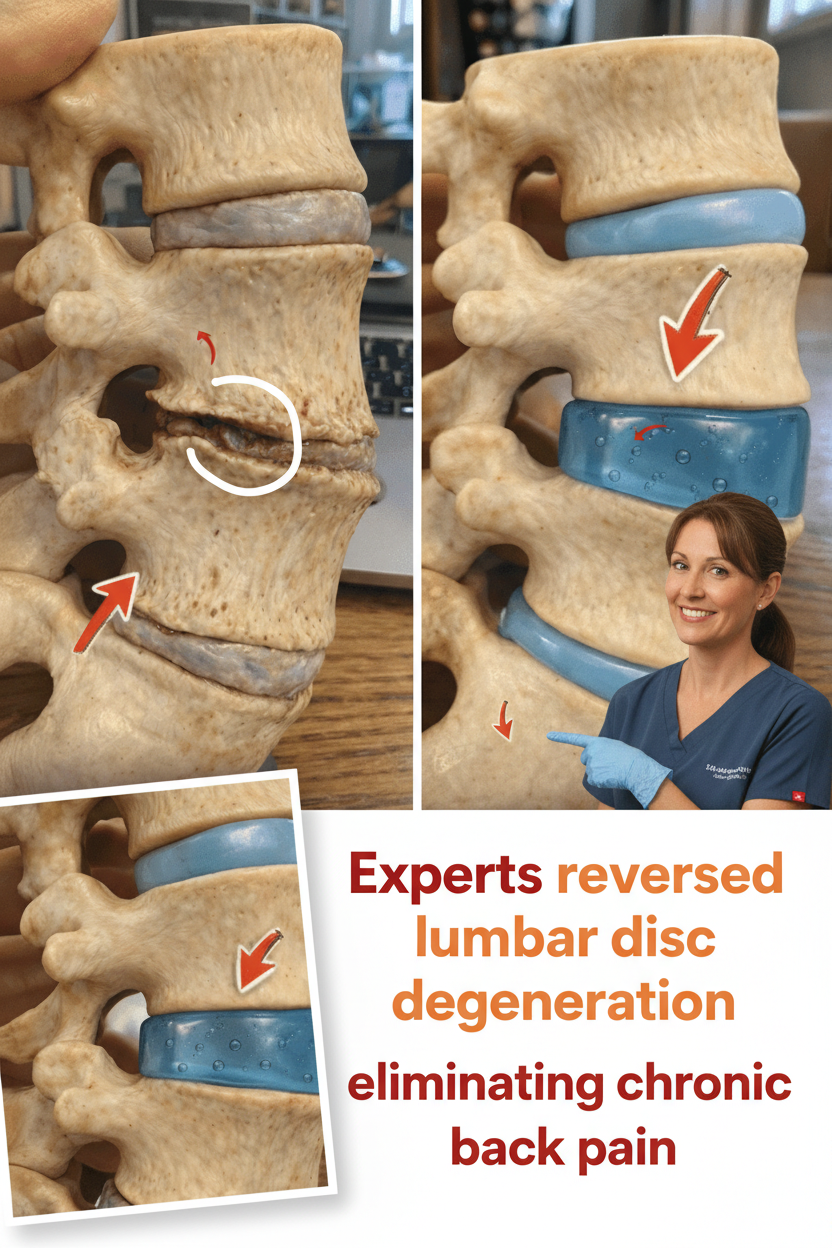
Upon injection into the degenerated disc, these advanced materials are designed to exert several beneficial effects:
- Restoring Lost Disc Height: By filling the voids created by disc degeneration, hydrogels can help to re-establish the disc’s natural height, potentially alleviating pressure on nerves and surrounding structures.
- Providing Structural Stability: They offer crucial mechanical support, which can stabilize the disc and reduce excessive pressure on adjacent spinal tissues.
- Creating a Favorable Healing Environment: Some sophisticated designs incorporate elements specifically intended to foster cellular activity or modulate inflammatory responses, effectively serving as temporary scaffolds that encourage the body’s natural healing processes.
Early laboratory and animal studies have yielded encouraging results, demonstrating improvements in disc mechanics and hydration levels. For example, certain hydrogel formulations have shown promise in maintaining disc integrity under simulated loads in experimental models. In human clinical settings, preliminary feasibility studies — particularly those involving second-generation hydrogels — have reported favorable safety profiles and notable functional improvements in small cohorts of patients suffering from chronic low back pain due to DDD.
One early report, for instance, documented significant reductions in self-reported pain levels and improved daily function scores over several months post-treatment, although larger, more extensive trials are ongoing. This innovative approach signifies a pivotal shift in focus — moving beyond mere symptom control to actively supporting and potentially restoring the disc’s natural environment. While still an evolving field, this direction holds immense promise for the future of spinal care.
Comparing Treatment Options: Traditional vs. Hydrogel Approaches
To better understand the potential role of injectable hydrogels, let’s consider how they compare to established treatment modalities:
Conservative Care (Physical Therapy, Medications, Lifestyle Adjustments)
- Pros: Non-invasive, generally low risk, and widely accessible.
- Cons: Primarily focuses on symptom management, may not address underlying disc structural issues, and results can vary significantly among individuals.
Surgical Options (e.g., Spinal Fusion or Disc Replacement)
- Pros: Can provide definitive relief and address severe cases of disc degeneration, offering substantial structural correction.
- Cons: Highly invasive procedures, require longer recovery periods, and carry potential risks such as adjacent segment disease (where stress is transferred to discs above or below the surgical site).
Injectable Hydrogels (Currently Investigational)
- Pros: Offer a minimally invasive alternative, often performed as an outpatient procedure, and directly target the degenerated disc structure.
- Cons: Still in the research and clinical trial phases, with long-term efficacy and broad applicability still being evaluated.