 By admin
 Revolutionizing Cancer Care: The Promise of a Universal Vaccine
Imagine a single vaccine that could equip your body to fight a multitude of cancers. This isn’t science fiction anymore. In laboratories worldwide, a groundbreaking “universal cancer vaccine” is moving from concept to reality, sparking immense hope in the medical community. This innovative approach promises to redefine cancer prevention and treatment, particularly for those in their later years. Let’s explore what this breakthrough means for the future of health.
What Defines a Universal Cancer Vaccine?
Unlike traditional vaccines that target specific viruses (like flu or COVID-19), a universal cancer vaccine isn’t a miraculous one-shot cure for all cancers. Instead, it’s designed to train your immune system to recognize and attack various types of abnormal cells, including cancerous ones, potentially stopping them before they can establish or spread. Its power lies in its ability to empower your body’s natural defenses against a broad spectrum of malignancies.
The Science Unveiled: Targeting Multiple Cancers
The excitement around this vaccine stems largely from advances in mRNA technology, the same innovation behind successful COVID-19 vaccines. For cancer, mRNA is being harnessed to instruct your cells to produce specific cancer-related proteins. These proteins then act as “wanted posters,” teaching your immune system to identify and eliminate cancer cells, whether they are from breast, lung, or even rare cancer types.
Another promising avenue involves targeting “neoantigens”—unique markers found exclusively on the surface of cancer cells. By presenting these neoantigens to the immune system, the vaccine aims to trigger a targeted response, prompting the body to seek out and destroy cells bearing these distinct identifiers. This personalized yet broadly applicable strategy holds immense potential for effective, multi-cancer immunity.
Why This Matters, Especially for Older Adults
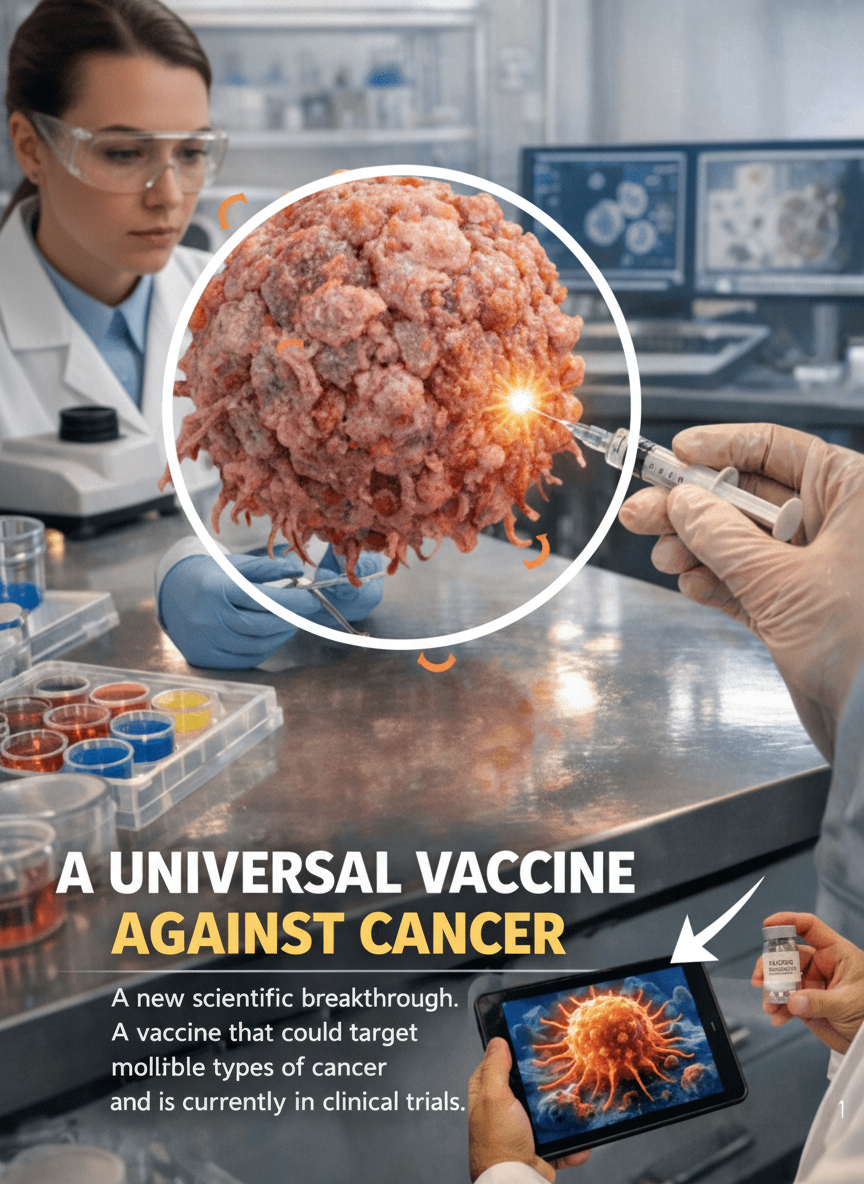
As we age, the risk of developing various cancers naturally increases. Many of these cancers can be aggressive and challenging to detect early. A universal cancer vaccine could be a game-changer for older adults, offering a proactive shield against a range of cancers. Beyond prevention, the vaccine’s ability to prime the immune system for early detection could lead to interventions when cancer is most treatable, significantly improving outcomes for at-risk individuals.
The Journey Ahead: Clinical Trials and Future Prospects
While the concept might sound futuristic, this universal vaccine is closer than you think. Early clinical trials in animal models have shown remarkable success in preventing cancer cell growth, paving the way for human trials. Experts anticipate that some form of this vaccine could become available within the next 5 to 10 years.
However, the path forward isn’t without its challenges. Researchers are diligently working to refine the vaccine’s efficacy across an even wider array of cancer types and ensure its safety and effectiveness across diverse age groups. Rigorous testing remains crucial before widespread public availability.
Frequently Asked Questions (FAQ)
- Will this vaccine work for all cancer types?
Currently in development, the vaccine is being tested against several cancer types. While it’s not guaranteed to target every single cancer, the goal is to provide immunity against a broad spectrum, often in conjunction with other treatments. - How soon could this vaccine be available?
While an exact timeline is hard to predict, clinical trials are progressing rapidly. Experts suggest we might see forms of this vaccine available for public use within the next 5 to 10 years. - Is this vaccine safe?
Early research and ongoing trials show promising safety profiles with minimal side effects. Like all new medical treatments, it will undergo extensive, rigorous testing to ensure its safety and efficacy before public release.