 By admin
 Ever woken up with that familiar burning sensation in your chest or throat, wondering if your late dinner was to blame? Or perhaps you discreetly clear your throat over breakfast, hoping no one notices your discomfort. Many of us attribute these nightly disturbances to diet, stress, or age. Yet, the real culprit might be a surprisingly simple habit you engage in every single night: your sleeping position.
The Hidden Impact of Your Sleeping Position
While we often focus on mattresses and pillows, our body’s orientation during sleep plays a crucial role in digestive comfort. When you lie down, gravity, which usually keeps stomach contents in place, loses some of its effectiveness. The stomach and esophagus (the tube connecting it to your throat) become more susceptible to how you’re positioned.
Research suggests that different sleep postures can influence the ease with which stomach contents might move upward, leading to discomfort for some, especially those prone to occasional nighttime acid reflux or heartburn.
Unveiling the Anatomy: Left vs. Right Side Sleep
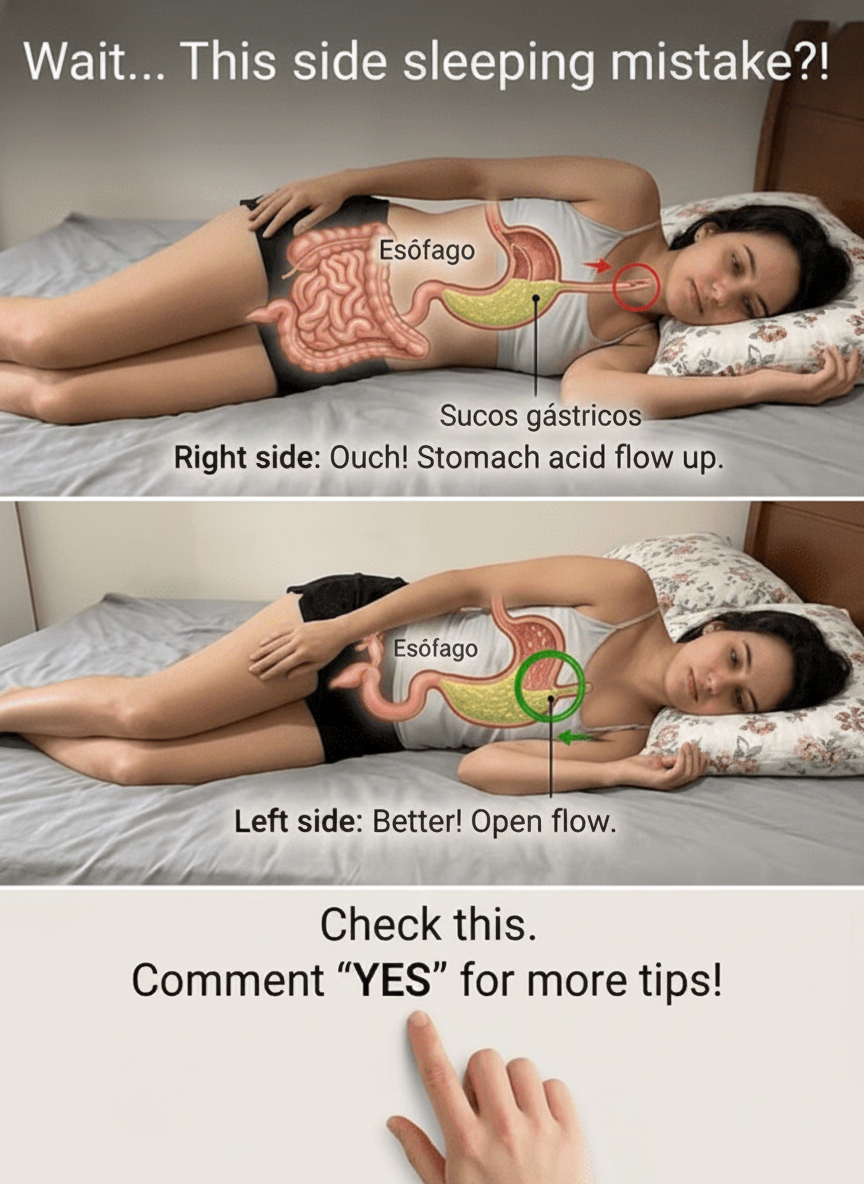
Imagine your stomach as a curved pouch. The key lies in how its opening, where the esophagus connects, aligns with gravity based on your sleeping side.
- Sleeping on your left side: The entrance from the esophagus typically sits slightly higher than the main body of the stomach. Gravity helps keep stomach contents settled in the lower curve, away from the esophageal opening. This position is often reported as more comfortable for digestion.
- Sleeping on your right side: The orientation shifts. Stomach contents may sit closer to the opening leading to the esophagus. For some individuals, this can make nighttime digestive discomfort more likely, as it potentially makes it easier for stomach acids to travel upward.
While sleeping on your right side isn’t inherently dangerous for everyone, and millions do it without issue, understanding this anatomical difference can explain why left-side sleeping may offer relief for those experiencing occasional nighttime burning or reflux sensations.
Beyond Position: Other Influencing Factors
Sleeping posture is just one piece of the puzzle. Several lifestyle habits also significantly impact your nighttime comfort:
- Late, large meals: Eating heavily right before bed.
- Immediate recline: Lying down too soon after dinner.
- Flat pillow: Not elevating your head sufficiently.
- Tight clothing: Constricting waistbands that put pressure on the abdomen.
- Caffeine close to bedtime: Can relax the esophageal sphincter.
Even if you optimize your sleep position, these habits can still contribute to discomfort. But don’t worry – simple adjustments can make a big difference.
Simple Habits for Better Nighttime Comfort
If you suspect your sleep position is contributing to your discomfort, try these gentle adjustments. Many find even small changes surprisingly effective:
- Embrace the Left Side: Start by lying on your left side with your knees slightly bent. Ensure your head is supported by a pillow that keeps your neck aligned with your spine. This harnesses gravity to keep stomach contents settled.
- Slightly Elevate Your Upper Body: Raising your head and upper torso can further aid digestion. Consider using a thicker pillow, an adjustable bed frame, or a specialized wedge pillow designed for sleep support.
By understanding your body’s anatomy and making these simple, often overlooked adjustments, you can significantly improve your nighttime comfort and wake up feeling refreshed, not unsettled.