 By admin
 Do you spend hours sitting, driving, or lounging? Many of us do, and often, it leads to a subtle yet significant shift in our posture: anterior pelvic tilt. This common imbalance can leave your hips feeling tight, your lower back strained, and your everyday movements less fluid. But here’s the good news: you don’t need fancy equipment or endless hours at the gym to make a difference. With a few targeted exercises and a simple daily habit, you can begin to restore balance and comfort to your body.
What is Anterior Pelvic Tilt?
Anterior pelvic tilt (APT) is a widespread postural pattern where the front of your pelvis dips forward, causing the back to rise slightly. This creates a gentle exaggeration of the natural curve in your lower spine. It often develops gradually due to muscle imbalances: tight hip flexors (at the front of your hips) combined with weaker glutes and abdominal muscles (at the back and front of your core). Recognizing APT is the first step toward better alignment and a more comfortable body.
Common Causes of Anterior Pelvic Tilt
Several everyday habits contribute to APT:
- Prolonged Sitting: Hours spent at desks or in cars can shorten hip flexors.
- Weak Core & Glutes: Lack of activity weakens the muscles essential for pelvic stability.
- Tight Hip Flexors: Insufficient stretching keeps these muscles in a shortened state.
- Poor Standing Habits: Habits like locking your knees can alter pelvic positioning.
- Lack of Regular Movement: Insufficient strength and mobility work prevents balanced muscle development.
Why Supporting Better Pelvic Alignment Makes a Difference
When your pelvis is in a neutral, balanced position, your entire body functions more efficiently. Your core engages effectively, your hips move freely, and your lower back experiences less unnecessary strain. Consistent stretching and strengthening can lead to noticeable improvements in alignment within weeks. This isn’t about quick fixes; it’s about building sustainable habits that foster long-term comfort and well-being.
5 Simple At-Home Exercises to Support Pelvic Alignment
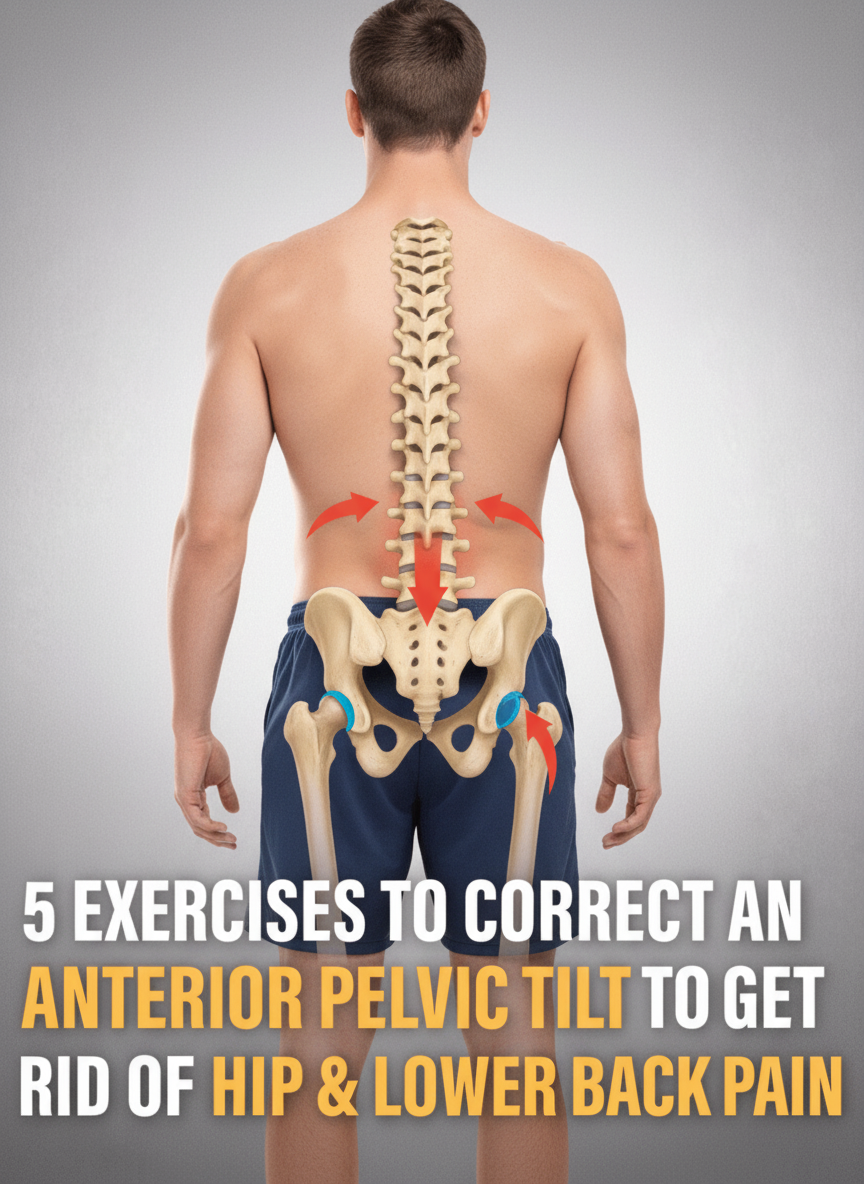
These five equipment-free exercises target the key muscle groups involved in APT, fitting easily into any schedule. Aim for 3-4 sessions per week, starting with fewer repetitions and gradually increasing. Always move with control and stop if you feel any sharp pain.
-
1. Half-Kneeling Hip Flexor Stretch
This stretch targets tight hip flexors, a primary contributor to APT. Research shows immediate improvements in pelvic positioning from consistent hip flexor stretching.
- Start in a half-kneeling position: right knee on the floor (use a cushion if needed), left foot flat in front.
- Gently tuck your pelvis by tightening your glutes and core.
- Lean slightly forward until you feel a mild stretch in the front of your right hip.
- Hold for 30 seconds, then switch sides. Repeat 3-5 times per side.
-
2. Glute Bridge
Strengthens glutes and hamstrings while engaging the core, crucial for counteracting posterior weakness.
- Lie on your back with knees bent, feet flat and hip-width apart.
- Press through your heels, lifting your hips until your body forms a straight line from knees to shoulders.
- Squeeze your glutes at the top and hold for 5-10 seconds.
- Lower slowly. Repeat 8-12 times.
-
3. Kneeling Leg Lift
Builds core stability and activates the glutes while promoting a neutral spine.
- Begin on all fours with hands under shoulders and knees under hips, maintaining a neutral spine.
- Engage your core by gently pulling your belly button towards your spine.
- Slowly extend one leg straight back, lifting it only to hip height, ensuring your lower back remains stable and doesn’t arch excessively.
- Hold for up to 5 seconds, then slowly lower and switch legs. Perform 8-10 reps per side.
-
4. Squats
A foundational exercise that teaches proper hip and core engagement for balanced movement.
- Stand with feet shoulder-width apart, toes pointing forward.
- Lower your hips as if sitting back into a chair, keeping your chest lifted and knees tracking over your toes.
- Drive through your heels to return to standing, squeezing your glutes at the top.
- Complete 12-15 slow repetitions.
-
5. Posterior Pelvic Tilt
Directly helps to re-educate your pelvis to move out of an anterior tilt by engaging your core and glutes to flatten your lower back.
- Lie on your back with knees bent and feet flat on the floor, hip-width apart.
- Gently flatten your lower back into the floor by engaging your abdominal muscles and slightly tilting your pelvis upwards.
- You should feel your tailbone lift slightly off the floor.
- Hold for 5-10 seconds, then release. Repeat 10-15 times.
The key to lasting change isn’t just performing these exercises; it’s about integrating awareness into your daily life. Pay attention to your posture while sitting, standing, and moving. Consistent effort and mindful movement are the simple daily habits that will amplify your progress and help you maintain a healthier, more comfortable posture long-term.