 By admin
 Have you ever found yourself subtly trying to hide your feet, perhaps during a family gathering or a relaxing evening at home? The truth is, dry and cracked heels are a far more common concern than many realize, particularly for those of us navigating life after 50. As skin naturally thins and loses moisture with age, the discomfort of cracked heels can transform simple walks into painful experiences and even lead to feelings of self-consciousness.
But here’s the truly empowering news: achieving smoother, more comfortable heels doesn’t always require expensive treatments. Often, the solution lies in incorporating a few gentle, consistent daily habits and utilizing simple, natural ingredients—some perhaps already in your kitchen! This article will guide you through five often-overlooked home habits that can make a remarkable difference in your foot care routine. Stay tuned, because one surprising kitchen staple revealed towards the end might just revolutionize your approach to heel health.
Understanding Why Heels Crack After 50
Before diving into effective home remedies, it’s crucial to grasp the underlying reasons why cracked heels tend to become more prevalent as we age. With each passing decade, our skin undergoes natural changes. A significant factor is the reduced production of natural oils, which are vital for maintaining skin’s suppleness and elasticity. This lack of natural lubrication causes the typically thick skin on our heels to become drier and less flexible.
Consequently, when this dry, rigid skin is subjected to constant pressure from standing, walking, or even just body weight, it struggles to stretch and adapt, leading to the formation of small, painful fissures or ‘heel cracks’.
Common Habits That Worsen Dry, Cracked Heels:
- Prolonged Wear of Open-Backed Footwear: Sandals and flip-flops can expose heels to air and friction, accelerating moisture loss.
- Extended Standing on Hard Surfaces: Consistent pressure on unforgiving floors can stress dry skin, leading to cracks.
- Overly Hot Showers or Baths: Excessive heat can strip the skin of its essential natural oils, exacerbating dryness.
- Inconsistent Moisturizing: Failing to regularly hydrate the skin is a primary contributor to dryness and cracking.
- Inadequate Hydration & Nutrition: Insufficient water intake and a diet lacking healthy fats can impact overall skin health, including the heels.
Dermatological research consistently highlights that effective management of cracked heels hinges on two key strategies: consistent moisture retention and minimizing friction. While many individuals instinctively reach for specialized creams, the real secret lies in integrating small, consistent daily habits that address these core issues. These foundational practices often prove more impactful than any single product alone.
1. The Hydrating Warm Water & Salt Foot Soak
Begin your journey to smoother heels with a time-honored practice: a soothing warm foot soak. This simple yet highly effective habit prepares your feet for subsequent care by softening hardened skin, making it more receptive to treatments.
How This Soak Benefits Your Heels:
- Deep Hydration: Warm water deeply hydrates the outermost layers of dry skin, improving its pliability.
- Gentle Cleansing: Natural salt can aid in gently purifying the skin’s surface, removing impurities.
- Softens Calluses: Regular soaking helps to soften thick, callused areas, making them easier to manage.
Simple Steps for Your Foot Soak:
- Fill a basin or foot spa with comfortably warm water.
- Stir in one tablespoon of natural salt (e.g., Epsom salt or sea salt).
- Immerse your feet and relax for 10 to 15 minutes.
- After soaking, gently pat your heels dry with a soft, clean towel.
Pro Tip: This foundational step truly shines when followed immediately by our next recommended habit!
2. Gentle Exfoliation for Renewed Skin
A crucial step many overlook in combating cracked heels is the regular, gentle removal of accumulated dead skin. Over time, layers of dry, hardened skin can build up, creating a barrier that prevents moisturizers from penetrating effectively. By carefully exfoliating, you allow nourishing products to reach the deeper layers of your skin, promoting true healing.
Guidelines for Safe and Effective Exfoliation:
- Choose the Right Tool: Opt for a quality pumice stone or a fine-grit foot file.
- Timing is Key: Always exfoliate after a warm foot soak when the skin is softest and most pliable.
- Technique Matters: Use light, gentle circular motions. The goal is to smooth, not to scrape aggressively.
- Avoid Over-Exfoliation: Dermatologists typically advise limiting exfoliation to two or three times per week. Excessive friction can irritate delicate skin and paradoxically worsen dryness and cracking.
3. Harnessing Natural Oils for Intensive Hydration
After cleansing and exfoliating, the most pivotal step in restoring heel health is intensive moisture. Without adequate hydration, even the most diligent preparation will yield limited results. Natural oils are exceptional for this purpose, as they not only deliver deep nourishment but also form a protective occlusive barrier on the skin’s surface, effectively minimizing transepidermal water loss.
Widely Used & Effective Natural Oils:
- Coconut Oil: Renowned for its moisturizing and emollient properties.
- Olive Oil: A rich source of antioxidants and healthy fats, excellent for skin conditioning.
- Sweet Almond Oil: A lighter oil, easily absorbed, known for softening and smoothing skin.
Optimal Application Method:
- Dispense a small amount of your chosen oil into your palms and gently warm it by rubbing your hands together.
- Massage the oil thoroughly into your heel area, paying special attention to any visibly cracked or dry patches.
- For maximum benefit, consider applying the oil generously before bedtime and covering your feet with cotton socks (more on this crucial step next!).
While these oils offer fantastic benefits, prepare to be surprised by a common kitchen ingredient that can further enhance your heel comfort!
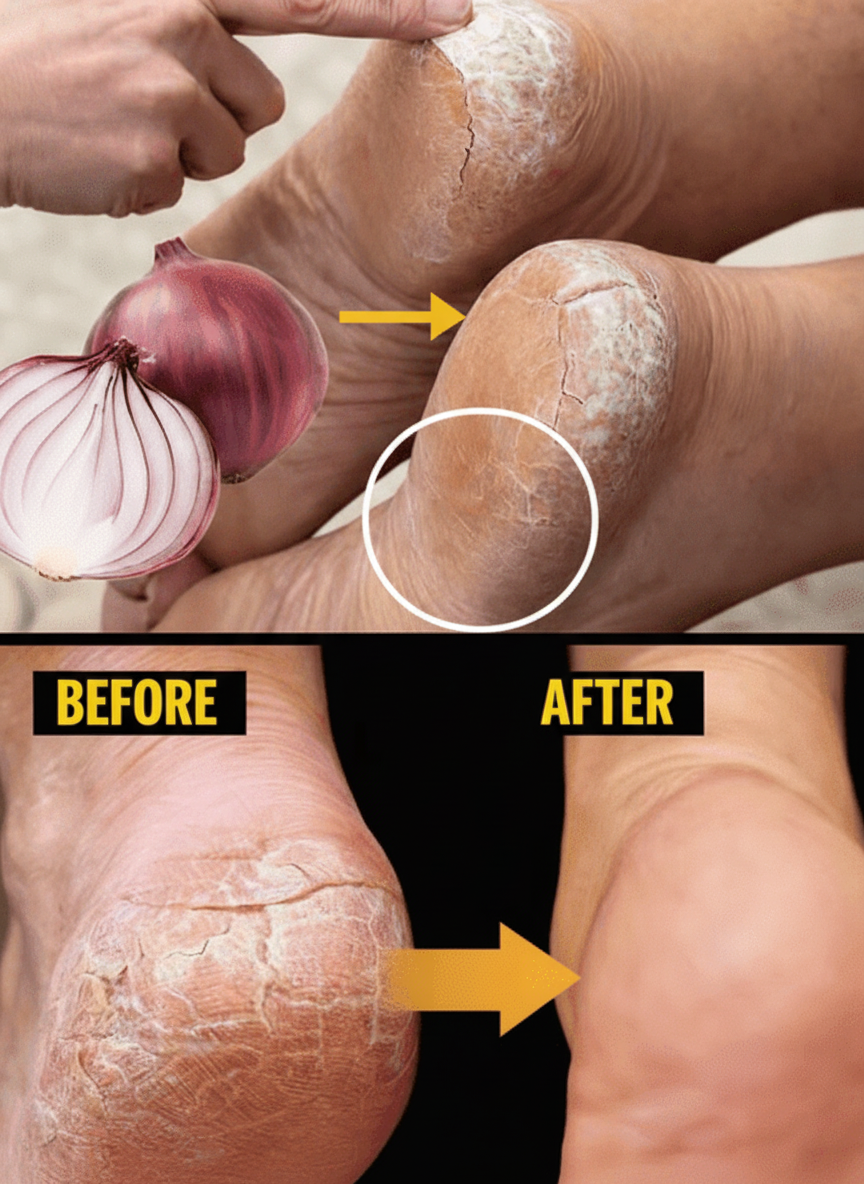
4. The Surprising Onion-Based Foot Mask for Enhanced Softness
This remedy might raise an eyebrow, but don’t dismiss it just yet! Onions, a humble kitchen staple, are packed with natural compounds like sulfur and powerful antioxidants. These elements have been the subject of research for their potential skin-supporting and softening attributes, and onions have a long history in various traditional skin remedies for addressing rough textures.
Simple Preparation for Your Onion Foot Mask:
- Take half a red onion and finely grate it.
- Combine the grated onion with one tablespoon of olive oil, mixing well to form a paste.
- Gently apply this mixture directly to the cracked heel areas.
- Allow the mask to sit for approximately 10 minutes.
- Rinse your feet thoroughly with warm water.
Important Sensitivity Note: Always perform a patch test on a small, inconspicuous area of skin first to check for any sensitivity or adverse reaction. Remember, this natural approach aims to support skin hydration and softness, and it is not intended to replace professional medical advice or treatment for severe conditions.
5. The Dermatologist-Approved Overnight Sock Method
Often recommended by dermatologists for its profound simplicity and effectiveness, this final habit is a game-changer and virtually cost-free. After applying your chosen moisturizer or natural oil to your heels in the evening, simply slip on a pair of soft cotton socks before bed.
Why This Method Works Wonders:
- Moisture Retention: The socks create a gentle occlusive layer, effectively trapping the applied moisture and preventing its evaporation throughout the night.
- Reduced Friction: They act as a protective barrier, minimizing friction between your heels and bedding, which can otherwise exacerbate dryness.
- Enhanced Absorption: By keeping the emollient in close contact with your skin, socks allow oils and creams to slowly and deeply absorb over several hours, maximizing their therapeutic benefits.
Many individuals report a noticeable improvement in heel softness and overall comfort within just a few consistent nights of adopting this routine. The key, as with all effective self-care, truly lies in unwavering consistency.
Your Simple Daily Heel Care Routine for Lasting Comfort
Integrating these habits into a consistent routine is the ultimate path to achieving and maintaining smooth, comfortable heels, especially as you navigate life after 50. Here’s a practical, easy-to-follow regimen:
Morning:
- Apply a light, hydrating moisturizer to your heels.
- Whenever possible, opt for supportive, closed-back shoes to protect your heels and reduce friction throughout the day.
Evening:
- Warm Foot Soak: Begin with a 10-15 minute warm water and salt foot soak to soften the skin.
- Gentle Exfoliation (2-3 times/week): After soaking, use a pumice stone or foot file with gentle circular motions to remove dead skin. Avoid over-exfoliation.
- Deep Moisturization: Apply a generous amount of natural oil (like coconut, olive, or sweet almond oil) or your preferred rich cream, focusing on cracked areas. Consider the onion mask 1-2 times a week if tolerated.
- Overnight Socks: Immediately after moisturizing, put on soft cotton socks to lock in moisture and enhance absorption overnight.
By making these simple, consistent habits a part of your daily self-care, you can significantly improve the health and appearance of your heels, reclaiming comfort and confidence with every step. Remember, patience and persistence are your greatest allies in this journey towards smoother, healthier skin.