 By admin
 Purple Deadnettle: Unveiling the Nutritional and Herbal Benefits of This Common Spring Edible
As spring awakens, many gardeners instinctively view the vibrant patches of low-growing, purple-tinged plants appearing in their yards as mere weeds, quickly reaching for tools to eradicate them. Yet, this common impulse often leads to overlooking a truly remarkable, abundant, and entirely free resource that has been cherished in traditional herbal practices for centuries. What if learning about this everyday plant could unlock simple ways to enrich your meals with fresh greens or offer gentle, natural wellness options? Continue reading to discover how to identify this fascinating plant, explore its diverse uses, and uncover a surprising everyday application at the end.
Identifying Purple Deadnettle: Your Guide to a Common Spring Edible
Purple deadnettle (Lamium purpureum) is a distinctive member of the mint family. Its most telling feature is its square stem, a classic characteristic shared by many mint relatives. The leaves are heart-shaped, softly fuzzy to the touch, and often display a noticeable purple or reddish hue, particularly on the upper foliage. Small, tubular flowers, ranging from pink to purple, form delicate clusters in whorls around the upper stems. Crucially, unlike its namesake, stinging nettle, purple deadnettle lacks any irritating hairs, which explains the “dead” in its name—it won’t sting you! This resilient plant thrives in disturbed soils such as lawns, garden edges, and open fields, making an early appearance each spring.
However, it’s frequently mistaken for other similar-looking plants. Let’s clarify the differences:
| Plant | Key Distinguishing Features | Edibility Notes |
|---|---|---|
| Purple Deadnettle | Triangular leaves on short stalks (petioles), prominent purple tint on upper foliage. | Fully edible (leaves, flowers, stems). |
| Henbit | Rounder leaves directly clasping the stem (sessile, no stalks), generally greener overall. | Also fully edible. |
| Stinging Nettle | Larger, serrated leaves covered in fine, stinging hairs. | Edible when cooked, but causes irritation if handled raw. |
| Ground Ivy | Creeping growth habit, round, scalloped leaves, and a stronger, distinct minty aroma. | Edible in small quantities. |
Accurate identification is paramount for safe foraging. Always verify the square stem and confirm the absence of stinging hairs. For consumption, ensure you harvest from clean, unsprayed areas, far from roadsides or potential contaminants.
The Nutritional Powerhouse: Why Purple Deadnettle Deserves a Spot on Your Plate
Often dismissed as a common weed, purple deadnettle actually boasts an impressive nutritional profile. Scientific analysis reveals its rich content of essential vitamins, including C, A, and K, alongside important minerals like iron, and valuable dietary fiber. Furthermore, it’s packed with beneficial plant compounds such as flavonoids and polyphenols, known for their antioxidant properties. This makes it a truly nutrient-dense spring green, often surpassing cultivated vegetables in its mineral concentrations, much like many other wild edibles.
Ready to incorporate this free superfood into your diet? Here are some simple and delicious ways:
- In Fresh Salads: Add young, tender tops raw to salads for a mild, earthy flavor with subtle hints of mushroom.
- Cooked Dishes: Sauté it like spinach, stir it into soups, blend it into pestos, or add it to smoothies for an extra nutritional boost. It’s a versatile, seasonal, and free alternative to cultivated greens.
- Simple Herbal Tea: Steep fresh or dried leaves in hot water for about 10 minutes to create a mild, soothing infusion.
Pro tip: For the best taste and texture, harvest the tender upper parts of the plant in early spring before it becomes too mature.
Beyond the Kitchen: Traditional & Modern Herbal Uses of Purple Deadnettle
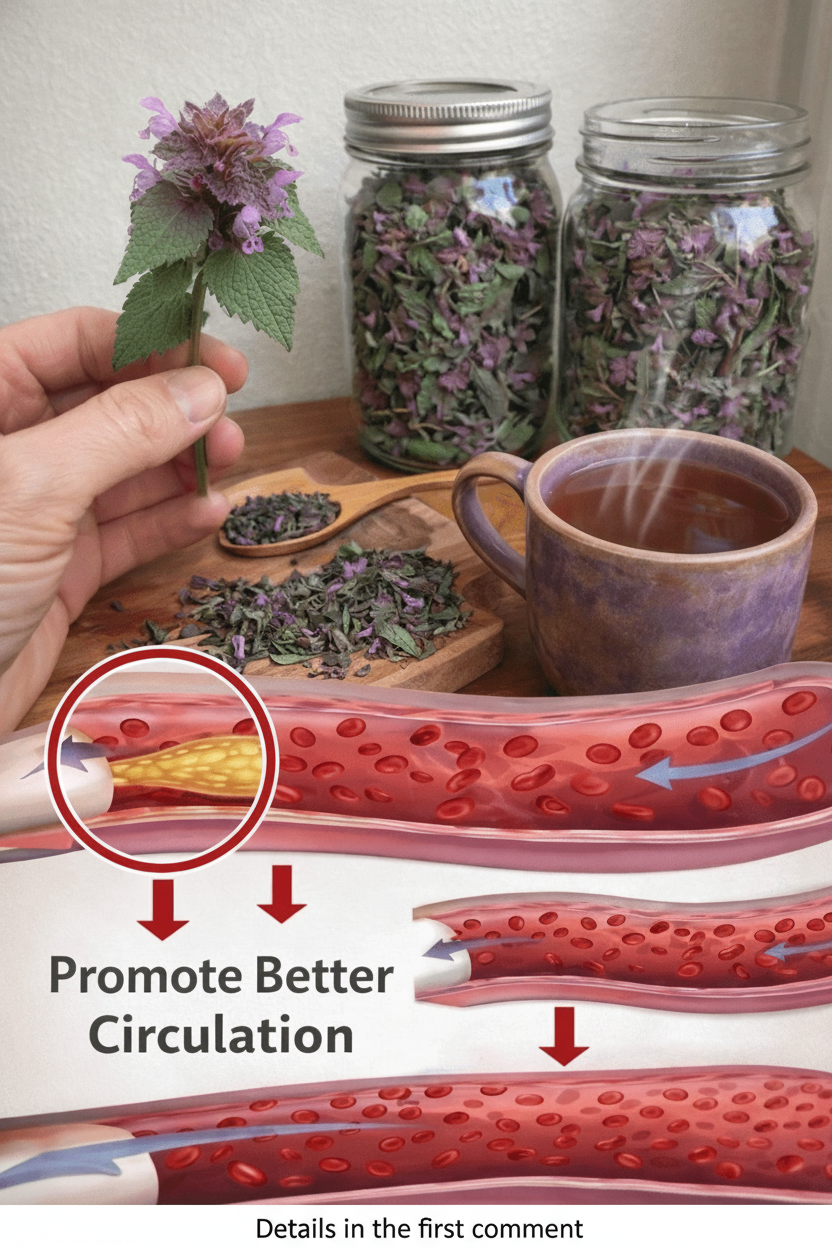
Purple deadnettle has a rich heritage in European folk herbalism, where it was traditionally valued for its astringent, diuretic, and soothing qualities. Modern scientific reviews of Lamium species have highlighted significant antioxidant activity attributed to its polyphenols, and laboratory studies suggest it possesses mild anti-inflammatory effects. Historically, people have utilized it in teas for digestive comfort or as a gentle diuretic, and in poultices for minor skin irritations. Emerging research also points to its potential antimicrobial properties.
Moreover, its ecological contribution is noteworthy: purple deadnettle provides vital early nectar for pollinators like bees, offering an excellent reason to allow some patches to flourish in your garden.
Simple Preparations: Bringing Purple Deadnettle into Your Daily Routine
Integrating purple deadnettle into your home wellness routine is surprisingly easy:
- Basic Herbal Tea Infusion: Gather a handful of fresh purple deadnettle tops. Rinse them thoroughly, chop lightly, and steep them in boiling water for 10-15 minutes. Strain the liquid and enjoy plain, or sweeten with a touch of honey if desired.
- Soothing Poultice: For minor skin irritations, crush fresh leaves until a paste forms. Apply this directly to the affected area for a cooling and potentially soothing effect.
- Drying for Later Use: To preserve purple deadnettle for year-round enjoyment, spread the leaves thinly on a clean screen or tray in a shaded, well-ventilated area. Once fully crisp and dry, store them in an airtight glass jar away from direct sunlight. These dried leaves can then be used for teas or infusions throughout the year.
Always start with small amounts to see how your body responds. Combining purple deadnettle with other mild herbs, such as lemon balm, can also enhance its flavor profile in teas.
Ecological Importance & Wellness Benefits
Allowing purple deadnettle to bloom in your garden offers a crucial early-season food source for emerging bees and other beneficial insects, significantly contributing to local biodiversity. Studies on related plants confirm its attractiveness to pollinators, including bumblebees.
From a wellness perspective, its generous content of Vitamin C and flavonoids aligns with traditional uses for immune system support, particularly during seasonal transitions. Here’s a quick synthesis of its traditional applications versus modern scientific insights:
- Traditional Uses: Often prepared as teas for digestive comfort, or utilized as a mild diuretic and for soothing skin applications.
- Emerging Research: Highlights significant antioxidant potential, particularly from its seed oils and aerial parts, along with observed mild anti-inflammatory properties in laboratory settings.
Remember to always source purple deadnettle responsibly from clean, uncontaminated environments. While highly nutritious and beneficial, it is best enjoyed as part of a varied, balanced diet and healthy lifestyle. For specific medicinal uses or health concerns, it is always advisable to consult with a qualified healthcare professional.