 By admin
 Papaya Leaf Benefits for Hair: A DIY Mask Guide for Scalp Health & Hair Retention
Dealing with sluggish hair growth can be incredibly frustrating. It often feels like a constant battle: brittle ends, an uncomfortable scalp, and the disheartening sight of the same hair length every time you look in the mirror. This ongoing struggle can significantly impact your self-confidence, limit your styling choices, and even influence your social interactions.
The good news is that many individuals are turning to papaya leaves as a simple, affordable addition to their scalp care routine. Preliminary research indicates that compounds found in papaya may contribute to a healthier scalp environment. Stick with us, because towards the end of this guide, we’ll reveal a surprisingly common oversight that can undermine the effectiveness of any natural hair mask.
Why Papaya Leaves Are Gaining Traction for Hair and Scalp Care
Papaya (Carica papaya) leaves have a rich history in traditional wellness practices across tropical regions. While this long-standing use doesn’t automatically prove their efficacy, it certainly explains their continued popularity in homemade hair remedies.
What’s Inside Papaya Leaves?
Papaya leaves are packed with beneficial plant compounds often linked to skin and scalp support. These include powerful antioxidants like flavonoids and vitamin E. Antioxidants play a crucial role because oxidative stress – an imbalance between free radicals and antioxidants – is a known factor that can negatively impact scalp comfort and hair quality over time. (Healthline)
But there’s more to these leaves. Papaya is also renowned for its enzymes, such as papain (though more concentrated in the fruit and latex). These enzymes can assist in breaking down protein buildup on the skin’s surface, which is why papaya enzymes frequently appear in exfoliating products. In the context of scalp care, this action is often described as “helping to lift away buildup,” leaving hair feeling cleaner and lighter. (MDPI)
What This Doesn’t Mean
It’s important to clarify: using papaya leaves doesn’t guarantee accelerated hair growth. In fact, Healthline points out that there isn’t strong scientific evidence to suggest that topical application of papaya leaf directly enhances human hair growth. (Healthline)
What Science Actually Suggests (And What It Doesn’t Promise)
Let’s maintain a practical and honest perspective.
Human Hair-Growth Trials Are Not the Strongest Evidence
Some initial studies, typically conducted in labs or on animals, suggest that papaya extracts might promote hair regrowth in experimental models. For instance, one study documented improved regrowth metrics in an animal model when using a papaya leaf extract preparation. While intriguing, these findings aren’t equivalent to demonstrating clear results in humans with diverse lifestyles, diets, and hair care routines. (WJPR)
Scalp Health Support: A More Achievable Goal
Many individuals seeking “growth” are often contending with issues like breakage, scalp irritation, or persistent flaking and buildup. Research indicates that papaya leaf extracts can exhibit antifungal properties in certain environments, which is particularly relevant given that some forms of dandruff are linked to yeast on the scalp. Again, this is promising, not definitive, but it helps explain why some users experience enhanced scalp comfort. (PMC)
Here’s the most compelling insight: when your scalp feels calmer and has less buildup, your hair can appear to grow faster because it experiences less breakage and styles more effectively. This isn’t “miracle growth” – it’s a significant improvement in hair retention.
Quick Comparison: Popular Growth Solutions vs. Papaya Leaf Scalp Masks
| Option | Primary Goal | Evidence Level | Common Drawbacks |
|---|---|---|---|
| Minoxidil | Supports hair growth cycle for some users | High (clinical use) | Potential irritation, requires consistent, ongoing use for many |
| Nutritional Support (Protein/Iron, etc.) | Reduces shedding linked to deficiencies | Moderate (context-dependent) | Only effective if deficiency is present |
| Essential Oils (properly diluted) | Scalp comfort, promotes massage ritual | Mixed | Risk of sensitization/allergic reactions |
| Papaya Leaf Scalp Mask | Aids in buildup removal + antioxidant support | Emerging (primarily non-human/early studies) | Potential irritation, requires patch test |
The reality is: papaya leaves are best integrated as a regular scalp-care practice, rather than a guaranteed shortcut to rapid hair growth. (Healthline)
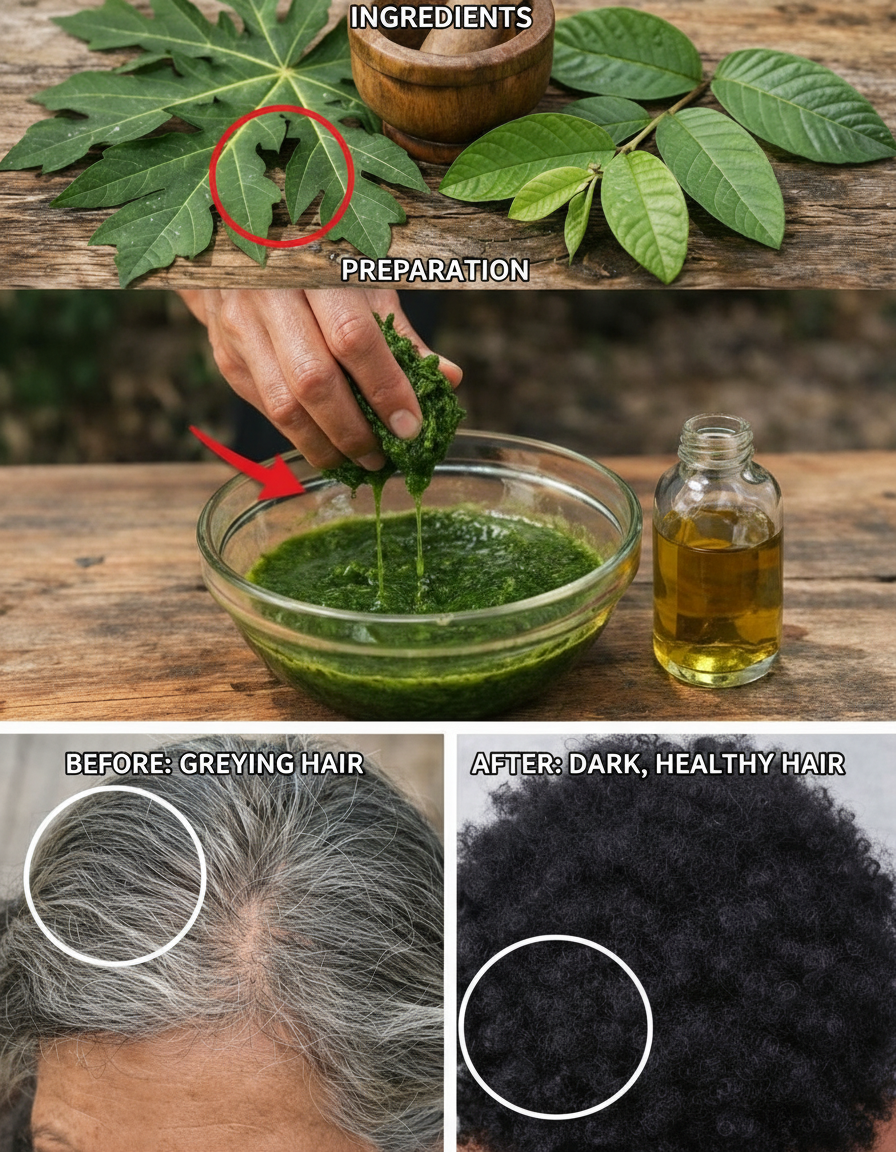
How to Prepare a Simple Papaya Leaf Hair Mask at Home
There’s no need for an overly complicated routine. The main objectives are achieving a clean-feeling scalp and gentle conditioning, not aggressive scrubbing.
Ingredients
- A handful of fresh papaya leaves (thoroughly washed)
- 2 tablespoons plain yogurt (for soothing comfort and smooth application)
- 1 tablespoon honey (for added moisture)
- Optional: 1 tablespoon coconut oil (beneficial for very dry hair lengths)
Step-by-step Application
- Blend the washed papaya leaves with a small amount of water until a smooth, consistent paste forms.
- Combine this paste with the yogurt and honey (and coconut oil, if you’re using it).
- Apply the mixture to your scalp first, then lightly coat the lengths of your hair. Avoid oversaturating the ends if your hair tends to go limp easily.
- Gently massage your scalp with your fingertips for about 60–90 seconds.
- Cover your hair with a shower cap and allow the mask to sit for 20–30 minutes. For your first application, start with a shorter duration to assess sensitivity.
- Rinse your hair thoroughly. If necessary, follow up with a light shampoo.
- Incorporate this mask into your routine once weekly for 3–4 weeks before evaluating its effects.
Pro tip: Always perform a patch test on a small, inconspicuous area of your skin (like behind your ear or on your inner arm) at least 24 hours before applying the mask to your entire scalp. This crucial step helps prevent the common mistake of potential irritation or allergic reactions that can backfire on your natural hair care efforts.