 By admin
 Nipah Virus in India: A Comprehensive Guide to Understanding and Prevention
The Nipah virus (NiV) has recently become a pressing public health concern in India, particularly in West Bengal, following reports of five confirmed cases as of late January 2025. Among those affected, two nurses are in critical condition, highlighting the severity of the infection. In response, health authorities have initiated quarantine measures for approximately 100 individuals to curb potential transmission. The seriousness of the situation has prompted neighboring nations like Thailand, Nepal, and Taiwan to implement stringent health screenings at their airports, including temperature checks, symptom questionnaires, and travel history reviews—protocols reminiscent of those adopted during the initial phases of the COVID-19 pandemic.
The World Health Organization (WHO) classifies Nipah as a priority pathogen, underscoring its significant epidemic potential. This classification is primarily due to its alarmingly high fatality rate, the current absence of an approved vaccine or specific treatment, and its proven ability to transmit effectively from person to person.
Key Facts About the Nipah Virus
Understanding the fundamental characteristics of the Nipah virus is crucial for appreciating its danger:
- Fatality Rate: NiV boasts a stark fatality rate ranging from 40% to 75%, which can escalate to as high as 75% in certain outbreaks, depending on the quality of surveillance and healthcare provided. This figure is substantially higher than the average ~3.4% observed with COVID-19.
- Incubation Period: The typical incubation period for Nipah virus infection is between 4 and 14 days, though it can, in rare instances, extend up to 45 days.
- Early Symptoms (often flu-like): Initial indicators of Nipah infection are frequently non-specific and can resemble common flu symptoms, including:
- Fever
- Headache
- Muscle aches or pain
- Vomiting
- Sore throat
- Severe Progression (often rapid): As the disease advances, symptoms can quickly become severe, often leading to:
- Respiratory distress, manifesting as coughing, shortness of breath, and pneumonia.
- Encephalitis, or inflammation of the brain, which can cause confusion, seizures, altered consciousness, and ultimately, coma.
Many severe cases experience rapid neurological deterioration, progressing to a coma within just 24 to 48 hours.
How Nipah Virus Spreads
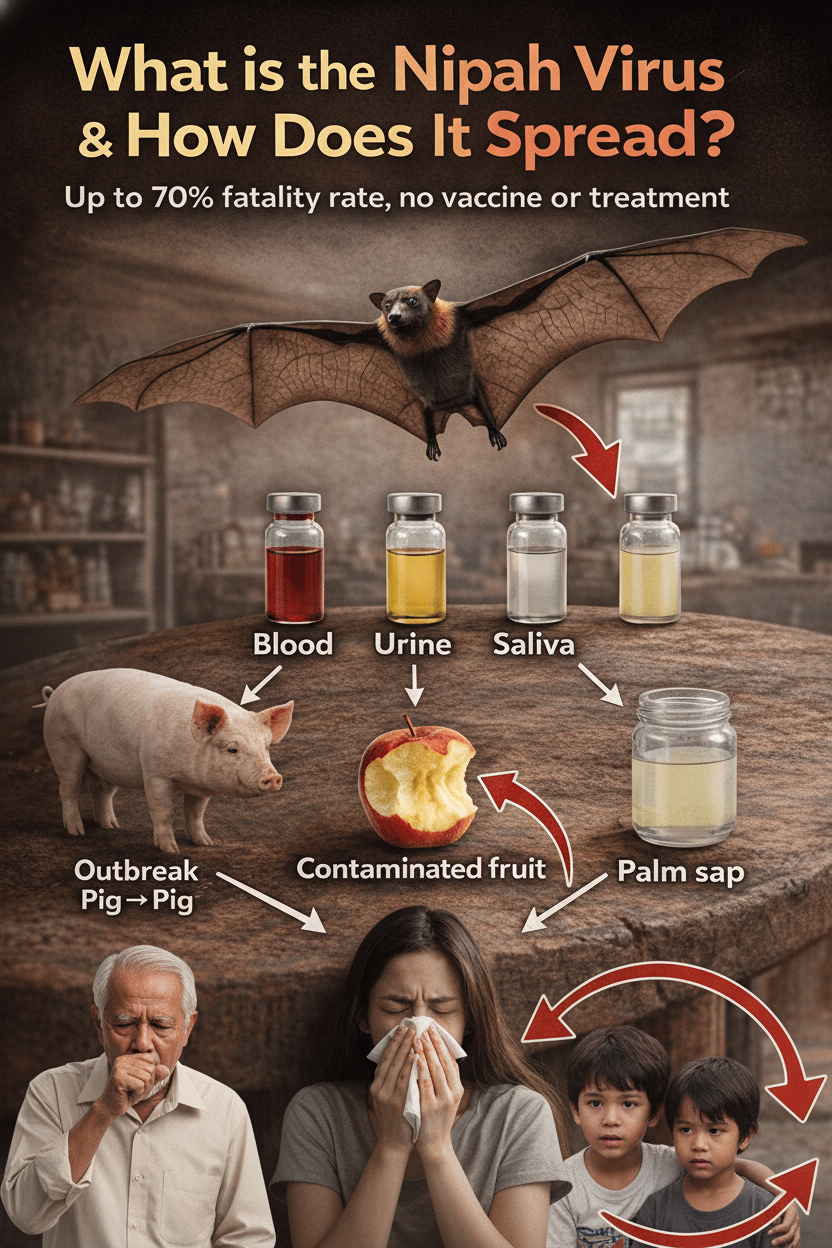
Nipah is classified as a zoonotic virus, meaning it primarily jumps from animals to humans before potentially spreading between people. Key transmission pathways include:
- Primary Reservoirs: Fruit bats, specifically those of the Pteropus species (also known as flying foxes), are considered the natural hosts for NiV. These bats can shed the virus through their saliva, urine, and feces.
- Contaminated Food: A significant route of transmission in outbreaks observed in Bangladesh and India involves consuming food products contaminated by bat secretions. This often includes fruits like dates, mangoes, bananas, and jackfruit, or drinking raw date palm sap (commonly known as toddy) that has been tainted by bat saliva or urine.
- Infected Pigs: Pigs can also become infected with Nipah and subsequently transmit the virus to humans, as was a major factor in the 1998–1999 outbreak in Malaysia.
- Human-to-Human Transmission: The virus can spread directly between people through respiratory droplets, saliva, or close physical contact, particularly prevalent in healthcare settings or within household clusters.
Crucially, unlike many other viral diseases, there is currently no approved vaccine for Nipah virus, nor is there a specific antiviral treatment. Patient care remains entirely supportive, focusing on managing symptoms through measures such as ventilation, fluid administration, and seizure control.
Current Situation in India (January 2025)
The ongoing Nipah outbreak in India, as of January 2025, is centered in West Bengal:
- Five confirmed cases have been reported, including two nurses who fell ill after working together in late December 2024. One of these nurses is currently in critical condition.
- Approximately 100 individuals who had close contact with the confirmed cases have been placed under quarantine to prevent further dissemination of the virus.
- Airports in nearby countries have escalated their health screening protocols for incoming travelers.
How to Protect Yourself: Official WHO & CDC Guidance
Adhering to strict preventative measures is paramount. Official guidelines from the WHO and CDC recommend the following:
- Inspect and Discard Fruit: Never consume fruit that exhibits visible bite marks, chew marks, or any residue of saliva. Such fruit should be immediately discarded.
- Safe Date Palm Sap Consumption: Avoid drinking raw date palm sap (toddy) unless you are absolutely certain it was collected using bat-proof covers and has been thoroughly boiled before consumption.
- Thorough Fruit Washing: Always wash all fruits thoroughly under running water. Whenever feasible, peeling fruits before consumption adds an extra layer of safety.
- Avoid Bat Contact: Steer clear of bats and their habitats. Do not enter bat roosts or handle any sick or deceased bats.
- Avoid Sick Pigs: Refrain from handling sick pigs or consuming meat from animals that appear to be ill.
- Strict Hygiene Practices: In any healthcare setting or household where potential exposure has occurred, practice rigorous hygiene, including frequent handwashing, wearing masks, and using gloves.
- Monitor for Symptoms: If you have recently been in an outbreak area or suspect potential exposure, diligently monitor yourself for symptoms. Seek immediate medical attention if you develop fever, headache, confusion, or difficulty breathing.
The Critical Bottom Line
While Nipah virus infections are rare, their extreme danger cannot be overstated. With no vaccine and no specific cure, coupled with a fatality rate significantly surpassing most known viruses, early detection and isolation are absolutely critical for containment. The primary routes of transmission—through contaminated fruit/sap and human-to-human contact—underscore the importance of vigilance.
The single most effective preventative measure is straightforward: If a bat has bitten, licked, or otherwise contaminated any food or drink item, do not consume it.
Stay informed about local health advisories, and do not hesitate to seek immediate medical care if any symptoms emerge after potential exposure. Sharing this vital information with family and friends, especially those residing in outbreak-prone regions, can be life-saving.
Quick Prevention Checklist:
- Avoid fruit or sap contaminated by bats.
- Wash all fruit thoroughly.
- Practice excellent personal hygiene.
- Monitor diligently for symptoms like fever, headache, confusion, or breathing issues.
One simple rule. One life-saving precaution.
Disclaimer
This article is provided for informational purposes only and should not be considered medical advice. Nipah virus infection is a severe and potentially fatal disease. If you experience symptoms such as fever, headache, vomiting, disorientation, seizures, or difficulty breathing after potential exposure (e.g., consuming bat-bitten fruit, contact with sick pigs, or interaction with infected individuals), it is imperative to seek emergency medical care immediately. Always adhere to guidelines issued by the WHO, CDC, and your local health authorities during outbreaks. Prompt medical intervention is crucial for improving outcomes.