 By admin
 For countless families globally, cancer presents an immense health challenge. The ongoing quest for effective and complementary therapeutic strategies often leaves individuals feeling overwhelmed, particularly when conventional treatments have limitations or severe side effects. What if a widely used culinary ingredient, revered for millennia in traditional medicine, demonstrated intriguing properties in contemporary scientific investigations? A recent 2024 study sheds new light on Nigella sativa—commonly recognized as black seed or black cumin—and its potent oil. As scientific interest in natural bioactive compounds intensifies, this significant research published in Molecular Biology Reports contributes valuable insights. Continue reading to explore the key observations made by scientists in controlled laboratory environments and understand why this ancient seed is drawing considerable public interest.
Understanding Nigella Sativa: The Black Seed Story
Nigella sativa, a delicate flowering plant, originates from regions across Asia, the Middle East, and specific areas of Europe. Its minute, dark seeds have been cherished for millennia, finding applications in culinary arts, ancient wellness practices, and various traditional remedies. These versatile seeds are also known by names such as black cumin, kalonji, or simply black seeds. The oil extracted from these seeds is particularly notable for its abundance of potent bioactive compounds, most prominently thymoquinone, a substance frequently emphasized in laboratory investigations. Beyond its aromatic qualities, scientists are deeply engaged in exploring the intricate ways its constituents influence cellular interactions at a molecular level.
Key Insights from the 2024 In Vitro Research
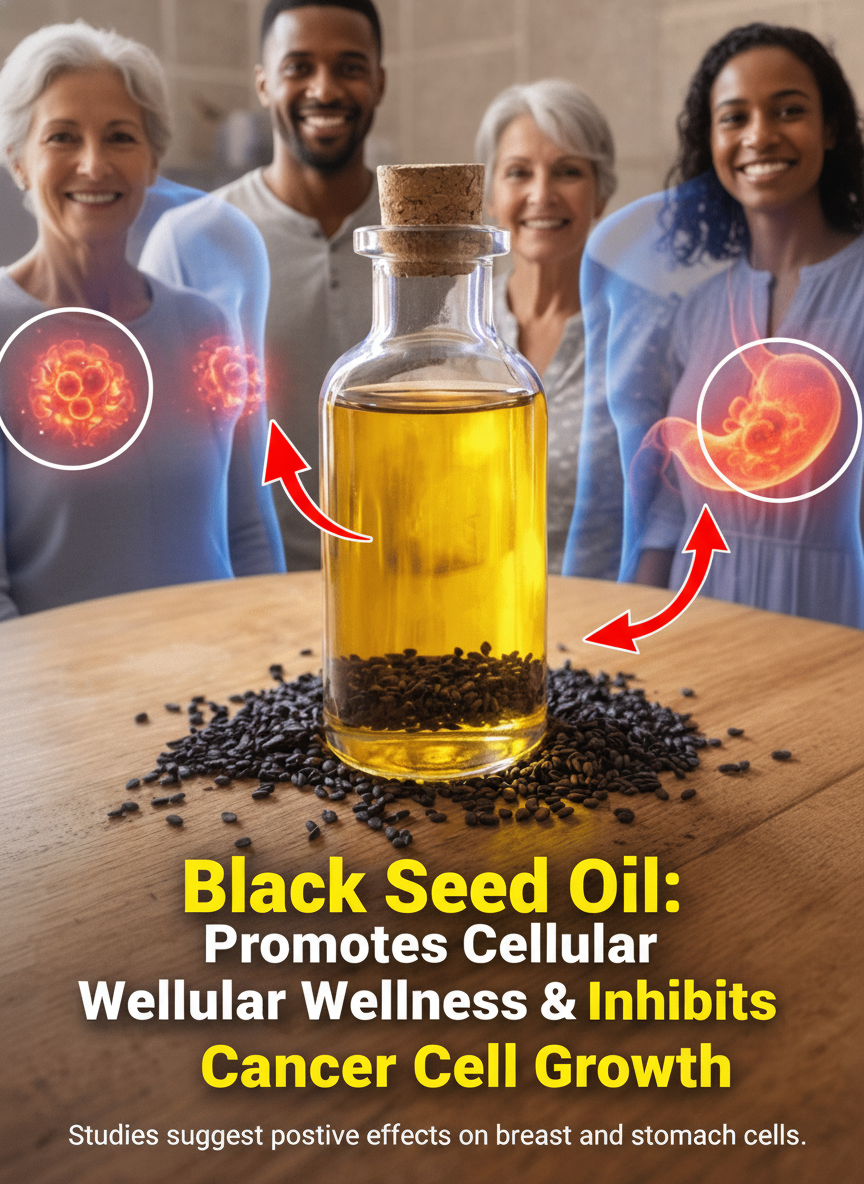
Within the pages of Molecular Biology Reports, the 2024 study detailed experiments where researchers meticulously applied Nigella sativa seed oil to two distinct human cancer cell lines under controlled laboratory conditions:
- MCF7 cells: Representing a common model for breast cancer studies.
- AGS cells: Utilized as a model for gastric (stomach) cancer research.
The scientists administered varying concentrations of the black seed oil, ranging from 10 to 200 µg/mL, and subsequently monitored its impact over intervals of 24, 48, and 72 hours. A distinct and consistent trend emerged from their observations: the oil significantly diminished cell viability in a manner that was both time- and dose-dependent. This means that increased concentrations and extended exposure durations correlated with a more substantial reduction in the number of living cancer cells. Below are the primary findings:
- Initial observations at 24 hours revealed a notable decrease in cell viability, even when lower doses were applied.
- By the 48- and 72-hour marks, these effects intensified considerably, particularly evident at the 100 and 200 µg/mL concentrations.
- The most profound reductions in cell viability were recorded at the highest concentrations, demonstrating a sustained inhibitory effect throughout the entire 72-hour duration across both breast and gastric cancer cell types.
This characteristic time- and dose-dependent reaction is frequently observed in laboratory investigations, indicating a consistent and predictable interaction between the compound and the target cells within the precisely controlled experimental setup.
Unpacking the Molecular Mechanisms: How Black Seed Oil Acts on Cells
To delve into the underlying “why” of their observations, the research team conducted comprehensive molecular analyses. Their focus included markers associated with apoptosis, or programmed cell death—a fundamental biological process where cells initiate self-destruction when necessary. The significant molecular alterations observed were:
- A notable increase in the expression of caspase-3, a pivotal enzyme universally recognized for its central role in initiating and executing apoptosis.
- A pronounced reduction in the BCL2/Bax ratio, effectively shifting the cellular balance away from survival and towards the induction of cell death.
Furthermore, the scientists investigated genes critically involved in cellular migration and protective responses to stress:
- They documented a substantial downregulation of MMP2 and MMP9, key enzymes implicated in extracellular matrix degradation and, consequently, the potential spread of cancer cells in experimental models.
- There was also a decreased expression of heat shock proteins HSP60 and HSP70, which are typically upregulated to shield cells from various forms of stress and promote their survival.
Collectively, these molecular shifts strongly suggest that Nigella sativa oil may operate through mechanisms that bolster natural cellular regulation and concurrently restrict factors often linked to disease progression within laboratory environments. It is particularly noteworthy that these profound effects were most evident at elevated concentrations and prolonged exposure times, consistently mirroring the dose-dependent behaviors observed in studies involving other natural bioactive compounds.
The Significance of In Vitro Research: What This Study Means
Laboratory investigations employing cell lines, often referred to as in vitro studies, are fundamental to scientific discovery. They enable researchers to decipher potential mechanisms of action for various compounds before progressing to more intricate biological systems. While these experimental setups cannot fully replicate the complexities of the human body, they offer invaluable preliminary insights into how specific compounds interact at a foundational cellular level. Nigella sativa boasts an extensive legacy in traditional medicinal practices, and contemporary scientific inquiry is actively exploring its bioactive constituents. This particular 2024 publication significantly advances prior research, which has already demonstrated comparable effects attributed to thymoquinone and other components of black seed oil. Nevertheless, it is crucial to emphasize that this represents early-stage scientific exploration—revealing promising observations in petri dishes, not definitive outcomes in human subjects.
Integrating Black Seed into Your Daily Routine: Practical Tips
For those intrigued by the potential benefits of black seed and considering its incorporation into their lifestyle, it is paramount to first consult with a qualified healthcare provider. Once cleared, here are some straightforward, everyday suggestions for exploring black seed:
- Culinary Sprinkle: Enhance your meals by sprinkling a teaspoon of whole or ground black seeds over yogurt, salads, or oatmeal. They impart a distinctive mild peppery and nutty flavor.
- Oil in Cuisine: Utilize black seed oil sparingly in your cooking. A small drizzle over roasted vegetables or mixed into salad dressings can add a unique taste profile. Remember to start with minimal amounts due to its potent flavor.
While research into Nigella sativa continues to evolve, its rich history and growing scientific interest make it a fascinating subject. Always prioritize professional medical advice when making decisions about your health and dietary supplements.