 By admin
 Waking up to a sharp, shooting pain that radiates from your lower back down your leg can turn simple movements into a daily challenge. This debilitating discomfort, often known as sciatica, can disrupt work, exercise, sleep, and time with loved ones. While frustrating, understanding its roots and adopting practical lifestyle adjustments can significantly help manage this nerve pain. Let’s explore how to identify, understand, and effectively address sciatica.
What is Sciatica?
Sciatica isn’t a condition itself, but rather a symptom indicating an underlying issue affecting the sciatic nerve. This longest nerve in the body extends from the lower back, through the hips, and down each leg, controlling leg muscles and providing sensation. When the sciatic nerve becomes irritated or compressed, it manifests as characteristic discomfort along its path.
Common Causes of Sciatica
Several factors can lead to sciatic nerve irritation:
- Herniated Disk: A common cause where the soft inner material of a spinal disk protrudes, pressing on nearby nerves.
- Bone Spurs: Overgrowths on spinal bones that can narrow the spinal canal and pinch nerve roots.
- Spinal Stenosis: A narrowing of the spinal canal, frequently observed with aging.
- Spondylolisthesis: When one vertebra slips forward over another, potentially compressing nerves.
- Injuries: Trauma from falls or accidents.
- Pregnancy: Added weight and postural changes can cause temporary compression.
- Lifestyle Factors: Obesity and poor posture can increase pressure on the lower back over time.
- Rare Causes: Tumors or infections, though uncommon.
Many of these issues stem from everyday wear and tear, highlighting the importance of spinal health.
Recognizing Sciatica Symptoms
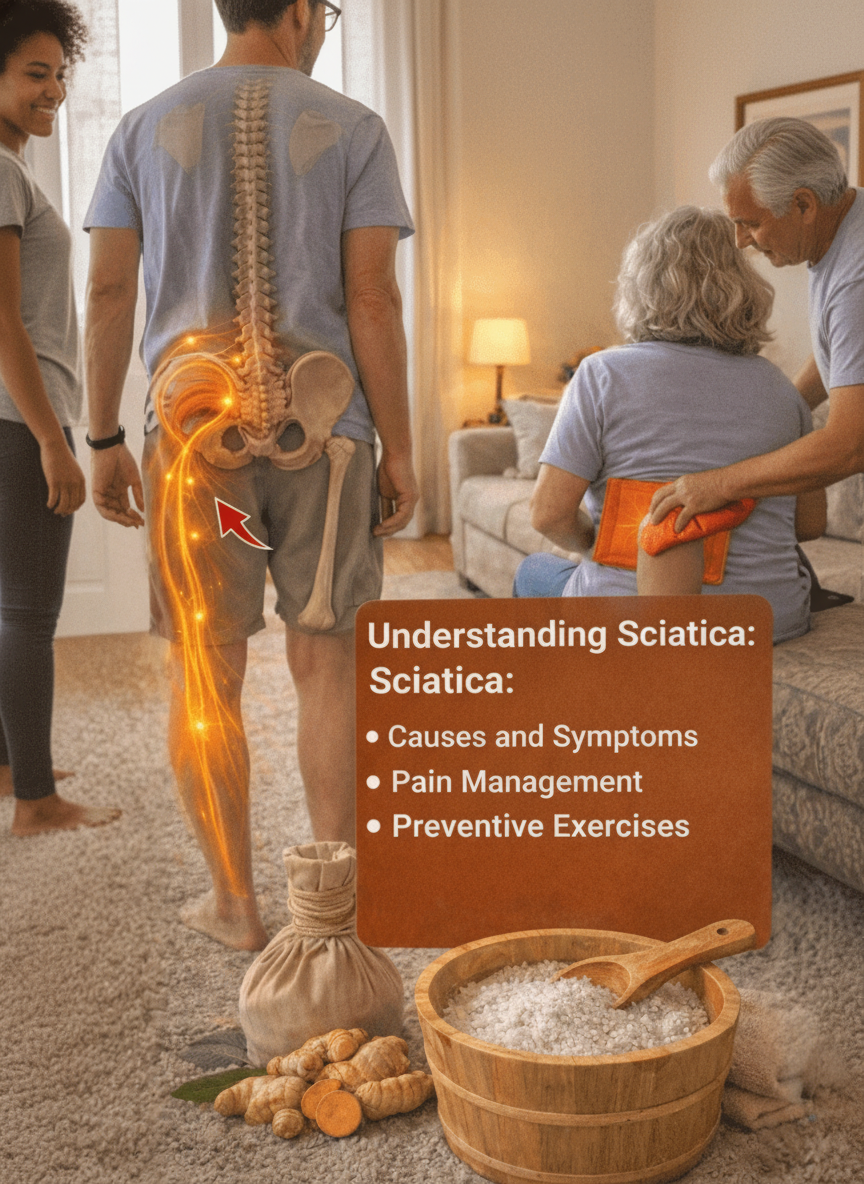
Symptoms typically affect only one side of the body and can range from subtle to intense:
- Pain: Often described as sharp, burning, or shooting, radiating from the lower back into the buttock and down the leg.
- Numbness or Tingling: A “pins and needles” sensation in the leg or foot.
- Weakness: Difficulty moving or standing due to weakness in the affected leg.
- Aching: A persistent ache in the hamstring or calf.
- Aggravating Factors: Discomfort frequently worsens with sitting, coughing, or sneezing.
- Red Flag Symptoms: In rare, severe cases, loss of bowel or bladder control requires immediate medical attention.
Symptoms vary, so observing patterns can be crucial for diagnosis and management.
Strategies for Sciatica Relief
Managing sciatica often involves reducing inflammation and easing pressure on the nerve:
- Rest, but Stay Active: While initial rest is important, prolonged inactivity can worsen symptoms. Gentle movement promotes circulation and healing.
- Over-the-Counter Pain Relief: Non-steroidal anti-inflammatory drugs (NSAIDs) like ibuprofen can help reduce swelling and pain. Always consult a healthcare professional before use.
- Hydration and Nutrition: A balanced diet and adequate hydration support overall nerve health and inflammation reduction.
Targeted Therapies for Discomfort
Heat and Cold Therapy:
- Cold: Apply ice packs (wrapped in a towel) for 15-20 minutes, several times a day, during the first 48-72 hours to reduce initial swelling.
- Heat: After a few days, switch to a heating pad on low or a warm cloth to relax muscles and improve blood flow. Alternate as needed, listening to your body.
Stretching and Gentle Exercises:
- Figure-Four Stretch: Lie on your back, cross one ankle over the opposite knee, and gently pull the thigh towards you. Hold for 30 seconds; repeat on both sides.
- Hamstring Stretches: While seated, gently reach for your toes.
- Gentle Walking: A slow, steady walk for 10-15 minutes daily can encourage mobility without strain.
These habits are foundational for building spinal resilience and managing nerve discomfort.