 By admin
 Menopause is a natural biological transition typically anticipated in a woman’s late 40s or early 50s. Therefore, when symptoms manifest prematurely, it can be a source of confusion and even distress. Initial, nuanced alterations in mood, sleep patterns, or menstrual regularity might be easily dismissed as mere stress, the natural course of aging, or simply a temporary ‘off’ month. However, as these discreet signs gradually accumulate, they can profoundly impact your energy levels, relationships, and self-assurance in ways that become increasingly difficult to overlook. The encouraging news is that gaining a clear understanding of what early menopause entails—and identifying supportive lifestyle practices that can help—can provide much-needed clarity and peace of mind. Furthermore, we’ll uncover a frequently overlooked daily habit towards the article’s conclusion that many women discover to be surprisingly empowering.
Understanding Early Menopause
Early menopause is medically defined as the cessation of menstrual periods occurring before the age of 45. When this transition happens even earlier, specifically before the age of 40, it is often referred to as premature menopause. According to leading health organizations and extensive peer-reviewed research, menopause is officially diagnosed after an individual has experienced 12 consecutive months without a menstrual period, primarily due to natural hormonal shifts—most notably a significant decline in estrogen and progesterone levels. Crucially, this transition doesn’t unfold instantaneously. The years preceding menopause, known as perimenopause, are typically when the initial subtle symptoms begin to emerge. It is during this phase that many women start to ponder: ‘Is this a normal part of life, or is something significant changing within my body?’
Potential Causes of Early Menopause
Research indicates that the onset of early menopause can be linked to a variety of factors, including:
- Family history: Genetic predisposition often plays a substantial role.
- Smoking: Tobacco use has been associated with earlier menopause.
- Certain autoimmune conditions: Disorders such as thyroid disease or lupus can sometimes impact ovarian function.
- Previous medical treatments: Therapies like chemotherapy or radiation that affect the ovaries.
- Surgical removal of the ovaries: A procedure known as oophorectomy directly induces menopause.
Occasionally, however, no definitive cause can be identified, which can be a source of frustration. Nevertheless, recognizing these early indicators can empower you to make informed lifestyle adjustments and engage in more confident, productive conversations with your healthcare provider.
10 Early Menopause Signs to Be Aware Of
Let’s delve into the most prevalent indicators—some of which are quite apparent, while others are surprisingly subtle and easily missed.
1. Irregular Periods
Often, this represents the inaugural noticeable alteration in a woman’s cycle. You might observe:
- Shorter menstrual cycles
- Extended intervals between periods
- Periods that are unusually heavy or notably lighter
- Months where your period is entirely skipped
Beyond these obvious changes, even if your cycle still appears generally ‘normal,’ subtle shifts in timing or flow could indicate your body is adapting to evolving hormonal levels.
2. Hot Flashes and Night Sweats
Sudden sensations of intense warmth that spread across the chest, neck, and face are among the classic hallmarks of the menopausal transition. Night sweats, the nocturnal equivalent, can:
- Significantly disrupt your sleep quality
- Lead to frequent awakenings throughout the night
- Result in feelings of profound exhaustion upon waking in the morning
Studies consistently demonstrate that fluctuating estrogen levels can directly influence the body’s intricate temperature regulation system. When sleep is compromised, nearly every other aspect of daily life feels more challenging.
3. Sleep Disturbances
You might begin to experience:
- Persistent difficulty initiating sleep
- Waking abruptly in the middle of the night (e.g., around 3 a.m.) without an apparent external reason
- Sleep that feels consistently light and unrefreshing
It’s crucial to understand that sleep disruption isn’t solely a consequence of night sweats. Hormonal shifts can directly impact melatonin production and other critical pathways involved in regulating healthy sleep cycles.
4. Mood Changes
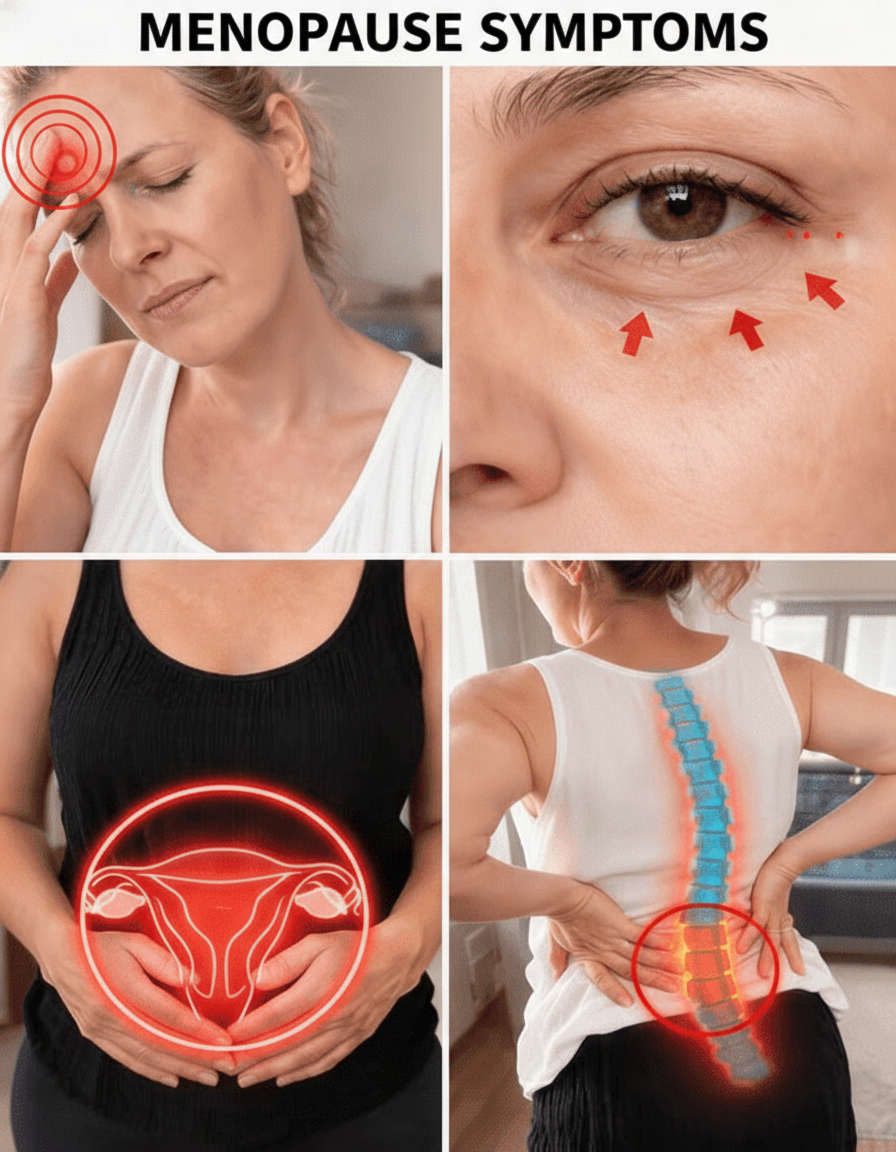
Increased irritability, heightened anxiety, or unexpected bouts of sadness are common emotional shifts. These feelings can seem particularly unfamiliar if you haven’t previously struggled with significant mood swings. Research indicates that estrogen plays a vital role in influencing serotonin and other crucial brain chemicals that support emotional stability and well-being. The key takeaway here is empowering: if your emotional state feels altered, it is not merely ‘in your head’ but often has a physiological basis.
5. Vaginal Dryness or Discomfort
A decline in estrogen levels can lead to the thinning and drying of vaginal tissues, a condition often referred to as vaginal atrophy or genitourinary syndrome of menopause (GSM). You might experience:
- Discomfort or pain during sexual intimacy
- Increased sensitivity or tenderness in the vaginal area
- Recurrent irritation or itching
While this topic is frequently overlooked in public discourse, it is a common and entirely manageable symptom with appropriate supportive strategies and treatments.
6. Decreased Libido
Hormonal fluctuations during perimenopause and menopause can certainly influence sexual desire. However, libido is a multifaceted aspect of well-being, and it can also be significantly affected by:
- The quality of your sleep
- Overall stress levels
- The dynamics within your relationship
Therefore, a reduction in libido is rarely attributable to one single factor.
7. Changes in Skin and Hair
You might gradually observe:
- Increased dryness or a loss of moisture in the skin
- Fine lines and wrinkles becoming more pronounced
- Noticeable thinning or changes in the texture of your hair
Estrogen plays a crucial role in supporting collagen production and maintaining skin elasticity. As estrogen levels shift, the skin’s texture and resilience may undergo gradual changes. However, there’s a hopeful aspect: consistent healthy daily habits can still significantly support skin health and resilience during this time.
8. Brain Fog
Experiencing difficulty concentrating or struggling to recall words can be quite alarming. Women often describe symptoms such as:
- Losing their train of thought mid-sentence
- Forgetting appointments or important details
- A general slowing of mental processing
Studies suggest that estrogen may play a role in maintaining cognitive sharpness and memory function. Experiencing temporary mental fog during perimenopause is a common and recognized symptom.
9. Joint or Muscle Discomfort
Are you noticing aches and pains that weren’t present before? Some women report:
- Morning stiffness, particularly in the joints
- Mild, persistent joint discomfort
- A reduction in overall flexibility
Hormones have an influence on the body’s inflammatory pathways, which may contribute to these new or exacerbated sensations of discomfort.