 By admin
 Anyone who has ever interacted with a Mimosa pudica plant quickly understands why it’s commonly referred to as the “sensitive plant.” Its leaves exhibit a remarkable characteristic, folding inward almost immediately upon the slightest touch. This intriguing defense mechanism often captivates children and garden enthusiasts alike. Yet, beyond its captivating, almost playful nature, this humble creeping plant holds a profound and extensive legacy within the realm of traditional medicine.
For hundreds of years, traditional healers across India, Southeast Asia, and South America have harnessed the therapeutic properties of Mimosa pudica to address a diverse range of health issues. Among its most recognized applications are its uses for managing swelling, inflammation, and fluid retention. In an era where contemporary lifestyles frequently contribute to conditions such as edema, persistent bloating, and chronic inflammatory responses, this age-old remedy is experiencing a resurgence of interest as a natural option to support healthy fluid balance and promote overall tissue comfort.
Within this article, we will delve into the historical applications, the array of active compounds, and the potential health benefits associated with Mimosa pudica, with a particular emphasis on its established role in alleviating swelling and assisting the body in effectively managing excess fluid retention.
In both ancient Ayurvedic traditions and various folk healing practices, Mimosa pudica—also widely known as “touch-me-not”—was highly esteemed for its inherent cooling, soothing, and restorative qualities. Its diverse applications encompassed:
- Swelling and edema: Freshly crushed leaves were often prepared as a poultice and applied directly to swollen joints or limbs to reduce puffiness.
- Wound healing: Decoctions made from the plant were traditionally used as washes for cuts and abrasions, believed to accelerate the healing process.
- Digestive balance: Extracts derived from the roots were sometimes ingested to alleviate symptoms of diarrhea or calm stomach irritation.
- Women’s health: Infusions were occasionally administered to address menstrual discomfort and provide support for uterine health.
These historical uses underscore the plant’s perceived efficacy in modulating inflammatory responses, soothing irritated tissues, and restoring equilibrium to bodily fluids.
Active Compounds in Mimosa pudica
Contemporary phytochemical research has unveiled a rich and complex profile of biologically active compounds present in Mimosa pudica:
- Flavonoids (quercetin, luteolin): These powerful plant compounds are well-recognized for their potent antioxidant and anti-inflammatory properties.
- Alkaloids: Certain alkaloids may contribute to the plant’s potential for pain relief and its ability to calm overactive nerve signals.
- Tannins: As astringent compounds, tannins can effectively tighten and constrict tissues, which may help in reducing localized swelling and the accumulation of fluid.
- Mimosine (unique to the plant): This distinctive amino acid, found exclusively in Mimosa pudica, has been a subject of study for its potential antimicrobial and immune-modulating effects.
Collectively, the presence of these compounds offers a scientific basis for understanding why Mimosa pudica was historically utilized to manage issues related to swelling and excess fluid retention.
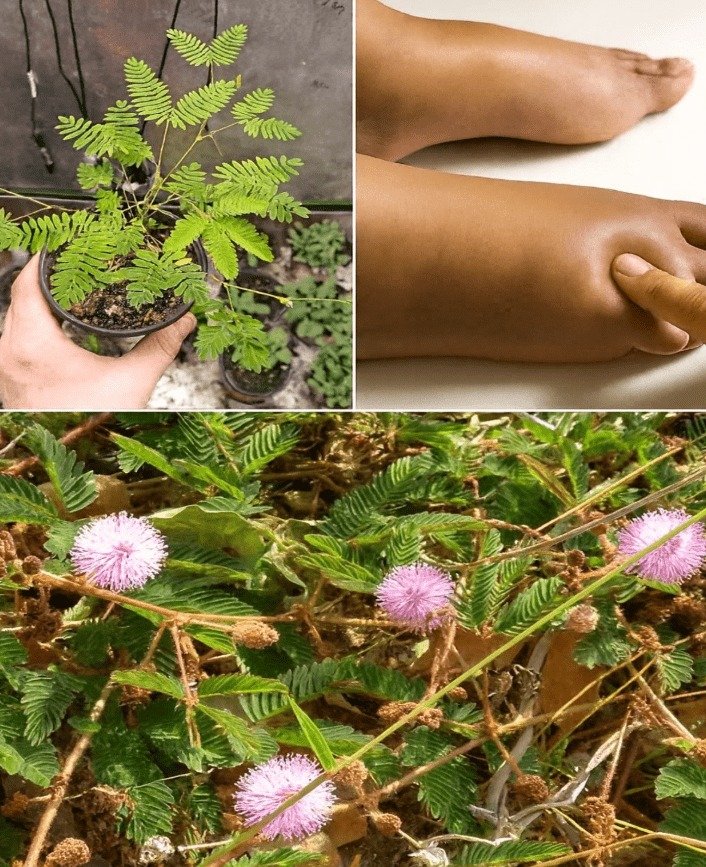
Potential Benefits for Swelling & Fluid Retention
- Anti-Inflammatory Action
The various flavonoids found within Mimosa pudica may help to soothe inflamed tissues, thereby diminishing associated symptoms such as redness, discomfort, and swelling. - Natural Diuretic Effect
Traditional folk medicine frequently noted its ability to assist the body in “releasing excess water,” which can be beneficial in alleviating bloating and edema. - Astringent Properties
The tannins present in the plant work to tighten and tone tissues, potentially aiding in the reduction of fluid leakage into surrounding bodily areas. - Lymphatic Support
By mitigating inflammation and promoting healthy fluid movement, Mimosa pudica may offer valuable support to the lymphatic system, a crucial network involved in immune regulation and the effective management of swelling.
Traditional Ways of Using Mimosa pudica
- Poultice: Freshly harvested and crushed leaves were traditionally applied directly onto swollen joints or limbs to provide localized relief.
- Infusion (tea): The leaves or roots were steeped in warm water to create a tea, which was then consumed to address fluid retention or mild edema.
- Topical wash: A decoction prepared from the plant was used externally to cleanse and soothe irritated skin or areas affected by swelling.
Important Note: It is always advisable to consult with a qualified healthcare professional before considering internal use of Mimosa pudica, as comprehensive safety data remains limited.
Comparison with Other Herbs for Fluid Retention
| Herb | Traditional Use | Key Compounds | Notes |
|---|---|---|---|
| Mimosa pudica | Swelling, edema, wound healing | Flavonoids, tannins, mimosine | Sensitive plant; used externally & internally |
| Dandelion leaf | Natural diuretic, blood vessel support | Potassium, flavonoids | Widely used for water retention |
| Parsley | Fluid balance, kidney support | Apiol, flavonoids | Common culinary herb, gentle effect |
| Horsetail | Edema, urinary health | Silica, flavonoids | Traditionally strengthens connective tissues |
This comparative overview indicates that while Mimosa pudica shares some functional similarities with more commonly recognized diuretic herbs, it also provides distinct astringent and lymphatic benefits, setting it apart.
Safety & Precautions
- Pregnancy and breastfeeding: The use of Mimosa pudica should be avoided during pregnancy and breastfeeding due to insufficient safety research.
- Children: Mimosa pudica should not be administered internally to children.
- Medication interactions: Given its potential diuretic-like effects, Mimosa pudica may interact with certain medications, including those for blood pressure or other prescribed diuretics.
- Dosage: Traditional practices suggest using the plant in small quantities; excessive intake can lead to adverse effects such as nausea or digestive upset.
Conclusion
Mimosa pudica, affectionately known as the sensitive plant, is far more than just a botanical curiosity found in gardens. For centuries, it has been revered as a valuable traditional remedy for addressing swelling, inflammation, and the accumulation of excess fluid. Emerging modern scientific research is progressively affirming the efficacy of its antioxidant, anti-inflammatory, and astringent compounds, which collectively may contribute to supporting optimal vascular and lymphatic health.
FAQs
Can Mimosa pudica help reduce leg swelling that results from prolonged standing?
Traditionally, it has been used for this purpose. When applied as a poultice or consumed as a tea, it may offer some relief, though individual results can vary.
Is it considered safe to consume Mimosa pudica tea on a daily basis?
There is limited scientific evidence regarding its long-term daily safety. While occasional use in small quantities aligns with traditional practices, daily consumption should always be discussed with a qualified healthcare provider.
Does Mimosa pudica function similarly to a pharmaceutical diuretic?
No, it does not. While it may possess mild fluid-releasing properties, it should not be considered a substitute for prescription diuretic medications.
Disclaimer: The information presented in this article is provided for educational purposes only. It is not intended to serve as a replacement for professional medical advice. Always consult with a qualified healthcare professional before initiating any herbal remedies, particularly if you have pre-existing chronic health conditions or are currently taking prescription medications.