 By admin
 Methicillin-resistant Staphylococcus aureus (MRSA) infections represent a significant global health challenge, leading to persistent skin and soft tissue complications. These formidable bacterial strains often prove unresponsive to conventional antibiotic treatments, resulting in extended periods of discomfort, frequent hospitalizations, and considerable patient anxiety. What might otherwise be minor cuts or abrasions can escalate into severe health concerns when MRSA is involved, leaving individuals with limited therapeutic options and a heightened risk of complications.
In response to this pressing issue, scientists are actively exploring innovative strategies and re-evaluating established compounds for their potential in infection management. Among these, methylene blue, a synthetic dye long recognized for its diverse medical applications, has recently garnered attention due to its promising activity against MRSA in carefully controlled laboratory environments. This emerging scientific inquiry raises an important question: what do these preliminary findings signify for the future landscape of MRSA treatment? Delve deeper into the crucial insights from a recent study and understand why further extensive research is essential before any clinical applications can be considered.
Understanding MRSA: A Formidable Foe in Skin Infection Treatment
Methicillin-resistant Staphylococcus aureus, commonly known as MRSA, is a particular strain of staph bacteria that has developed resistance to several widely used antibiotics. While frequently associated with skin and soft tissue infections, MRSA can also progress to more serious, life-threatening conditions, particularly in healthcare settings or among individuals with compromised immune systems. Typical signs of an MRSA skin infection often manifest as red, swollen, tender bumps that might be mistaken for spider bites or boils. The bacteria primarily spreads through direct physical contact, sharing contaminated personal items, or in environments where hygiene practices are suboptimal, especially in densely populated areas.
The challenge of antibiotic resistance arises as bacteria, including MRSA, evolve sophisticated mechanisms to circumvent the effects of antimicrobial drugs, progressively rendering conventional treatments ineffective. This escalating resistance crisis underscores the urgent need for novel therapeutic approaches and inventive strategies in infectious disease management.
Methylene Blue: An Established Medical Dye Reimagined for Antimicrobial Potential
Methylene blue is a well-established synthetic chemical compound boasting a remarkable safety record and over a century of diverse applications in the medical field. Historically, clinicians have utilized this versatile dye for treating conditions such as methemoglobinemia, a blood disorder, and as a vital staining agent during surgical procedures and diagnostic tests. Characterized by its high water solubility and striking deep blue hue, methylene blue also finds applications outside of medicine, including use in aquariums and as a common biological stain in laboratories.
Its inherent capacity to interact with cellular components and light has historically paved the way for investigations into various therapeutic avenues, notably in antimicrobial photodynamic therapy (a technique where light activates the compound to generate reactive oxygen species that damage pathogens). However, a particularly intriguing recent development involves contemporary laboratory studies focusing on methylene blue’s direct antibacterial properties against organisms like MRSA, crucially, without the need for light activation.
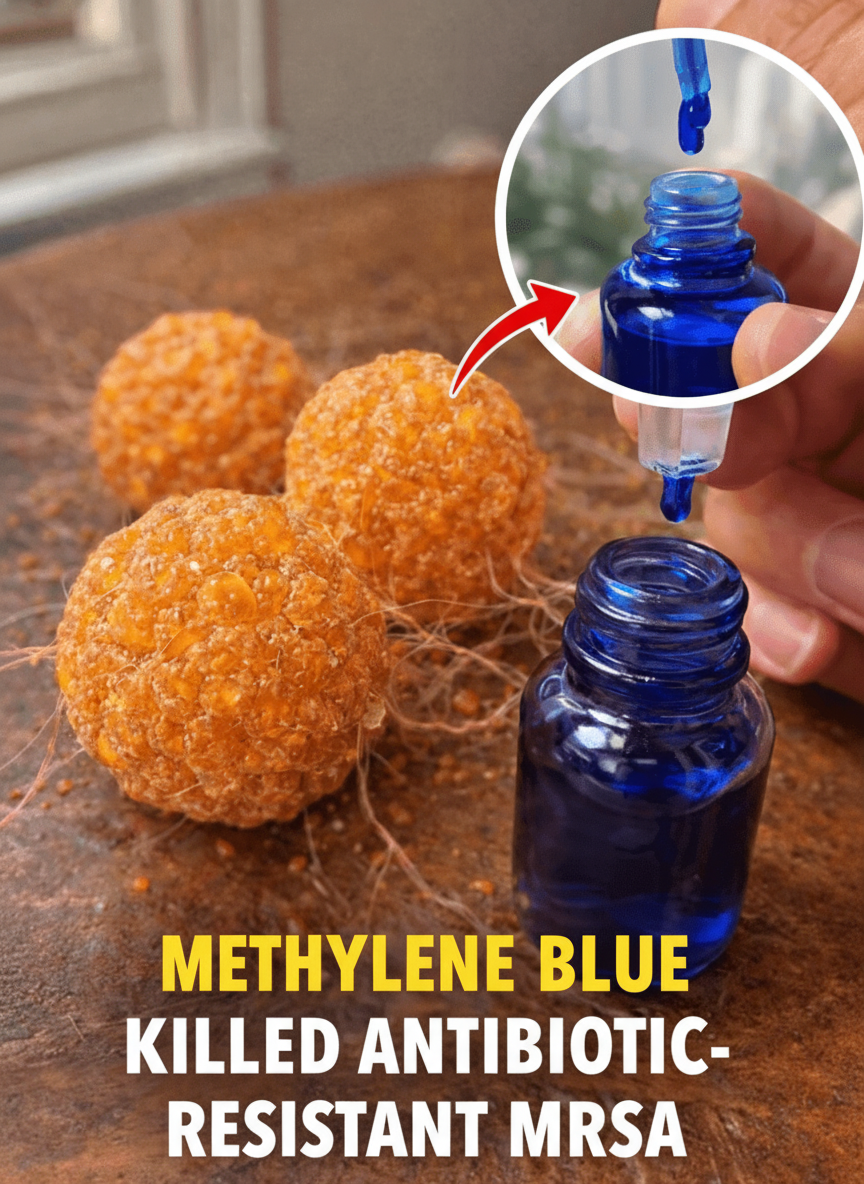
Unpacking Recent Lab Discoveries: Methylene Blue’s Efficacy Against MRSA
A groundbreaking 2024 study, featured in the esteemed journal Pharmaceuticals and titled “In Vitro and Ex Vivo Investigation of the Antibacterial Effects of Methylene Blue against Methicillin-Resistant Staphylococcus aureus,” meticulously explored the antibacterial performance of methylene blue when challenged with 104 distinct clinical isolates of MRSA. The research team employed several established laboratory methodologies to assess its impact:
- Minimum Inhibitory Concentration (MIC) testing: This fundamental assay quantifies the lowest concentration of an antimicrobial agent required to prevent visible bacterial growth. The study revealed MIC values ranging from 16 to 64 µg/mL for the majority of the MRSA isolates tested.
- 24-hour time-kill assays: These experiments meticulously monitored the rate and extent to which methylene blue diminished bacterial populations over a 24-hour period. Notably, the dye exhibited robust, concentration-dependent bactericidal activity—significantly reducing live bacterial counts—at concentrations of 16 µg/mL and above within the specified timeframe.
- Ex vivo experiments on human skin tissue: To bridge the gap between petri dish observations and actual physiological conditions, the researchers conducted tests on excised human skin samples. In this more representative model, methylene blue also demonstrated a significant capacity to reduce MRSA viability.
Furthermore, the investigation delved into the potential for synergistic interactions when methylene blue was combined with specific antibiotics, with some preliminary results suggesting enhanced efficacy when used in tandem. However, it is crucial to underscore that these compelling findings originate from highly controlled laboratory and tissue-based models, and not from direct studies involving living human patients.
From Lab Bench to Bedside: Understanding the Translational Gap in Medical Research
In vitro (meaning “in glass” or test tube) and ex vivo (meaning “outside the living organism,” typically referring to tissue samples) studies serve as indispensable foundational stages in scientific discovery. They are instrumental in pinpointing potential therapeutic avenues and screening for promising compounds, all while mitigating risks to human participants during the initial phases of research. Nevertheless, several critical factors must be considered:
- Bacterial behavior observed in a simplified laboratory dish can vary significantly from their intricate interactions within the multifaceted environment of the human body, which includes a dynamic immune system, complex blood flow, and various physiological barriers.
- An agent that successfully eradicates bacteria in a controlled lab setting might not exhibit the same efficacy, or could potentially induce unforeseen complications or adverse reactions, when administered to human subjects.
- While methylene blue is generally considered safe and well-tolerated for its established medical applications, it does carry a risk of drug interactions, particularly with medications that influence serotonin levels. Furthermore, potential side effects can include nausea, dizziness, and a noticeable discoloration of urine.
For these reasons, researchers are careful to emphasize that while these findings are encouraging, they currently position methylene blue as a compound with potential supportive or adjunctive roles in future treatment strategies, rather than an immediate standalone cure.
The preliminary laboratory findings regarding methylene blue’s direct antibacterial activity against MRSA are undeniably exciting, offering a glimmer of hope in the ongoing battle against antibiotic-resistant infections. This common dye, with its long medical history, could potentially become a valuable tool in our antimicrobial arsenal. However, the journey from promising lab results to approved clinical treatments is long and rigorous, requiring extensive further research, including robust in vivo studies and human clinical trials, to fully ascertain its safety, efficacy, and optimal application in real-world patient scenarios. The scientific community eagerly anticipates these next steps in unlocking methylene blue’s full therapeutic potential.