 By admin
 Unlock More from Your Food: The Science of Nutrient Absorption and Smart Preparation
Do you ever finish a healthy meal only to feel less energized than you expected? It’s a common frustration when you’re diligently choosing nutritious foods, yet sense you’re not reaping their full benefits. The truth is, the way we prepare our ingredients—from a simple chop to a gentle steam—plays a crucial role in how effectively our bodies absorb vital vitamins and minerals. Understanding these subtle yet powerful techniques can revolutionize how your body processes nutrients, turning good food into truly great fuel. Join us as we explore the fascinating science behind food preparation and unlock simple strategies to enhance your nutrient intake.
The Science Behind Nutrient Bioavailability
Beyond flavor, the scientific reality of how you prepare your food directly impacts its nutritional value. This isn’t merely anecdotal; leading institutions, such as the Harvard T.H. Chan School of Public Health, highlight how various cooking methods significantly influence nutrient bioavailability—the extent to which nutrients are available for absorption and utilization by the body. Consider the structural changes heat can induce: it can soften rigid plant cell walls, making their valuable contents more accessible to your digestive enzymes. Conversely, excessive heat can diminish delicate, heat-sensitive vitamins. The challenge lies in finding the optimal balance, a subject we’ll delve into further.
Raw vs. Cooked: Debunking the “Always Better” Myth
A common belief holds that raw foods are inherently superior, primarily due to their preserved natural enzymes and vitamins. While this holds true for certain nutrients, such as the delicate vitamin C found in many fresh fruits, it’s far from a universal truth. The optimal approach often depends on the specific food and nutrient in question.
Consider the humble tomato. Research highlighted in publications like the Journal of Agricultural and Food Chemistry demonstrates that cooking significantly elevates its lycopene content. Lycopene, a potent antioxidant, offers numerous health advantages. While raw tomatoes are excellent in salads, a gentle simmer in a sauce can enhance its absorption by as much as 35%.
Carrots present a similar compelling case. Their beta-carotene, a precursor to vitamin A, becomes substantially more bioavailable once cooked. A study in the American Journal of Clinical Nutrition indicates that methods like steaming or boiling effectively break down the carrot’s fibrous structure, making this crucial nutrient more accessible to your body.
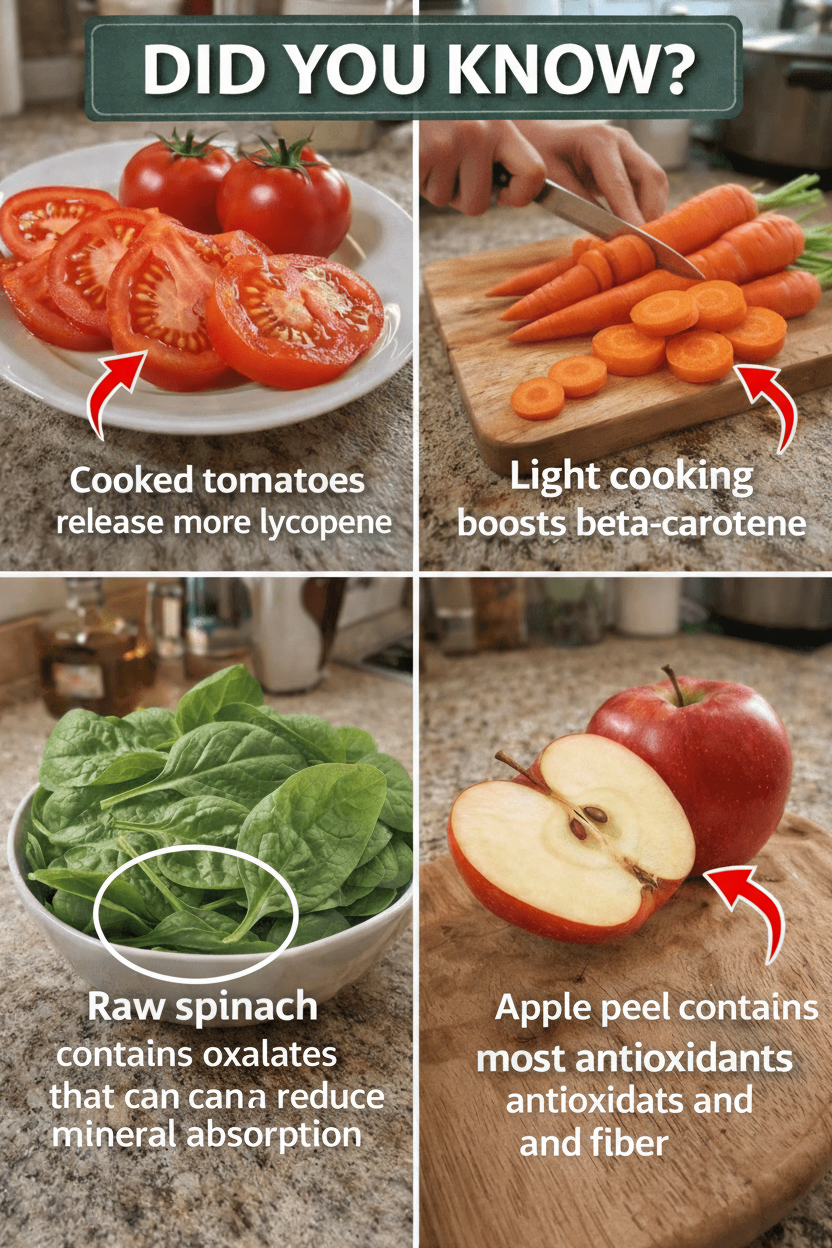
However, the narrative isn’t exclusively pro-cooking. Some nutrients are indeed sensitive to heat. For instance, boiling leafy greens like spinach can lead to a considerable loss of folate. Yet, a brief, light wilting can help preserve more of this essential B vitamin while still making other nutrients, like iron, more available by reducing oxalate content. This underscores the importance of choosing the right preparation technique for each food.
Optimizing Nutrient Uptake: A Food-Specific Guide
To illustrate these principles more concretely, let’s examine how specific food items respond to different preparation methods. The table below highlights key nutrients and how their availability is influenced by whether the food is consumed raw or cooked.
| Food Item | Nutrient Focus | Raw Benefit | Cooked Benefit |
|---|---|---|---|
| Tomatoes | Lycopene | Lower absorption due to cell walls | Heat significantly increases availability (up to 35%) |
| Carrots | Beta-Carotene | Present, but limited by fibrous structure | Steaming or boiling boosts conversion to Vitamin A |
| Spinach | Folate | Higher retention of water-soluble vitamins | Light cooking reduces oxalates, improving iron absorption |
| Eggs | Protein | Digestible, but potential bacterial risk and lower absorption | Cooking dramatically improves protein bioavailability (up to 90%) |
| Broccoli | Sulforaphane | Activated by chopping raw (enzyme release) | Mild steaming enhances enzyme activity for compound formation |
This comparative overview, informed by extensive nutritional research including data from sources like the USDA nutrient database, clearly demonstrates that a blanket preference for raw or cooked is often misplaced. The most beneficial approach involves a thoughtful combination of both.
Beyond vegetables, proteins also exemplify this dynamic. While raw eggs might be tempting in certain dietary trends, cooking them is crucial. Heat denatures egg proteins, making them far more digestible and absorbable. Research, such as that published in the Journal of Nutrition, confirms a substantial increase in protein absorption from cooked eggs compared to raw.
Actionable Strategies for Enhanced Nutrient Absorption
Armed with this knowledge, you can easily integrate smart preparation habits into your daily routine without needing specialized kitchen gear. Here’s a practical guide to help you maximize the nutritional value of your meals:
- Prioritize Fresh, Quality Ingredients: Always begin with the freshest, most vibrant produce available. Wash them thoroughly but gently to prevent the premature loss of delicate water-soluble nutrients.
- Chop and Rest Cruciferous Vegetables: For vegetables like broccoli, cauliflower, or cabbage, chopping them 10-15 minutes before cooking can be highly beneficial. This “rest period” allows enzymes to activate and form potent health-promoting compounds, a phenomenon frequently discussed in cancer research reviews.
- Embrace Gentle Cooking Techniques: Whenever possible, favor steaming over boiling. Steaming significantly reduces the leaching of water-soluble vitamins and minerals. Often, a brief 3-5 minute steam is sufficient to tenderize vegetables while preserving their nutritional integrity.
- Pair Fat-Soluble Vitamins with Healthy Fats: To boost the absorption of fat-soluble vitamins (A, D, E, K) found in foods like carrots, tomatoes, and leafy greens, always include a healthy fat source. A drizzle of olive oil, avocado, or nuts can make a substantial difference, as recommended by dietary guidelines from organizations like the Academy of Nutrition and Dietetics.
- Explore the Power of Fermentation: Incorporate fermented foods into your diet. Transforming cabbage into sauerkraut, for example, not only extends its shelf life but also enhances its digestibility and nutrient content, particularly probiotics and certain B vitamins.