 By admin
 Reclaim Your Comfort: A Gentle 4-Minute Routine for Forward Head Posture After 60
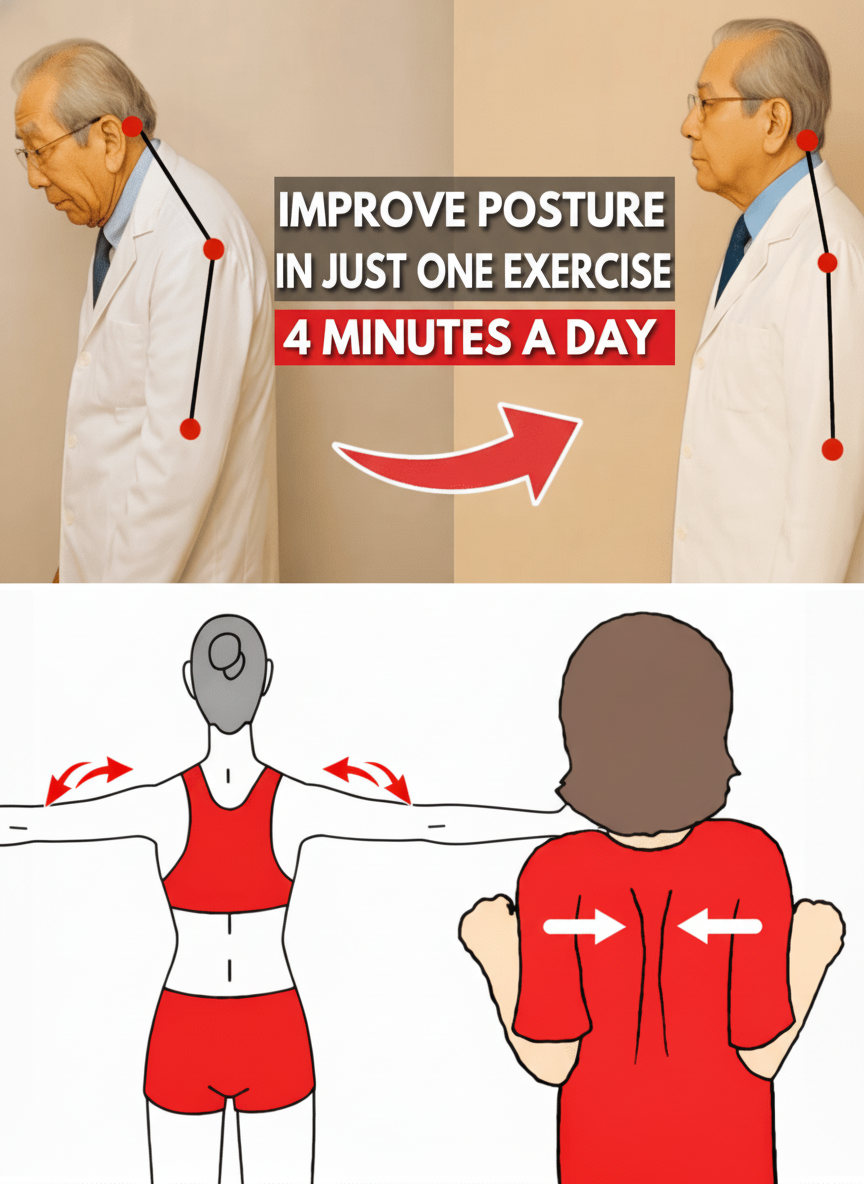
For many adults over 60, forward head posture (FHP) is a silent thief of comfort, bringing persistent neck pain, chronic fatigue, and concerns about balance. This common shift, often a result of years spent looking at screens or performing daily tasks, rounds the shoulders and places extra strain on your neck, making you feel heavier and less steady.
But what if you could gently encourage better alignment in just four minutes a day? Discover a simple, body-friendly routine, endorsed by Japan’s oldest doctor, designed to ease the discomfort of FHP without forcing changes.
Why Forward Head Posture Can Quietly Steal Your Comfort
FHP often develops from prolonged habits like looking down, leading to nagging neck pain and that “heavy, tired” feeling by midday. This increased load on the neck and upper back can even contribute to shallow breathing and ongoing fatigue. Many seniors also report increased unsteadiness, raising quiet concerns about balance and falls. Understanding these impacts is the first step towards gentle support.
The Foundation: A Gentle Approach to Alignment
Experienced senior physicians highlight that FHP isn’t just about muscle weakness; it’s often tied to how the nervous system holds onto old habits. This no-equipment routine uses gentle, rhythmic movements to send reassuring signals, helping your body release tension without triggering more guarding. Focusing on safety and awareness, it aims to ease the stiffness and fatigue associated with FHP. Dedicate just four minutes, ideally in the morning or after sitting, to begin supporting your natural comfort.
🧘 Step 1 – Sensory Neck Warm-Up (60 seconds)
Sit or stand comfortably. Slowly rotate your head side to side, then gently nod and tilt your ear toward your shoulder, moving only where it feels safe and comfortable. This 60-second warm-up helps awaken awareness and softens the protective tightness often accompanying FHP and daily neck pain. Take a deep breath during the last rotation and notice a subtle feeling of lightness.
🧘 Step 2 – Integrated Retraction with Shoulder Blade Squeeze (3 reps)
Clasp your hands behind your back or rest them on your lap. Gently draw your shoulder blades together, then slide your head straight back, keeping your eyes level. Hold for 10–15 seconds, breathing calmly. Repeat three times to engage the deep muscles affected by FHP. This full-body movement supports better posture and eases the rounded-shoulder fatigue, often leaving practitioners feeling taller and more at ease.
🧘 Step 3 – Passive Towel Support (15-20 seconds per hold)
Roll a small towel and place it under the base of your skull while seated. Allow your head to rest back for a soft, natural lengthening. Breathe deeply into your ribs for 15–20 seconds per hold to help decompress areas strained by FHP. This relaxing step supports cervical comfort and can reduce that heavy-headed feeling and fatigue.
🧘 Step 4 – Thoracic Opening (1 minute)
Lie on your back with a rolled towel or cushion placed horizontally under your upper back, arms relaxed to the sides. Breathe deeply and let your chest open naturally. This final minute helps restore mobility restricted by FHP and supports better breathing.