 By admin
 For many grappling with insulin resistance, the journey feels like an uphill battle. Despite rigorous efforts—meticulously tracking carbohydrate intake, counting every calorie, and committing to strenuous workouts—the frustrating reality of persistent weight and debilitating fatigue often remains. This relentless struggle can lead to profound discouragement, leaving individuals questioning their approach even when dedicated to improving their well-being and regaining control.
The complexities of insulin resistance extend far beyond superficial dietary adjustments. A deeper understanding of cellular mechanisms, particularly mitochondrial health, is now revealing why progress has felt so elusive for so long. There’s an emerging perspective poised to redefine our approach, one that begins at the very core of your cells.
🔋 Unveiling the Deeper Connection: Insulin Resistance and Mitochondrial Function
Insulin resistance frequently presents as a stubborn condition, seemingly unresponsive to even the most disciplined dietary regimens. While reducing sugar and calorie intake undeniably offers benefits to many, the fundamental challenge with insulin resistance may actually reside in how effectively your cells generate and utilize energy. This is precisely where the crucial role of mitochondrial health comes into play.
Mitochondria are the vital powerhouses within your cells, responsible for converting nutrients into usable energy. When their function is compromised or declines, insulin resistance can become significantly more challenging to manage, often manifesting as persistent fatigue, unexplained weight gain, and a general lack of vitality. Contemporary research increasingly suggests that nurturing and supporting robust mitochondrial health could be a cornerstone in improving your body’s responsiveness to insulin. Conversely, impaired mitochondrial function means cells struggle to efficiently process glucose, thereby perpetuating a cycle that exacerbates insulin resistance and leaves you feeling chronically low on energy.
⚡ Mitochondria: Beyond Simple Energy Production in Insulin Resistance
Imagine mitochondria as miniature, rechargeable batteries powering every cell in your body, each playing a critical role in navigating the demands of insulin resistance. When mitochondrial health is optimized, they efficiently store and release energy as needed. However, when these cellular batteries weaken or become dysfunctional, glucose accumulates unused within the bloodstream, intensifying insulin resistance and making weight loss feel like an insurmountable task, despite your best efforts.
That pervasive brain fog, the chronic low energy, and the stalled progress that many individuals experience with insulin resistance? These symptoms frequently trace back to mitochondria that are not charging or discharging energy effectively. By actively supporting and enhancing mitochondrial health, cells become more adept at utilizing fuel, potentially alleviating many of the daily struggles intrinsically linked to insulin resistance.
🌡️ The Inflammation Link: Mitochondrial Health and Insulin Resistance
Inflammation establishes a detrimental cycle for anyone contending with insulin resistance. Diets rich in nutrient-poor, highly processed foods and unstable fats can inflict damage upon delicate mitochondrial membranes. This damage leads to energy leakage and an increase in oxidative stress, which in turn escalates systemic inflammation. Elevated inflammation then further impairs cells’ ability to respond appropriately to insulin, worsening the very condition it seeks to alleviate.
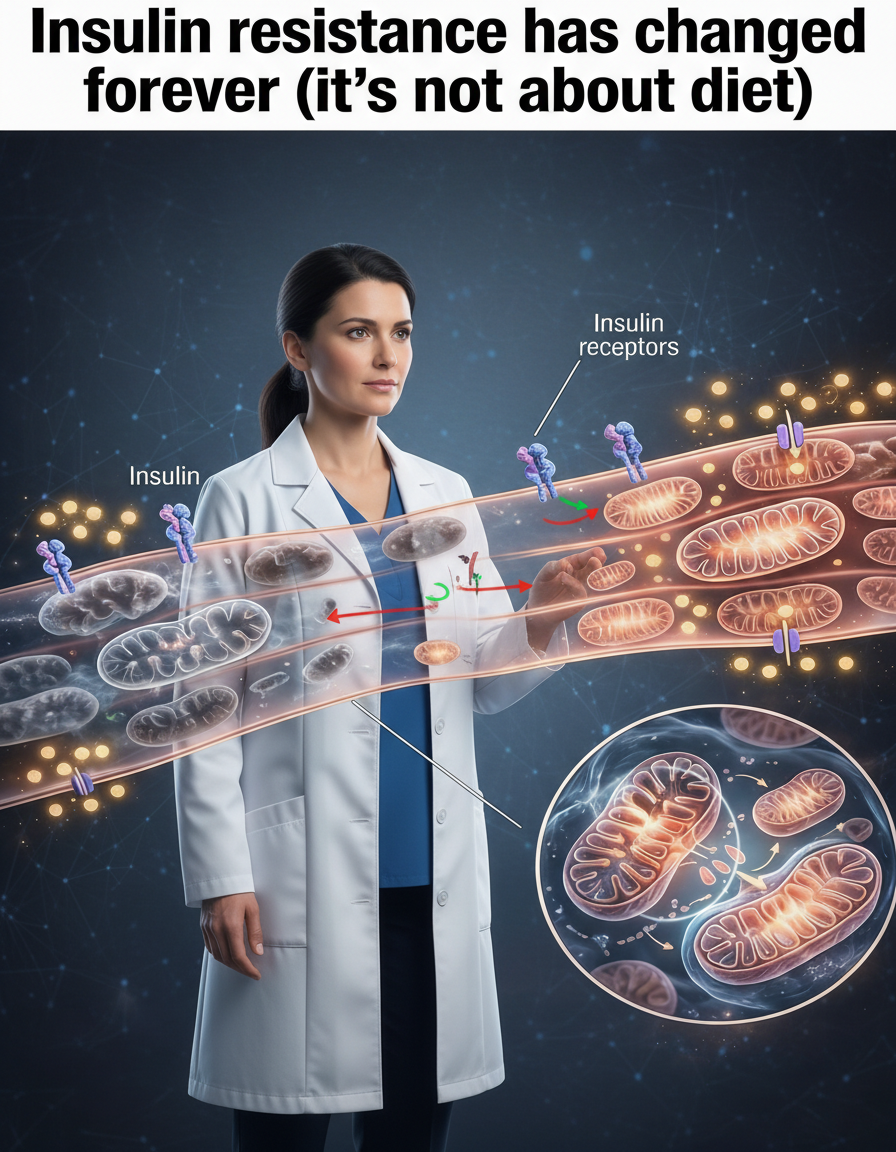
The cumulative result? Heightened fatigue, a sluggish metabolism, and that overwhelming sense of being trapped in the grip of insulin resistance. Breaking this vicious cycle necessitates a proactive approach focused on shielding and restoring mitochondrial health, thereby addressing inflammation at its cellular origin.
🥑 Why Nutrient Quality is Paramount for Mitochondrial Health in Insulin Resistance
When managing insulin resistance, a sole focus on calorie counting often proves insufficient, as the quality of nutrients directly and profoundly impacts mitochondrial health. Essential minerals, antioxidants, and specific types of healthy fats are crucial for maintaining the stability of mitochondrial membranes and ensuring efficient energy production. Without an adequate supply of these vital nutrients, insulin resistance can unfortunately persist, even when adhering to a calorie-restricted diet.
Shifting the emphasis from mere caloric intake to consuming whole, nutrient-dense foods—rather than processed alternatives—provides the necessary nourishment for your mitochondria. This enhanced cellular nutrition helps cells process glucose more effectively, gradually easing some of the burdens associated with insulin resistance over time.
🌟 Emerging Insights: Quantum Processes and Mitochondrial Health
Groundbreaking studies delving into mitochondrial health are uncovering fascinating underlying mechanisms, such as quantum tunneling. This phenomenon involves protons moving with remarkable efficiency to generate cellular energy. Within the context of insulin resistance, disruptions to these intricate quantum processes may contribute to a less efficient utilization of energy at a cellular level. This evolving area of research underscores why a focus on supporting mitochondrial health could offer novel and powerful avenues for understanding and addressing insulin resistance, moving beyond conventional perspectives that solely emphasize diet.
🏃♂️ Practical Strategies for Mitochondrial Renewal and Resilience
One of the most promising avenues for improving mitochondrial health involves encouraging the body to generate new, more efficient mitochondria—a vital biological process known as mitochondrial biogenesis. This renewal can significantly enhance cells’ capacity to manage energy demands, which is particularly beneficial for individuals managing insulin resistance. Here are evidence-based strategies that may promote this crucial mitochondrial renewal and bolster cellular resilience:
- Engage in Regular Exercise: Incorporating consistent physical activity, especially in a fasted state, can stimulate mitochondrial growth and improve their efficiency.
- Practice Intermittent Calorie Restriction: Rather than constant, severe dieting, consider structured periods of calorie reduction.
- Implement Fasting Windows: Experiment with fasting periods of 12–18 hours a few times per week to challenge and optimize mitochondrial function.
- Prioritize Nutrient-Dense Eating: On non-fasting days, focus on consuming whole, unprocessed foods rich in vitamins, minerals, and antioxidants to fuel mitochondrial health.
These strategic “pattern interrupts” provide beneficial challenges to your mitochondria, potentially supporting more efficient energy utilization, enhancing cellular resilience, and offering a potent new approach to combating insulin resistance.