 By admin
 Imagine meticulously brushing, flossing, and rinsing, only to still feel that embarrassing, persistent bad breath lingering. You’ve tried everything, yet the frustrating odor refuses to disappear, leaving you self-conscious and wondering what you’re doing wrong. What if I told you the true culprit might not be your teeth at all, but a tiny, hidden secret lurking in your throat, ready to be unmasked?
What Are Tonsil Stones and Why Do They Form?
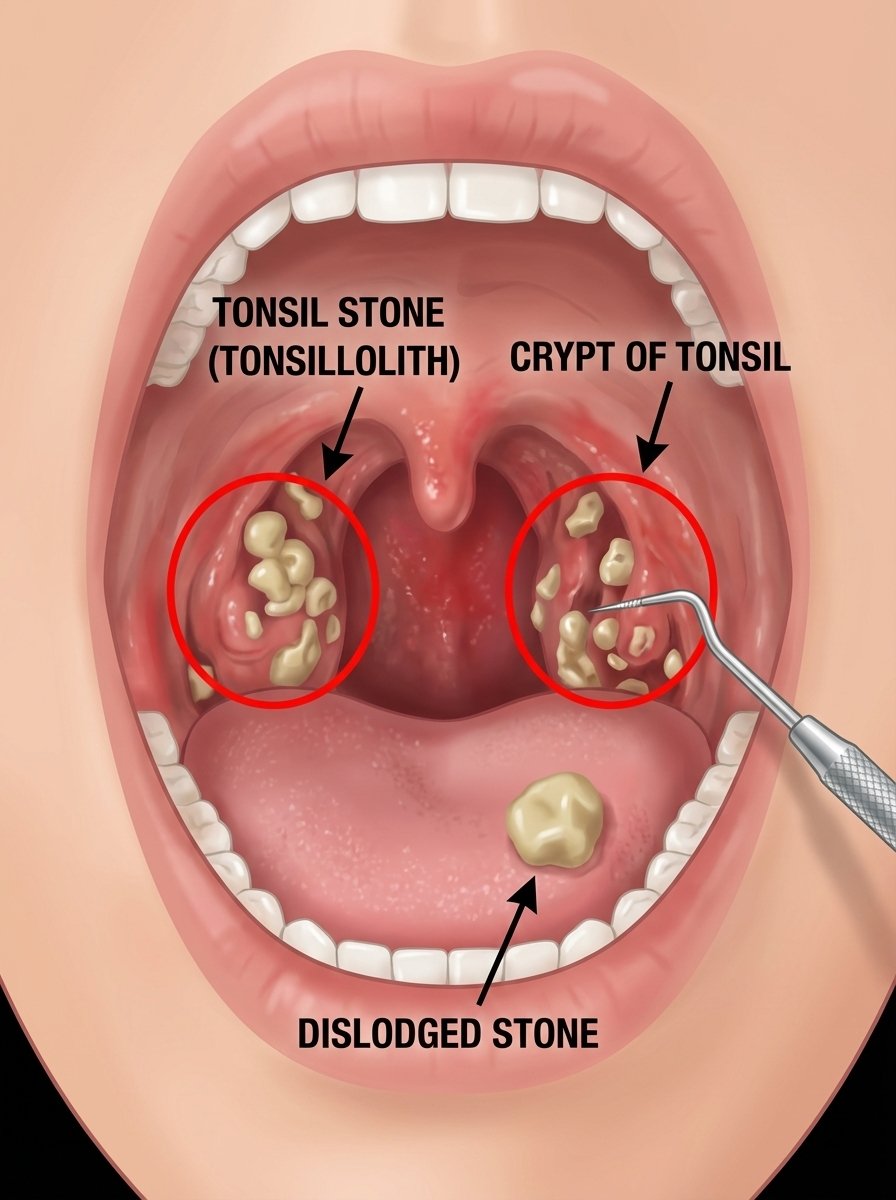
Tonsil stones, medically termed tonsilloliths, are those perplexing small, often white or yellowish, formations that develop within the natural crevices of your tonsils. These tiny pockets, scientifically known as “tonsil crypts,” become unintended traps for various types of debris over an extended period.
So, what exactly accumulates in these crypts to form these mysterious stones? Typically, it’s a mix of several common elements:
• Microscopic food particles from your meals
• Shed dead cells from your mouth and throat lining
• Excess mucus, often from post-nasal drip
• Various types of bacteria naturally present in the oral cavity
But here’s the crucial detail that often goes unnoticed, even by those with excellent oral hygiene…
As this trapped debris remains lodged deep within your tonsil crypts, bacteria begin their natural decomposition process. This bacterial breakdown is what generates volatile sulfur compounds (VSCs) – the potent gases notoriously responsible for that stubborn, often metallic, and truly unpleasant bad breath.
Extensive general medical research consistently identifies these very sulfur compounds as the primary culprits behind chronic, intractable oral odor. This scientific understanding explains precisely why, despite your most diligent brushing and mouthwash routines, the pervasive smell can stubbornly persist.
However, the impact of tonsil stones extends beyond just breath, and there’s another important aspect to consider…
Intriguingly, many individuals remain completely unaware they have tonsil stones until these formations grow sufficiently large to trigger noticeable discomfort or become clearly visible as small spots at the back of the throat.
Common Signs You Might Have Tonsil Stone
You might be confidently thinking to yourself, “Surely, if I had something like that, I would definitely know about it.” However, the reality is often quite different; these tiny invaders are masters of disguise.
Indeed, tonsil stones possess a remarkably sneaky nature. It’s not uncommon for many adults, particularly as they age, to unknowingly harbor these calcified deposits for years, completely oblivious to their presence.
So, how can you tell if these hidden culprits are behind your symptoms? Here are some of the most common indicators that you might be dealing with tonsil stones:
• A persistent, foul breath odor that stubbornly resists improvement, even with diligent brushing and mouthwash.
• That irritating sensation of something perpetually caught or lodged at the back of your throat.
• A subtle, yet noticeable, discomfort or scratchiness experienced during swallowing.
• The appearance of small, distinct white or yellowish spots visible upon inspection of your throat.
• Frequent bouts of coughing or an insistent urge to clear your throat, seemingly without cause.
And here’s an intriguing detail that often surprises people who finally discover they have tonsil stones…
Many individuals affected by tonsil stones frequently report experiencing a peculiar metallic or consistently unpleasant taste lingering in their mouth. This distinct taste is a direct consequence of the ongoing bacterial breakdown of the organic material trapped within the stones.
Furthermore, if you’ve ever experienced the disconcerting event of coughing up a small, surprisingly foul-smelling lump, you’ve likely had a direct encounter with a dislodged tonsil stone.
Why Brushing Alone Doesn’t Fix the Problem
Let’s face a common misconception head-on.
For years, we’ve been diligently taught that consistent brushing and flossing are the ultimate keys to maintaining a truly fresh and healthy mouth. While these practices are undeniably fundamental and critical for oral hygiene, their primary focus remains on cleaning the surfaces of your teeth and the health of your gums.
However, here’s a vital truth that often gets overlooked…
Tonsil stones, by their very nature, originate and develop in the deep, intricate crypts of your tonsils – areas situated far beyond the reach of even the most thorough toothbrush or dental floss.
To clarify this crucial distinction, consider this straightforward comparison:
| Area | What It Affects | Cleaning Method |
|---|---|---|
| Teeth & Gums | Plaque, food debris | Brushing, flossing |
| Tongue | Bacteria coating | Tongue scraping |
| Tonsils | Trapped debris, stones | Specialized cleaning |
This means that even individuals who maintain exemplary dental hygiene can still find themselves quietly developing tonsil stones, often leading to confusion and frustration.
It’s precisely this disconnect that leaves so many feeling utterly confused and deeply frustrated when their persistent bad breath remains a mystery.
Who Is More Likely to Develop Tonsil Stones?
While tonsil stones aren’t a universal experience, specific factors significantly heighten an individual’s susceptibility, with the risk often escalating noticeably as we get older.
You might find yourself at an increased risk of developing these unwelcome formations if any of the following apply to you:
• You naturally possess larger or more numerous tonsil crypts, which are more prone to trapping debris.
• You frequently contend with chronic throat irritations or recurring sinus problems.
• You experience dry mouth, a common condition that tends to become more prevalent in older adults.
• Your daily water intake is insufficient, leading to dehydration.
• Your diet regularly includes significant amounts of dairy products or particularly sticky foods.
It’s also particularly crucial to consider this often-overlooked physiological change…
With advancing age, a natural decrease in saliva production often occurs. Saliva plays an absolutely vital role as the body’s natural cleanser, constantly washing away particles from the mouth and throat. A reduction in this essential fluid directly translates to increased debris accumulation.
Consequently, this diminished salivary flow creates an ideal, hospitable environment for tonsil stones to comfortably take root and develop.
Safe and Gentle Ways to Manage Tonsil Stones at Home
Now, let’s get to the practical solutions you’ve been eagerly anticipating.
The pressing question is: what actionable steps can you genuinely take to address this issue?
The encouraging news is that a significant number of tonsil stone cases can be effectively managed and alleviated through the implementation of straightforward, consistent habits right in the comfort of your own home.
Consider integrating these highly practical and gentle steps into your daily routine to help manage or even prevent tonsil stones:
1. Embrace the Power of Warm Salt Water Gargles
Gargling with warm salt water is an incredibly effective and soothing method. It actively helps to dislodge loose debris from your tonsil crypts and works to maintain a cleaner, healthier throat environment.
Make this a twice-daily ritual, ideally performing it once in the morning and again after your evening meal, or anytime you feel irritation.
2. Prioritize Consistent Hydration
Consuming an adequate amount of water throughout your day is absolutely crucial. Proper hydration not only assists in naturally flushing away microscopic particles from your mouth and throat but also actively supports robust saliva production – your body’s built-in cleansing mechanism.
Instead of large gulps, aim for small, consistent sips of water regularly across your day to keep things flowing.
3. Elevate Your Entire Oral Hygiene Routine
Never consider brushing as the final step in your oral care; it’s just the beginning. To truly combat tonsil stones and enhance your overall oral health, expand your daily habits:
• Incorporate gentle tongue cleaning with a scraper to remove bacterial buildup.
• Opt for an alcohol-free mouthwash to rinse without causing dryness or irritation.
• Make it a habit to rinse your mouth with plain water after every meal or snack to dislodge fresh food particles.
4. Consider Gentle Manual Removal (Only If Clearly Visible)
For those with clearly visible tonsil stones, some individuals find success in carefully dislodging them using a clean cotton swab or a low-pressure oral irrigator.
An extremely important caution: Always proceed with the utmost gentleness to prevent any irritation or damage to your delicate tonsil tissue. If you feel any uncertainty, discomfort, or cannot see the stone clearly, it is always safer to refrain from attempting removal yourself.
5. Explore the Benefits of a Water Flosser
A specialized low-pressure oral irrigator (like a water flosser) can be an excellent tool. When used cautiously, its gentle stream of water can effectively and safely help dislodge trapped debris and even small stones from the tonsil crypts.
Crucial Reminder: While these home remedies are often effective, if you experience persistent, frequent, or particularly uncomfortable tonsil stones, or if they cause significant pain or difficulty swallowing, it is always prudent and highly recommended to consult a qualified healthcare professional for a thorough evaluation and personalized guidance.
Simple Habits That Can Help Prevent Tonsil Stones
It’s a universal truth: proactive prevention consistently outweighs the difficulties of later treatment. Applying this wisdom to tonsil stones can save you significant discomfort.
Here are actionable, simple habits you can seamlessly integrate into your daily life, starting right now, to significantly reduce your risk of developing tonsil stones:
• Commit to drinking sufficient water every single day to keep your mouth and throat moist.
• If you notice a correlation with symptoms, consider moderating your intake of excessive dairy products.
• Adhere rigorously to a comprehensive and consistent oral hygiene routine, including tongue cleaning.
• Be proactive in addressing any developing sinus infections or chronic throat irritations promptly.
• Strictly avoid smoking and limit excessive alcohol consumption, as both can contribute to dry mouth and irritation.
Ultimately, the most profound insight to remember is this…
It’s the consistent application of these seemingly small, daily habits that collectively yields significant, long-lasting improvements and prevention against tonsil stones.
Conclusion
As we’ve uncovered, persistent bad breath is far from being exclusively a symptom of inadequate brushing habits. More often than you’d imagine, its true origin can be found lurking deeper within our bodies, in areas we seldom consider – specifically, your tonsils. Tonsil stones are a surprisingly common occurrence, frequently going undetected for extended periods, yet they possess the power to quietly erode your confidence and diminish your daily comfort.
The truly encouraging revelation here is that armed with this newfound awareness and by integrating a few straightforward, consistent daily care practices, you are fully empowered to effectively manage these formations and substantially reduce their impact on your life.
You now possess the knowledge to identify the “hidden culprit” that countless individuals unknowingly struggle with, giving you a powerful advantage in maintaining lasting fresh breath.
Frequently Asked Questions (FAQ)
1. Are tonsil stones dangerous to my health?
In the vast majority of instances, tonsil stones are considered benign and pose no serious health threat. Their primary impact is typically limited to causing localized discomfort and, notably, persistent bad breath. Nevertheless, if you experience a worsening of symptoms, such as increased pain, significant swelling, or difficulty swallowing, it is always advisable to promptly seek professional medical advice for an accurate assessment.
2. Is it possible for tonsil stones to disappear without intervention?
Indeed, smaller tonsil stones frequently resolve on their own. They can often become naturally dislodged and expelled from the tonsil crypts through everyday actions like coughing, sneezing, or even regular swallowing.
3. When should I consider consulting a doctor about my tonsil stones?
You should absolutely consider seeking professional medical attention if you are experiencing persistent or escalating discomfort, if tonsil stones are forming with alarming frequency, or if you encounter any difficulty or pain when swallowing. A qualified healthcare professional can meticulously evaluate your specific situation, confirm the diagnosis, and recommend the most appropriate course of action, which might include more advanced removal techniques or, in rare cases, tonsillectomy.
Disclaimer
Please note that the content presented in this article is intended strictly for general informational purposes and educational value. It should under no circumstances be considered a substitute for professional medical advice, diagnosis, or treatment from a licensed healthcare provider. Always seek the direct guidance and expert opinion of a qualified medical professional regarding any health concerns or before making any decisions related to your health or treatment.