 By admin
 Guava Leaves for Cavity Care: 3 Natural & Economical Home Remedies
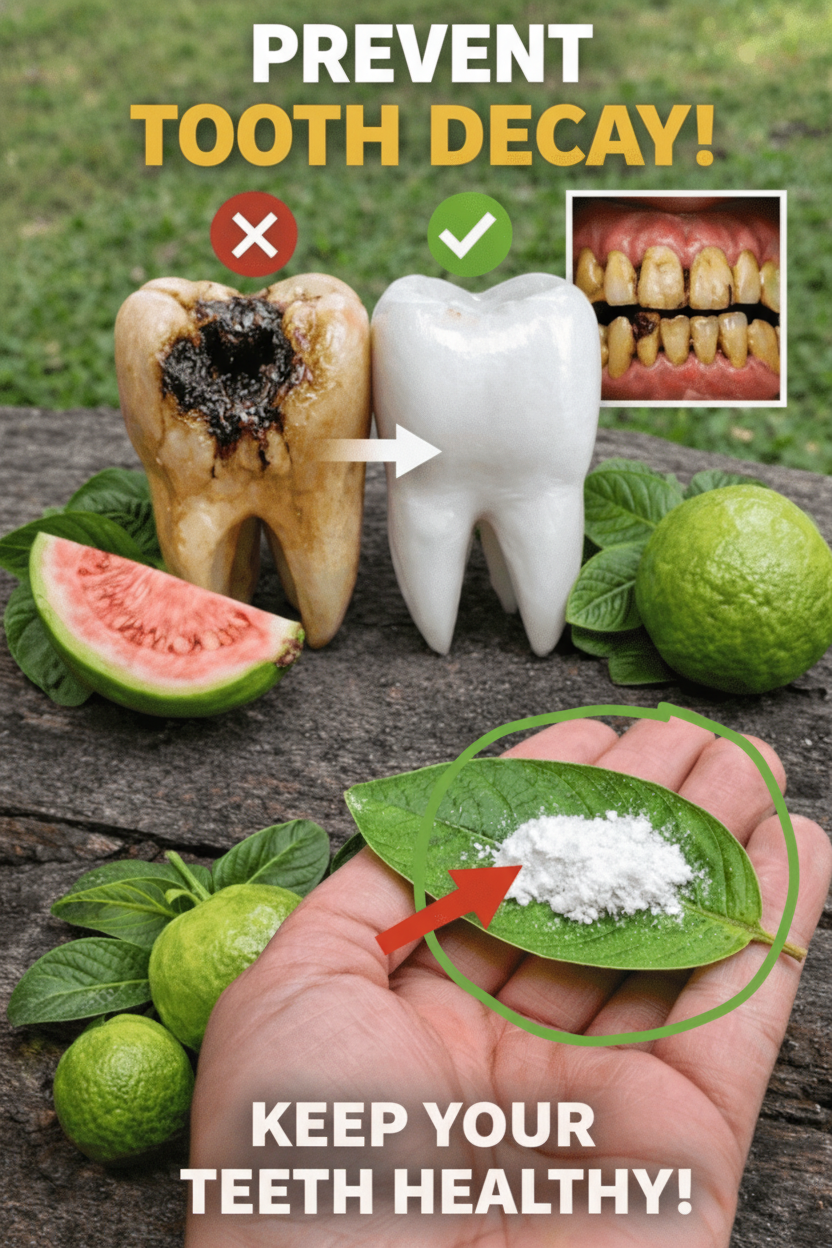
For centuries, in tropical regions spanning Southeast Asia, India, the Caribbean, and parts of Latin America, guava leaves have been revered as a powerful traditional home remedy. They’ve been a go-to solution for common oral ailments like toothache, inflamed gums, and the initial signs of tooth decay. Contemporary scientific research now validates this ancient wisdom, confirming that guava leaves are packed with potent compounds. These include agents with significant antibacterial, anti-inflammatory, and remineralizing capabilities, notably effective against Streptococcus mutans, the primary bacterium responsible for cavities. It’s vital to understand that while guava leaves offer remarkable supportive benefits, they are not a substitute for professional dental care, nor can they reverse advanced cavities or decay requiring fillings or root canals. However, when used regularly and correctly, they can be highly effective in the very early stages of demineralization, such as white-spot lesions, by diminishing bacterial presence, alleviating discomfort, and fostering enamel remineralization. Below, we explore three highly effective, scientifically-backed, and budget-friendly methods for leveraging guava leaves to support your dental health, ordered by their historical use and current research validation.
1. Guava Leaf Mouth Rinse / Gargle (Most Recommended & Fastest Pain Relief)
Why it works
Guava leaves are a treasure trove of beneficial compounds, including quercetin, potent flavonoids, tannins, and essential oils like eugenol. These components collectively exhibit powerful antibacterial properties, particularly against S. mutans and other common oral pathogens. The tannins, in particular, play a crucial role by helping to tighten gum tissue, which can reduce bleeding and inflammation. Furthermore, several small clinical studies conducted between 2015 and 2023 in regions like India and Nigeria have indicated that guava leaf rinses can effectively reduce plaque index, alleviate gingivitis, and significantly lower bacterial counts, sometimes performing comparably to conventional solutions like chlorhexidine.
How to prepare (daily rinse)
- Begin by thoroughly washing 8–12 fresh, young guava leaves. If using dried leaves, 1–2 tablespoons will suffice.
- Boil the leaves in 500–750 ml of water for 8–12 minutes. Alternatively, steep them in hot water for 15–20 minutes.
- Allow the mixture to cool until it reaches a comfortable lukewarm temperature.
- Strain the liquid to remove the leaf particles.
- Use this decoction as a natural mouthwash: swish vigorously around your mouth for 30–60 seconds, gargle, and then spit it out. Do not swallow.
- For optimal results, use 2–3 times daily, ideally after meals and before bedtime.
Realistic results
- Pain Relief & Reduced Sensitivity: Often experienced within 1–3 days of consistent use.
- Less Plaque Buildup & Fresher Breath: Noticeable improvements typically observed within 7–14 days.
- Early White Spots: May stabilize or show slight lightening over a period of 4–8 weeks.
2. Guava Leaf + Salt Paste (Enhanced Antibacterial & Localized Pain Relief)
Why it works
This method combines the osmotic power of salt with the natural antimicrobial properties of guava leaves for a more potent local action. Salt is known for its ability to draw out fluid from inflamed tissues, thereby reducing swelling, and it also possesses inherent antibacterial qualities. When paired with the flavonoid-rich, antimicrobial compounds found in guava leaves, this creates a formidable paste that directly targets cavity-causing bacteria. This combination has been a long-standing traditional remedy in many communities for alleviating toothache and addressing early stages of decay.
How to prepare
- Bring 200 ml of water to a boil with 6–8 fresh guava leaves. Continue boiling until the liquid reduces to approximately 50 ml, forming a strong decoction. Allow it to cool completely.
- Mix 1 teaspoon of the cooled guava leaf decoction with ½ teaspoon of fine sea salt (or regular table salt) to create a thick, consistent paste.
- Using a clean finger or a cotton swab, apply the paste directly onto the affected cavity or painful tooth.
- Leave the paste on for 5–10 minutes, then rinse your mouth gently with water.
- Repeat this application 2–3 times daily, particularly when pain or sensitivity flares up.
Realistic results
- Rapid Pain Relief: Often experienced quickly, typically within 5–30 minutes of application.
- Reduced Swelling/Inflammation: Noticeable decrease in inflammation around the affected tooth within 2–5 days.
- Optimal for: Early-stage cavities or sensitivity due to exposed dentin.
3. Guava Leaf + Clove Oil Spot Treatment (Most Potent for Acute Pain & Cavities)
Why it works
This powerful combination leverages the renowned properties of clove oil with the synergistic effects of guava leaf. Clove oil, particularly its active component eugenol, is widely recognized in dentistry as one of nature’s most potent local anesthetics and antibacterials. When integrated with a concentrated guava leaf decoction, the guava extract not only enhances the penetration of the clove oil but also contributes its own robust antimicrobial capabilities, resulting in a highly effective treatment for severe tooth pain and bacterial reduction.
How to prepare
- Prepare a strong guava leaf decoction following the same method as described for the mouth rinse (Method 1), ensuring it is concentrated. Allow it to cool.
- Combine 1 teaspoon of the cooled decoction with 1–2 drops of pure clove essential oil.
- Dip a clean cotton swab into the mixture and apply it directly to the cavity or the acutely painful area.
- Hold the swab in place for 2–5 minutes. Afterwards, spit out any excess liquid and rinse your mouth gently.
- This treatment can be applied 2–3 times daily, especially during intense pain flare-ups.
Realistic results
- Immediate Pain Relief: Often achieved within minutes, thanks to clove’s powerful numbing effect.
- Reduced Bacterial Activity & Inflammation: Significant improvements typically observed within 3–7 days.
- Highly Effective for: Exposed nerves or deeper cavities, offering substantial relief until professional dental consultation can be sought.
Realistic Expectations & Timeline for Guava Leaf Remedies
- Days 1–3: Expect noticeable pain relief, particularly with the addition of clove oil. You may also experience fresher breath and reduced tooth sensitivity.
- Days 7–14: A decrease in the overall bacterial load in the mouth, leading to calmer gums. Early white spots on enamel may begin to stabilize.
- Weeks 4–8: A healthier oral environment is fostered, potentially slowing the progression of very early-stage cavities.
- Long-term Consistent Use: Contributes to improved gum health, reduced plaque buildup, and a decrease in the frequency of toothaches.
What Guava Leaf Remedies Do NOT Do
While highly beneficial, it’s crucial to have realistic expectations. Guava leaf preparations are supportive remedies and:
- Cannot fill or reverse deep, established cavities. These require professional dental intervention.
- Do not replace essential oral hygiene practices such as fluoride toothpaste, regular professional dental cleanings, or dental fillings.
- Are not a cure for advanced tooth decay, dental abscesses, or severe infections. Seek immediate professional dental care for these conditions.
- May not work equally for everyone. Effectiveness can vary depending on the individual’s oral health status and the specific stage of the cavity.
Safety Notes & Important Warnings
Guava leaves are generally considered safe for consumption and topical use in typical herbal amounts for most individuals. However, please observe the following important cautions:
- Patch Test: Before using any guava leaf preparation in your mouth, apply a small amount of the diluted decoction to a discreet area on your inner arm. Wait 24 hours to check for any rare allergic reactions.
- Do NOT Swallow Large Amounts: Ingesting excessive quantities of guava leaf preparations can lead to mild stomach upset.
- Clove Oil Caution: Never apply pure, undiluted clove essential oil directly to your mouth or skin, as it can cause burns and irritation to mucous membranes. Always dilute it as instructed.