 By admin
 Have you ever wondered about the scientific marvel that allows researchers to swiftly and precisely replicate millions of copies of DNA? Many find it challenging to grasp the intricate mechanisms behind contemporary genetic breakthroughs, from early disease detection to advanced personalized health insights. For decades, this complexity hindered progress in biology and medicine, making discoveries slower and less dependable. But what if a humble microbe, thriving in a scorching hot spring, held the ultimate key to unlocking these monumental advancements?
In this comprehensive article, we will delve into the astonishing journey of Thermus aquaticus and uncover how its discovery irrevocably altered the landscape of genetic research. Stay with us until the very end to discover the most astonishing aspect: how pure scientific curiosity paved the way for one of the greatest leaps in modern science.
An Unforeseen Expedition in Yellowstone National Park
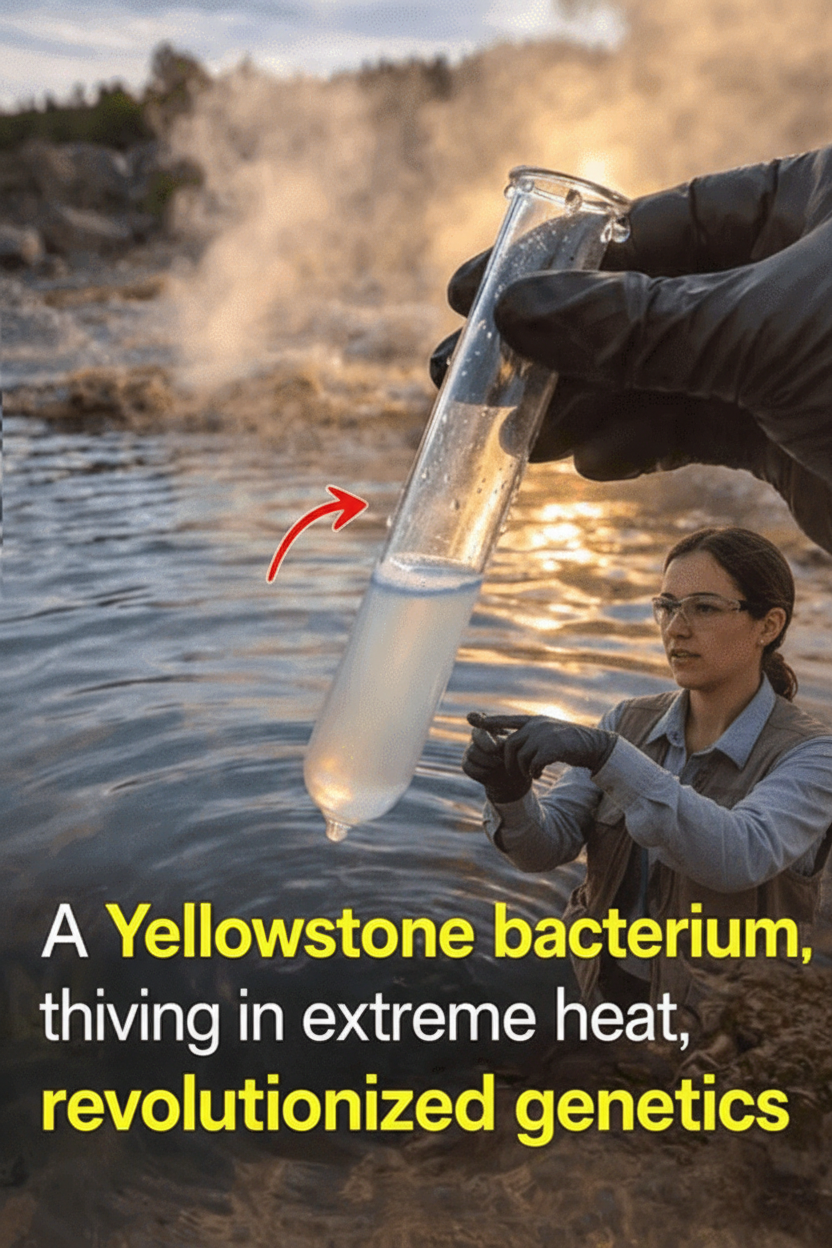
The year was 1966 when Hudson Freeze, then a young student, joined forces with acclaimed microbiologist Thomas Brock. Their mission: to explore the renowned hot springs of Yellowstone National Park. Their fundamental inquiry was straightforward yet profound: could any form of life persist in water hot enough to boil? Day after day, their expedition involved trekking through the park, navigating around curious wildlife, and meticulously collecting samples from steaming geysers and pools. One location, in particular, captured their attention: Mushroom Spring, nestled within the Lower Geyser Basin. There, amidst vibrant yellow microbial mats, they unearthed a peculiar bacterium flourishing in temperatures ranging from 70-80°C (158-176°F). This remarkably resilient microorganism was christened Thermus aquaticus, or simply “Taq” for brevity. Initially, this appeared to be just another intriguing find from Earth’s extreme environments. However, the true significance of this discovery was about to unfold…
The Critical Importance of Heat-Stable Enzymes
Before Taq’s emergence, the majority of known enzymes used in laboratory settings would degrade under high temperatures. This presented a significant hurdle for DNA replication, as scientists were forced to painstakingly add fresh enzymes after each heating cycle, drastically slowing down the entire process. The breakthrough arrived when researchers successfully isolated enzymes from T. aquaticus. The undisputed star among them was Taq polymerase—a specialized enzyme essential for building new DNA strands, which astonishingly remained active and stable even at temperatures between 80-95°C. This unprecedented heat stability was nothing short of a paradigm shift in molecular biology. Yet, its full potential was still to be realized…
The Genesis of PCR: An Unanticipated Scientific Revolution
The 1980s witnessed a pivotal moment when biochemist Kary Mullis conceived a groundbreaking method for rapidly amplifying DNA. His innovative idea hinged on finding an enzyme capable of enduring repeated heating and cooling cycles without breaking down. His search led him directly to Taq polymerase, derived from those very Yellowstone samples. Mullis ingeniously utilized this enzyme to develop the Polymerase Chain Reaction (PCR)—a remarkably straightforward procedure that can generate millions of copies of specific DNA segments within a test tube. What began as a simple act of curiosity in a thermally active spring ultimately evolved into a fundamental pillar of contemporary science. Extensive studies and reports from authoritative sources like the National Park Service and various scientific journals underscore how PCR, empowered by Taq, has profoundly transformed fields far beyond anything Brock and Freeze could have ever envisioned.
PCR’s Enduring Impact on Our Modern World
PCR is far more than just laboratory jargon; it underpins countless daily advancements in genetics and health research. Here are some critical areas where it has made an indelible mark:
- Genetic Testing and Research: Facilitates the detailed examination of genes, providing crucial insights into inherited traits, predispositions, and genetic variations.
- Forensic Science: Enables precise DNA fingerprinting, allowing investigators to identify individuals from even minuscule biological samples at crime scenes.
- Pathogen Detection: Crucial for the rapid and accurate identification of viruses, bacteria, and other pathogens in clinical and environmental samples, aiding in disease control.
- Medical Advancements: Supports vital procedures such as organ donor matching, accurate paternity testing, and extensive genetic studies that contribute to personalized medicine and therapeutic development.
Without the remarkable stability of Taq polymerase, these intricate processes would undoubtedly remain agonizingly slow and severely constrained. Research consistently demonstrates that PCR has dramatically accelerated biological discoveries, leading to quicker and more profound insights into human health and disease. But the inspiring lessons from this story extend even further…
Profound Lessons from Curiosity-Driven Scientific Exploration
This remarkable journey powerfully illustrates how the pursuit of the unknown can yield unforeseen and invaluable rewards. Brock and Freeze were not driven by the pursuit of a major invention; their motivation was pure curiosity about life forms thriving in extreme environmental conditions. Their pioneering work serves as a powerful reminder that:
- Fundamental, basic research frequently delivers the most significant breakthroughs and applications, often many years down the line.
- The extreme environments of nature often harbor unique biological solutions to complex human challenges.
- Collaborative efforts among students, professors, and field researchers are essential catalysts for scientific progress.
Numerous experts emphasize that Yellowstone’s unparalleled natural environment continues to inspire ongoing studies into extremophiles—organisms specifically adapted to flourish in harsh, unconventional settings.
Practical Steps to Deepen Your Understanding
Eager to delve further into this captivating scientific narrative? Here are some straightforward ways you can explore this topic today:
- Consult Original Research Papers: Seek out Brock and Freeze’s seminal 1969 publication on Thermus aquaticus. These are typically accessible through academic databases or in summarized forms online.
- Explore Yellowstone’s Resources: Visit the National Park Service website for informative articles about thermophiles, hot springs, and the park’s unique biodiversity.
- Watch Educational Documentaries: Search for documentaries covering the history of PCR or the fascinating world of extremophiles. Many reputable science channels offer free content on platforms like YouTube.
- Support Basic Scientific Research: Consider supporting organizations and institutions dedicated to fundamental scientific inquiry, which often leads to unexpected and transformative discoveries.