 By admin
 Freezing Bread at Home: The Overlooked Mistake Inviting Mold
Picture this: You reach into the freezer for that loaf of bread you diligently saved weeks ago. After thawing, however, you’re greeted by an unwelcome sight – strange spots, or perhaps a faint, musty odor. This common scenario often leaves people feeling frustrated, believing that freezing bread guarantees its pristine condition indefinitely. The uncomfortable truth is that while freezing significantly slows spoilage, it doesn’t halt it entirely. And if your bread was already past its prime before freezing, invisible mold spores can still make an unwelcome comeback.
The good news? A few simple adjustments to your freezing habits can dramatically reduce this risk. The most critical insight, often overlooked, lies in understanding what truly happens when bread meets the freezer.
Why Freezing Isn’t a Mold-Proof Shield
Many households freeze bread under the assumption it completely prevents spoilage. This belief is understandable, but food science tells a slightly different story. Freezing temperatures effectively slow down the growth of microorganisms, including mold. However, they do not destroy mold spores that are already present on the bread’s surface or within its structure. Instead, these spores enter a dormant state, essentially ‘hibernating’ in the cold.
Research in food safety consistently demonstrates that mold spores are resilient survivors; they simply become inactive until warmer conditions return. This means the real secret to safe frozen bread isn’t just the freezing itself, but the condition of the bread before it ever enters the freezer.
The Critical Factor: What Happens Before Freezing
If bread sits on your counter for several days, tiny mold spores may have already begun to colonize it, even if they’re invisible to the naked eye. When you freeze this aging bread, you’re essentially pressing pause on these dormant spores. Once the bread thaws, these spores reactivate, leading to visible mold or off-odors shortly after. This is the key idea many people miss:
Freezing preserves the current condition of the bread; it does not improve it.
Spotting the Early Warning Signs of Aging Bread
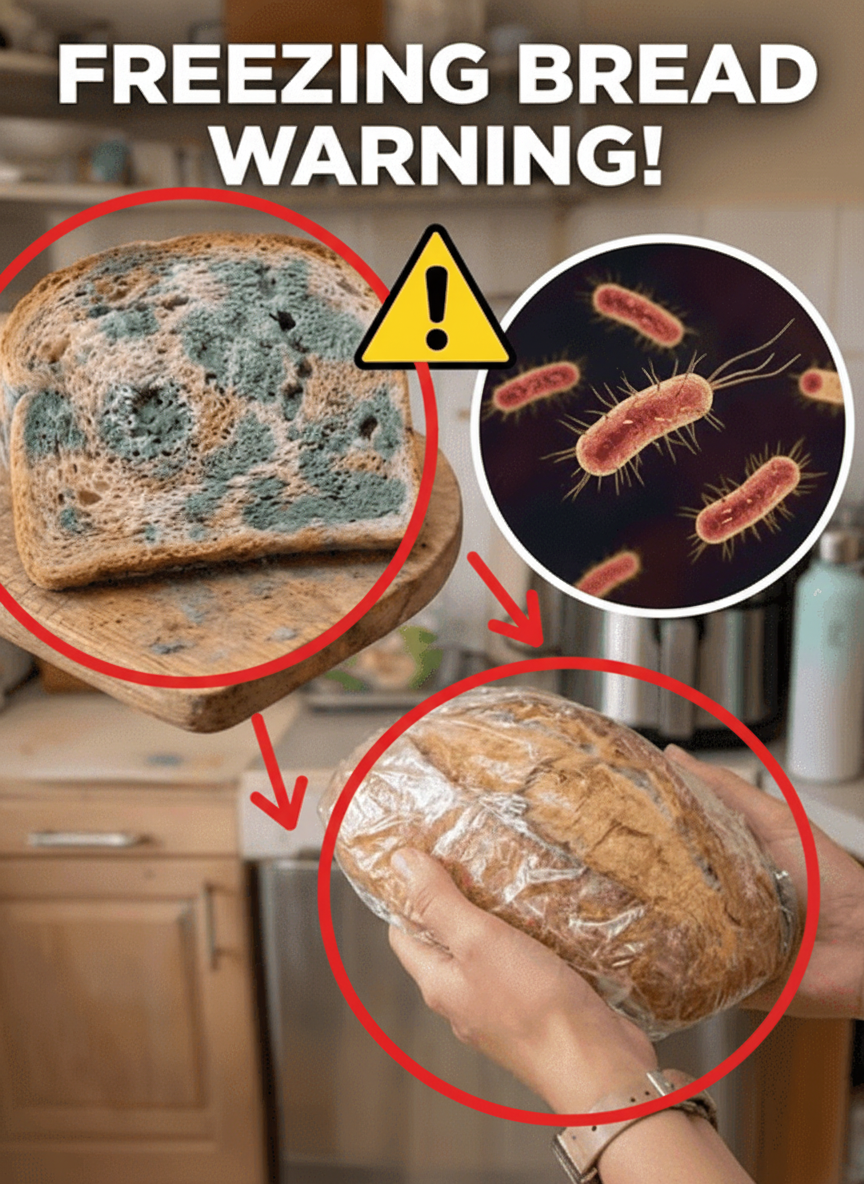
Don’t wait for visible mold to appear. Pay attention to these subtle clues that your bread might already be aging:
- The soft texture of the bread becoming slightly sticky.
- A faint sour or musty smell, even before visible signs.
- Tiny, discolored dots on the crust or edges.
- Condensation forming inside the bread bag.
These small changes often precede the formation of visible mold. Unfortunately, many people decide to freeze bread only when they realize it’s about to expire. At this point, freezing becomes far less effective at preventing future mold growth.
Common Freezing Mistakes That Encourage Mold Growth
Let’s address everyday habits that quietly increase the likelihood of mold returning after thawing:
- Freezing Bread Too Late: This is the most frequent error. If bread is frozen only when it’s nearing its expiry date, it likely already harbors microscopic mold spores.
- Poor Sealing or Packaging: Loosely wrapped bread allows air and moisture to infiltrate. This creates condensation during freezing and thawing, an ideal breeding ground for mold.
- Repeated Thawing and Refreezing: Taking a whole loaf out, letting it thaw, and then refreezing unused portions introduces moisture and significant temperature fluctuations. This cycle actively encourages microbial activity.
- Storing Bread Near Strong Odors or Contaminants: Bread readily absorbs smells. Storing it near strong-smelling foods or raw ingredients can introduce additional moisture or potential cross-contamination.
The Smarter Way to Freeze Bread at Home
Implementing these simple steps can help you store bread more safely and conveniently, ensuring fresher results:
- Freeze Bread While It’s Still Fresh: Ideally, freeze bread within the first 24 hours of purchase or baking. This locks in its peak freshness before any spoilage begins.
- Slice the Bread First: Freezing individual slices instead of an entire loaf allows you to remove only what you need. This prevents the repeated thawing and refreezing of the whole loaf.
- Use Airtight Freezer Packaging: Opt for thick, heavy-duty freezer bags or rigid, sealed containers. Crucially, remove as much air as possible before sealing to minimize moisture build-up.
- Label with the Freezing Date: Bread maintains its best quality in the freezer for about one to three months. Labeling helps you keep track and avoid forgotten food that sits too long.
- Thaw Properly: Instead of leaving bread exposed on the counter for hours, try these safer methods:
- Toast individual slices directly from frozen.
- Warm them briefly in a preheated oven (or microwave for a quick thaw).
- For whole loaves, transfer to the refrigerator to thaw overnight, or allow a brief thaw at room temperature just until slices can be separated.
By understanding that freezing is a pause, not a permanent stop, and by adopting these simple habits, you can enjoy fresh-tasting bread from your freezer without the unwelcome surprise of mold.