 By admin
 Fatty Liver Disease: 17 Critical Symptoms You Need to Know
Many of us experience unexplained fatigue or vague discomforts, often dismissing them as stress or a demanding lifestyle. Yet, these subtle signals could be your body’s way of alerting you to a silent, progressive condition: fatty liver disease, medically known as steatosis. When excess fat accumulates in liver cells, it can go unnoticed for years, slowly impacting this vital organ. Recognizing the signs early is crucial, as steatosis often progresses quietly until more advanced stages. Here are 17 critical symptoms that demand your attention.
What is Fatty Liver Disease (Steatosis)?
Steatosis occurs when too much fat builds up in your liver cells. According to health experts like the Mayo Clinic and Cleveland Clinic, it frequently starts without any obvious warning signs and is often discovered incidentally during routine check-ups. While lifestyle factors such as diet and weight are common contributors, the condition can remain dormant for years before symptoms become noticeable or severe.
Early Warning Signs Often Overlooked
In its initial stages, fatty liver disease can be subtle, mimicking everyday ailments. Watch for these common early indicators:
- Persistent fatigue that isn’t relieved by rest
- A dull ache or feeling of fullness in the upper right abdomen
- General malaise or a pervasive feeling of being “unwell”
- Reduced appetite leading to unintentional weight changes
- Mild nausea, especially after meals
Visible Changes and Advanced Indicators
As steatosis progresses, your body may start to show more distinct signs, particularly on your skin and in other bodily functions. These can indicate a more significant impact on liver health:
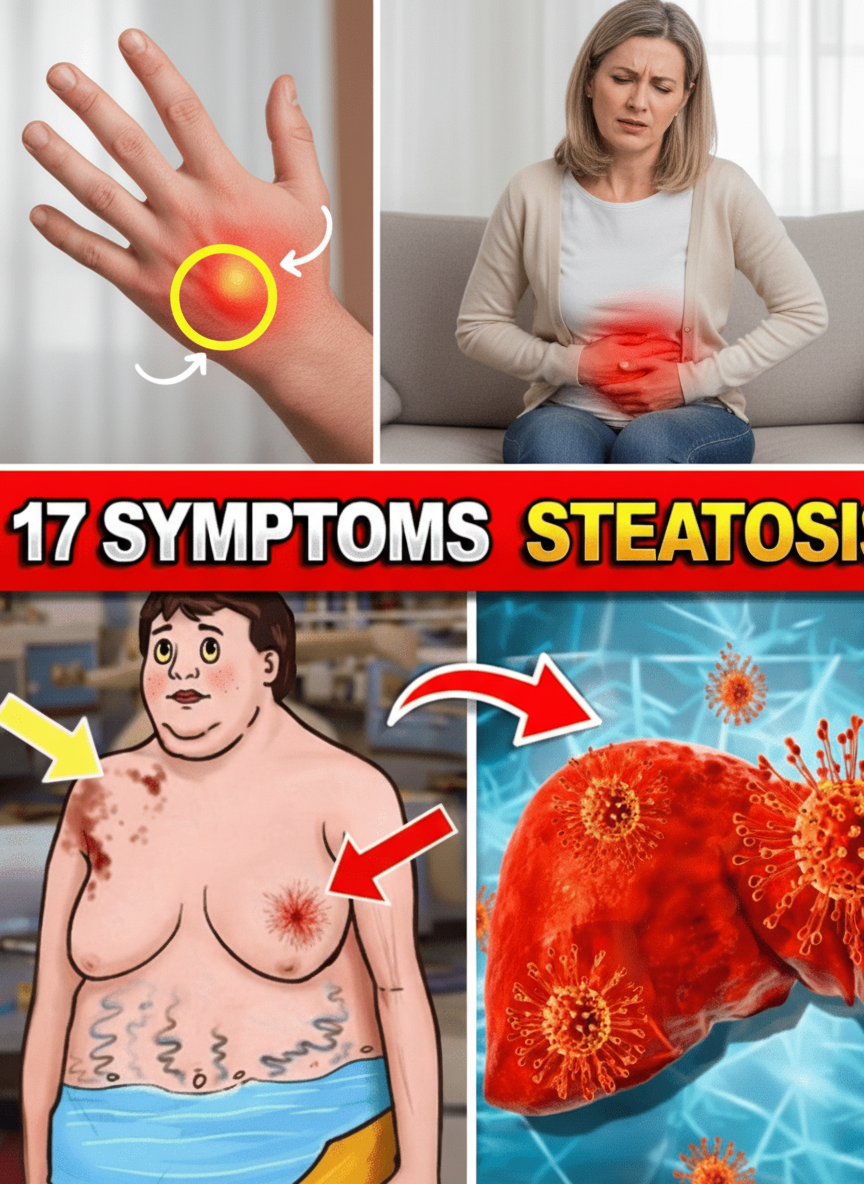
- Unexplained itchy skin that comes and goes
- Yellowish tint to the skin or whites of the eyes (jaundice)
- Spider-like small blood vessels (spider angiomas) visible under the skin, often on the chest or face
- Reddened palms that may feel unusually warm
- Dark patches or discoloration on the neck, armpits, or chest area (acanthosis nigricans)
- Easy bruising, even from minor bumps or pressure
- Swelling in the abdomen (ascites)
- Swollen legs or ankles, often worsening by evening
- Dark-colored urine, even when well hydrated
- Pale or clay-colored stools
- Shortness of breath with mild physical activity
- Muscle weakness, making tasks like climbing stairs feel harder
The 17 Critical Symptoms: A Comprehensive List
Drawing insights from leading medical institutions, here is a consolidated list of the 17 symptoms and signs commonly associated with fatty liver disease and its potential progression. Remember, not everyone experiences all of them, and early stages may only present a few.
- Chronic fatigue
- Upper right abdominal discomfort
- General malaise
- Loss of appetite
- Nausea
- Unexplained weight loss
- Itchy skin
- Jaundice (yellowing of skin/eyes)
- Abdominal swelling (ascites)
- Leg and ankle swelling
- Spider angiomas on skin
- Red palms
- Easy bruising
- Dark urine
- Pale stools
- Shortness of breath
- Muscle weakness
Actionable Steps for Liver Health
Taking proactive steps can significantly support your liver health and potentially slow or reverse the progression of fatty liver disease. Consider these daily habits:
- Maintain a symptom journal to track energy levels and any discomforts.
- Prioritize balanced meals rich in vegetables, fruits, and lean proteins.
- Stay adequately hydrated and limit sugary drinks and processed foods.
- Engage in at least 30 minutes of moderate physical activity most days.
- Schedule a medical check-up if you notice several symptoms appearing together or persisting.
Why Early Awareness Matters
The insidious nature of fatty liver disease means it often remains undiagnosed until complications arise. Early detection through symptom awareness and timely consultation with healthcare providers offers the best opportunity for intervention and management. By recognizing these patterns, you empower yourself to take control of your health and protect your liver.