 By admin
 Across the globe, countless women endure a silent struggle against chronic pelvic pain, abnormally heavy menstrual bleeding, and debilitating fatigue that profoundly impacts their daily existence. Too often, these persistent symptoms are dismissed as mere ‘normal’ period discomfort. This pervasive suffering frequently results in lost productivity, strained personal connections, emotional exhaustion, and years of feeling overlooked or misunderstood by healthcare providers. A significant source of this distress stems from the lingering stigma and insufficient public awareness surrounding the condition, preventing many from seeking crucial answers earlier and allowing symptoms to escalate over time. However, acquiring a comprehensive understanding of endometriosis can be a transformative step towards reclaiming control. This article aims to shed light on this complex condition and will later explore encouraging lifestyle strategies that many women find invaluable for navigating its daily challenges.
What Is Endometriosis?
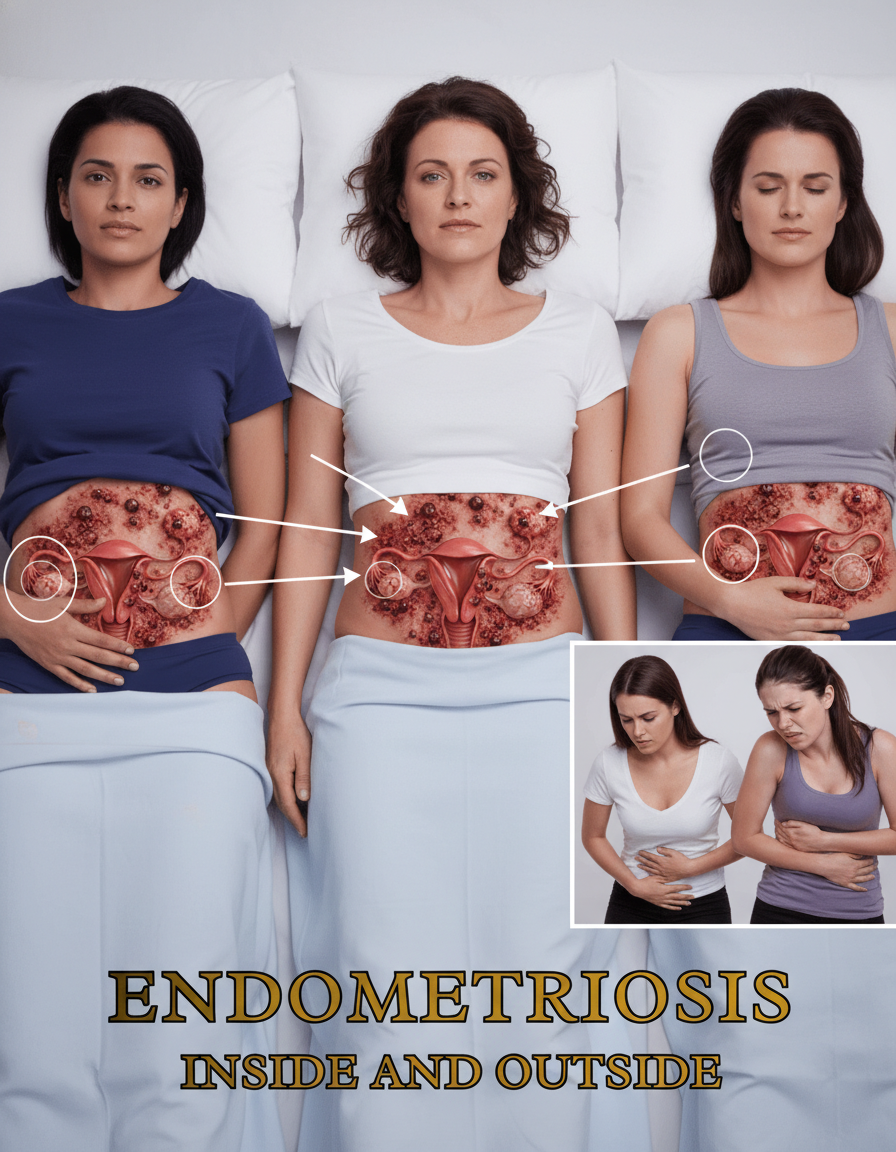
Endometriosis is a chronic, often painful, condition characterized by the growth of tissue resembling the uterine lining (endometrium) outside the uterus. This ectopic tissue commonly adheres to organs within the pelvic region, such as the ovaries, fallopian tubes, and the outer surface of the uterus, though it can occasionally be found in more distant parts of the body. Throughout the menstrual cycle, this misplaced endometrial-like tissue behaves similarly to the normal uterine lining: it thickens, breaks down, and bleeds in response to hormonal fluctuations. Crucially, unlike menstrual blood that exits the body, this blood becomes trapped, leading to inflammation, irritation, the development of fibrous scar tissue (known as adhesions), and the formation of cysts on the ovaries, specifically called endometriomas. According to estimates from the World Health Organization, endometriosis impacts approximately 10% of women of reproductive age worldwide, affecting an estimated 190 million individuals globally. Its repercussions extend far beyond physical discomfort, significantly influencing emotional health, career performance, and interpersonal relationships. Yet, understanding its symptoms is only part of the journey…
Common Symptoms of Endometriosis
While pain often stands out as the hallmark symptom of endometriosis, its manifestation can vary significantly from one individual to another. Many describe it as far more intense and unyielding than typical menstrual cramps. Below are some of the most frequently reported indicators:
- Excruciating Menstrual Cramps (Dysmenorrhea): Pain that commences days before menstruation and extends long after the period concludes.
- Chronic Pelvic and Lower Back Pain: Persistent discomfort in the pelvic region or lower back that endures throughout the entire month, not solely during the menstrual cycle.
- Painful Intercourse (Dyspareunia): Experiencing deep pain during or after sexual activity.
- Abnormal Bleeding: Abnormally heavy menstrual flow (menorrhagia) or unpredictable spotting and bleeding between periods.
- Fertility Difficulties: Significant challenges with conception, often leading to infertility concerns.
- Gastrointestinal Disturbances: Symptoms such as abdominal bloating, constipation, or diarrhea, frequently worsening around menstruation.
- Profound Fatigue: Persistent exhaustion, significantly reduced energy levels, and sometimes cyclical nausea.
The complexity arises because these symptoms frequently mimic those of other conditions, including Irritable Bowel Syndrome (IBS) or Pelvic Inflammatory Disease (PID). Research indicates a troubling average diagnostic delay of 7 to 10 years, and sometimes even longer, from symptom onset to receiving an official diagnosis. This prolonged wait subjects countless women to years of unexplained and untreated suffering. But what exactly contributes to this enigmatic condition?
What Causes Endometriosis?
The exact etiology of endometriosis remains an active area of scientific investigation, yet several prominent theories help explain its development. Key contributing factors and leading hypotheses include:
- Retrograde Menstruation: This theory suggests that instead of exiting the body, menstrual blood containing endometrial cells flows backward through the fallopian tubes and into the pelvic cavity. While this phenomenon occurs in many women, only a subset develops endometriosis, indicating other factors are at play.
- Genetic Predisposition: A family history of endometriosis, particularly in a mother or sister, significantly increases an individual’s risk, pointing to a strong genetic component.
- Immune System Dysfunction: It’s hypothesized that an impaired immune system may fail to recognize and eliminate endometrial-like tissue growing outside the uterus.
- Hormonal Influences: Estrogen is known to fuel the growth and maintenance of endometrial tissue, both inside and outside the uterus, suggesting a pivotal role for hormonal balance.
Crucially, it is vital to understand that endometriosis is not a consequence of personal lifestyle choices, nor can it be entirely prevented through daily habits alone. It is a complex, multifactorial condition primarily driven by intricate biological and physiological mechanisms.
How Is Endometriosis Diagnosed?
Diagnosing endometriosis presents a significant challenge due to the non-specific nature of its symptoms, which often overlap with other gynecological or gastrointestinal conditions. Healthcare professionals typically initiate the diagnostic process with:
- Thorough Medical History: A comprehensive review of your personal medical history, family health background, and a detailed discussion of your symptom patterns.
- Pelvic Examination: A physical examination to check for any tenderness, nodules, or abnormalities in the pelvic area.
- Imaging Studies: Non-invasive tests such as transvaginal ultrasound or Magnetic Resonance Imaging (MRI) may be employed to identify potential lesions, cysts (endometriomas), or other structural changes indicative of endometriosis.
Historically, the definitive diagnosis of endometriosis has often relied on laparoscopy, a minimally invasive surgical procedure. During a laparoscopy, a surgeon makes a small incision, typically near the navel, and inserts a thin, lighted instrument (laparoscope) to visualize the pelvic organs directly and, if necessary, take tissue samples (biopsies) for laboratory confirmation. However, ongoing advancements in imaging technologies are progressively enhancing the reliability of non-surgical diagnostic methods in specific scenarios, holding the promise of a quicker and less invasive route to understanding and addressing your symptoms.