 By admin
 Eggshell & Coffee Teeth Whitening: Unpacking the Viral Trend, Its Promises, and Crucial Dental Risks
Many of us cherish our morning coffee ritual, but the joy often comes with a subtle price: persistent yellow stains on our teeth. The quest for a brighter smile without harsh chemicals has led to a fascinating online phenomenon: the ‘eggshell and coffee’ teeth whitening paste. This article dives deep into this viral DIY dental hack, exploring its widespread appeal, the science (or lack thereof), and crucially, the often-overlooked risks that could impact your long-term oral health.
Understanding the Viral Eggshell & Coffee Whitening Trend
Social media platforms are awash with captivating videos showcasing dramatic before-and-after transformations using surprisingly simple ingredients. The ‘eggshell + coffee’ teeth whitening paste refers to a homemade concoction, with finely ground eggshells taking center stage. Proponents claim this mixture can effectively erase the unsightly stains left by coffee and other common beverages. Eggshells, primarily composed of calcium carbonate (a key mineral also found in tooth enamel), are pulverized into a fine powder and then blended with other natural components to form a paste applied directly to teeth.
The visual demonstrations are compelling: creators often first discolor eggshells with coffee to simulate stained teeth, then apply their homemade paste to reveal a noticeably lighter surface within minutes. While visually impressive, it’s vital to remember that a real tooth’s complex structure differs significantly from a simple eggshell.
Preliminary dental research has indeed explored calcium-based compounds, like those derived from eggshells, for their potential role in supporting enamel health and addressing issues such as dentin hypersensitivity by potentially sealing exposed tubules. For instance, a study published in the Journal of Clinical and Experimental Dentistry examined eggshell-derived materials for dentin hypersensitivity, noting potential benefits. However, these studies do not directly endorse eggshell paste as a method for whitening coffee stains. The allure of this trend largely stems from its perceived simplicity, natural origins, and the eco-friendly idea of repurposing kitchen waste.
The Battle Against Coffee Stains: How They Form
For countless coffee aficionados, the daily ritual brings comfort, but persistent exposure often leads to visible tooth discoloration. The primary culprits are tannins, natural plant compounds abundant in coffee, tea, and red wine, which readily bind to tooth enamel, resulting in extrinsic surface stains. The American Dental Association (ADA) consistently identifies such beverages as leading contributors to aesthetic tooth concerns.
Furthermore, acidic drinks can temporarily lower the mouth’s pH, making enamel more porous and thus more susceptible to staining. Over time, this cumulative effect can diminish the natural brightness of your smile, potentially affecting self-confidence. The viral eggshell paste attempts to counteract this by leveraging the mild abrasive quality of powdered eggshells to mechanically scrub away these surface discolorations. While captivating demonstrations show rapid stain removal on inanimate eggshells, applying abrasive substances to living tooth enamel demands a much higher degree of caution. Aggressive or improper application could inflict more harm than good.
On a positive note, the use of eggshells aligns with sustainability efforts, as they are biodegradable and abundant kitchen waste. Yet, it’s crucial to understand that not all natural remedies are inherently risk-free.
Decoding the “Science” of Eggshells for Teeth
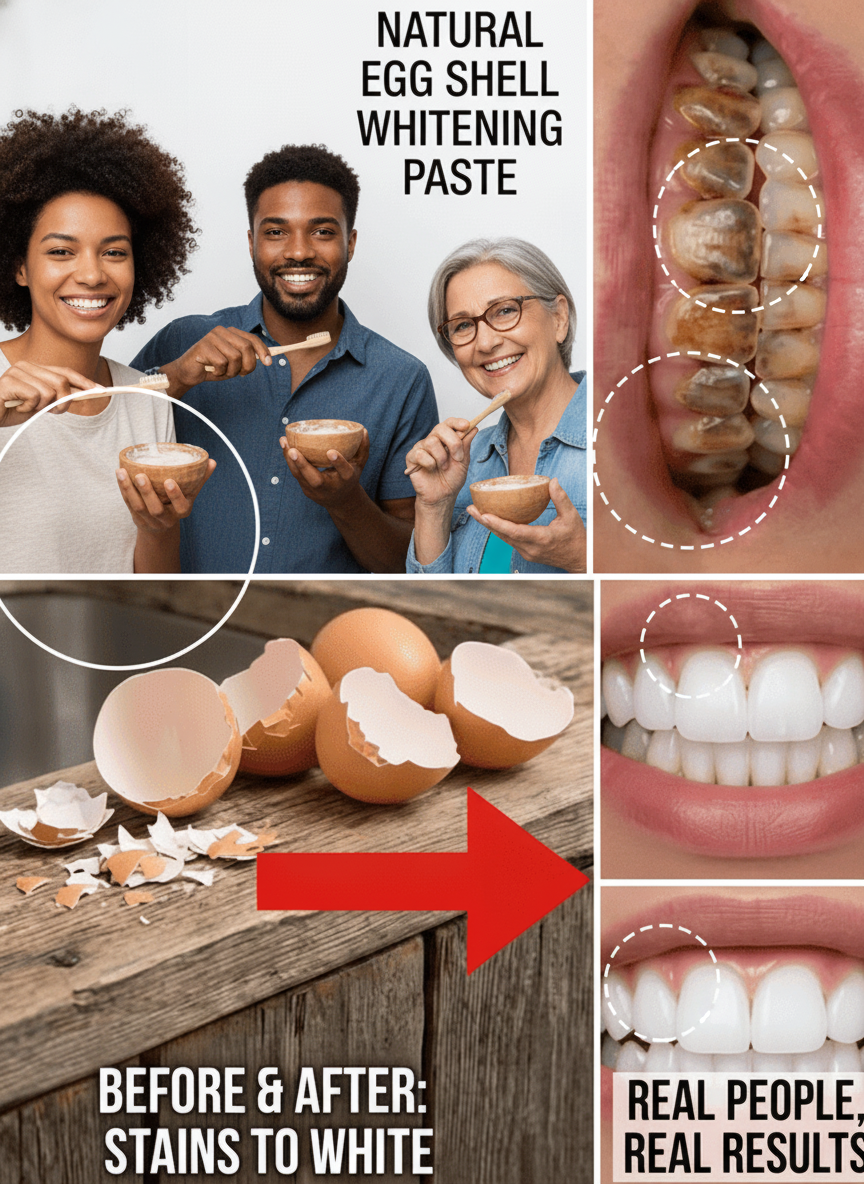
Comprising approximately 95% calcium carbonate, eggshells share a fundamental mineral component with human tooth enamel. When meticulously ground into a fine powder, this substance can theoretically act as a gentle abrasive, capable of polishing away superficial stains from sources like coffee. Academic research, including studies from institutions like the University of Massachusetts Lowell, has investigated eggshell-derived materials for applications in bone and tooth regeneration, highlighting their biocompatibility and potential for supporting tissue growth through remineralization.
Another publication in Materials Science and Engineering explored eggshell-based toothpastes for managing dentin hypersensitivity, suggesting a role in blocking exposed dentin tubules. However, it’s crucial to distinguish these findings from direct evidence supporting eggshells as an effective or safe teeth whitening agent for coffee stains. Most claims regarding eggshell paste for whitening remain largely anecdotal.
In contrast, baking soda, a common ingredient often combined with eggshells in DIY recipes, has been more extensively researched. A comprehensive meta-analysis published in the Journal of the American Dental Association affirmed baking soda’s efficacy in removing surface stains without causing excessive abrasion when used appropriately and in professionally formulated products. This distinction underscores the importance of evidence-based practices in dental care.
The Overlooked Risks: What Viral Videos Don’t Tell You
While the allure of a natural, DIY teeth whitening solution is strong, relying solely on unverified home remedies like the eggshell and coffee paste carries significant, often unmentioned, risks to your dental health. Before attempting this viral trend, consider these critical concerns:
- Enamel Erosion and Damage: Despite being rich in calcium carbonate, improperly ground eggshells can be highly abrasive. Particles that are not sufficiently fine can act like sandpaper, potentially scratching and eroding the delicate enamel surface. This damage is irreversible and can lead to permanent tooth sensitivity and increased susceptibility to decay.
- Increased Tooth Sensitivity: When enamel is worn away, the underlying dentin, which contains thousands of microscopic tubules leading to the tooth’s nerve, becomes exposed. This exposure can result in acute sensitivity to hot, cold, sweet, or acidic foods and drinks.
- Ineffective Whitening for Intrinsic Stains: The eggshell paste, at best, might only remove superficial extrinsic stains. It cannot penetrate the tooth structure to address intrinsic discoloration (stains within the tooth itself), which often requires professional bleaching agents.
- Risk of Microbial Contamination: Eggshells are not sterile and can harbor bacteria, including Salmonella. Introducing these contaminants into your mouth, especially if there are any small cuts or gum irritations, poses a risk of oral infection.
- Lack of Regulation and Consistency: Unlike commercially available dental products that undergo rigorous testing and regulation, homemade pastes lack standardized formulations or quality control. The particle size of eggshells, the ratio of ingredients, and the method of application can vary wildly, leading to unpredictable and potentially harmful outcomes.
- Delaying Professional Dental Care: Relying on unproven home remedies might deter individuals from seeking professional dental advice for persistent stains or underlying oral health issues. A dentist can accurately diagnose the cause of discoloration and recommend safe, effective, and tailored whitening treatments.
Conclusion
The viral eggshell and coffee teeth whitening paste presents an appealing, natural-sounding solution to common coffee stains. While the idea of repurposing kitchen waste for a brighter smile is captivating, the scientific evidence supporting its efficacy for whitening is largely anecdotal, and the potential risks to your dental health are substantial and often understated. From the irreversible damage of enamel erosion to the risk of oral infections, the downsides far outweigh the unproven benefits.
For a truly brighter, healthier smile, always prioritize evidence-based dental care. Consulting with a dental professional is the safest and most effective way to address tooth discoloration, ensuring you receive personalized advice and treatments that protect your long-term oral health.
”
}
“`