 By admin
 Early Breast Changes: 10 Signs Women Should Never Overlook
Many women vividly recall the moment they first notice something amiss with their breasts – perhaps a subtle swelling near the armpit, a peculiar redness, or a breast that suddenly feels different. Initially, these changes might seem insignificant, easy to dismiss. Yet, the truth is that some of the most crucial early body signals are often quiet, subtle, and easily overlooked. Understanding what to watch for can significantly impact how quickly one seeks medical advice, making a powerful difference in health outcomes.
1. A New Lump or Thickened Area in the Breast
A lump is one of the most recognized early warning signs. However, it’s vital to know that not all lumps feel like a distinct, round marble. Some may present as thickened tissue, a general firmness, or a patch that feels distinctly different from the surrounding areas. These changes can vary in size, shape, and texture – some may be hard, others softer or irregular. Key characteristics to observe include:
- A lump that does not move easily when pressed.
- A thickened area that feels different from nearby tissue.
- A lump or thickening that persists after your menstrual cycle.
Important note: Many breast lumps are benign, often caused by cysts or hormonal fluctuations. Nevertheless, any persistent or new change warrants prompt evaluation by a healthcare professional.
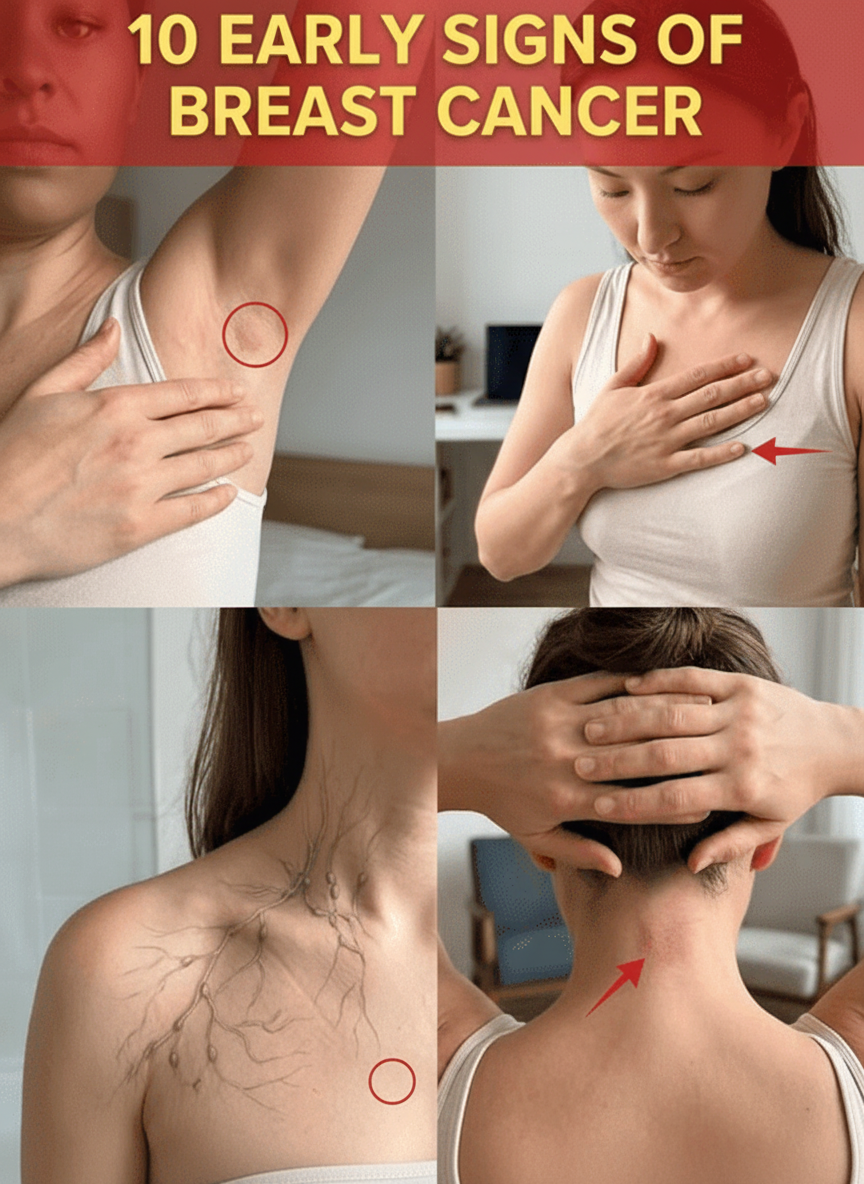
2. Swelling or Lumps in the Armpit
The breasts and armpits are intimately connected through a network of lymph nodes. Sometimes, swelling in the armpit (known as axillary lymph nodes) can appear even before a noticeable lump forms in the breast itself. This swelling might feel like:
- Small, rounded nodes under the skin.
- Tender or painless bumps.
- Persistent fullness in the armpit area.
While lymph nodes can enlarge due to various reasons, including infection, persistent swelling that does not resolve should always be medically investigated.
3. Unusual, Persistent Breast Pain
Breast tenderness is common during hormonal changes. However, persistent pain that feels distinctly different from typical cycle-related discomfort deserves close attention. Signs that should prompt concern include:
- Pain localized to one specific spot.
- Pain that seems unrelated to your menstrual cycle.
- Discomfort that lasts for several weeks or more.
Though most breast pain is not linked to cancer, any unusual or ongoing pain should be discussed with a healthcare provider.
4. Redness, Rash, or Skin Irritation on the Breast
Changes on the breast skin can sometimes signal underlying issues. Redness, a rash-like irritation, or warmth on the breast might resemble common skin inflammation. Be vigilant for symptoms such as:
- Persistent redness that doesn’t fade.
- Thickened skin in the affected area.
- Skin that feels unusually warm or swollen.
Conditions like mastitis (a breast infection) can cause similar symptoms. However, if redness persists, spreads, or is accompanied by other changes, medical advice is strongly recommended.
5. Changes in Breast Shape or Size
It’s natural for women to have slight differences between their breasts. However, a sudden or noticeable alteration in shape or size can be a significant indicator. Possible warning signs include:
- One breast becoming visibly larger or more swollen.
- Noticeable changes in the breast’s contour or roundness.
- Unexpected firmness or hardness developing in one specific area.
These changes can occur slowly, making them easy to overlook, which underscores the importance of regular self-awareness.
6. Skin Dimpling or Puckering (Peau d’Orange)
Sometimes, the skin on the breast may develop small indentations or dimples, giving it a texture similar to an orange peel. Medically, this is known as “peau d’orange.” Signs to watch for include:
- Small, visible indentations in the skin.
- An uneven or pitted surface texture.
- Areas of skin tightening or puckering.
These changes often occur when deeper tissue alterations affect the skin’s structure and appearance.
7. Nipple Changes or Inversion
While some women naturally have inverted nipples, a sudden change where a nipple turns inward, flattens, or changes position should never be ignored. Other concerning nipple changes include:
- A nipple that suddenly flattens.
- A nipple that begins pulling inward (retraction).
- Persistent crusting, scaling, or itching around the nipple area.
These changes can be signals of underlying tissue alterations.
8. Unusual Nipple Discharge
Fluid leaking from the nipple spontaneously – meaning without squeezing or stimulation – can sometimes indicate a medical concern. Nipple discharge may appear in various forms:
- Clear or watery.
- Yellow or milky.
- Bloody or dark.
While many causes of nipple discharge are benign, any spontaneous discharge, especially if bloody or from a single duct, should always be evaluated by a healthcare professional.
9. Persistent Breast Skin Thickening
Beyond general irritation or redness, sometimes the skin over a specific area of the breast may feel distinctly thicker or firmer than the surrounding tissue. This change might be subtle at first but persists over time. It’s important to differentiate this from general swelling or irritation. If you notice a localized area of skin that feels persistently thicker or tougher to the touch, it should be examined.
10. Unexplained Warmth, Swelling, or Heaviness of One Breast
This sign is distinct from localized redness or irritation and often involves a more generalized change across one entire breast. It might feel:
- Unusually warm to the touch.
- Noticeably swollen or enlarged compared to the other breast.
- Heavier than usual, sometimes without a clear lump.
These symptoms, particularly if they develop rapidly, can be indicators of inflammatory breast cancer, a less common but aggressive form of the disease, and require immediate medical attention.
”
}
“`