 By admin
 What Is That White String in an Egg …Here’s Why It’s Actually a Good Sign
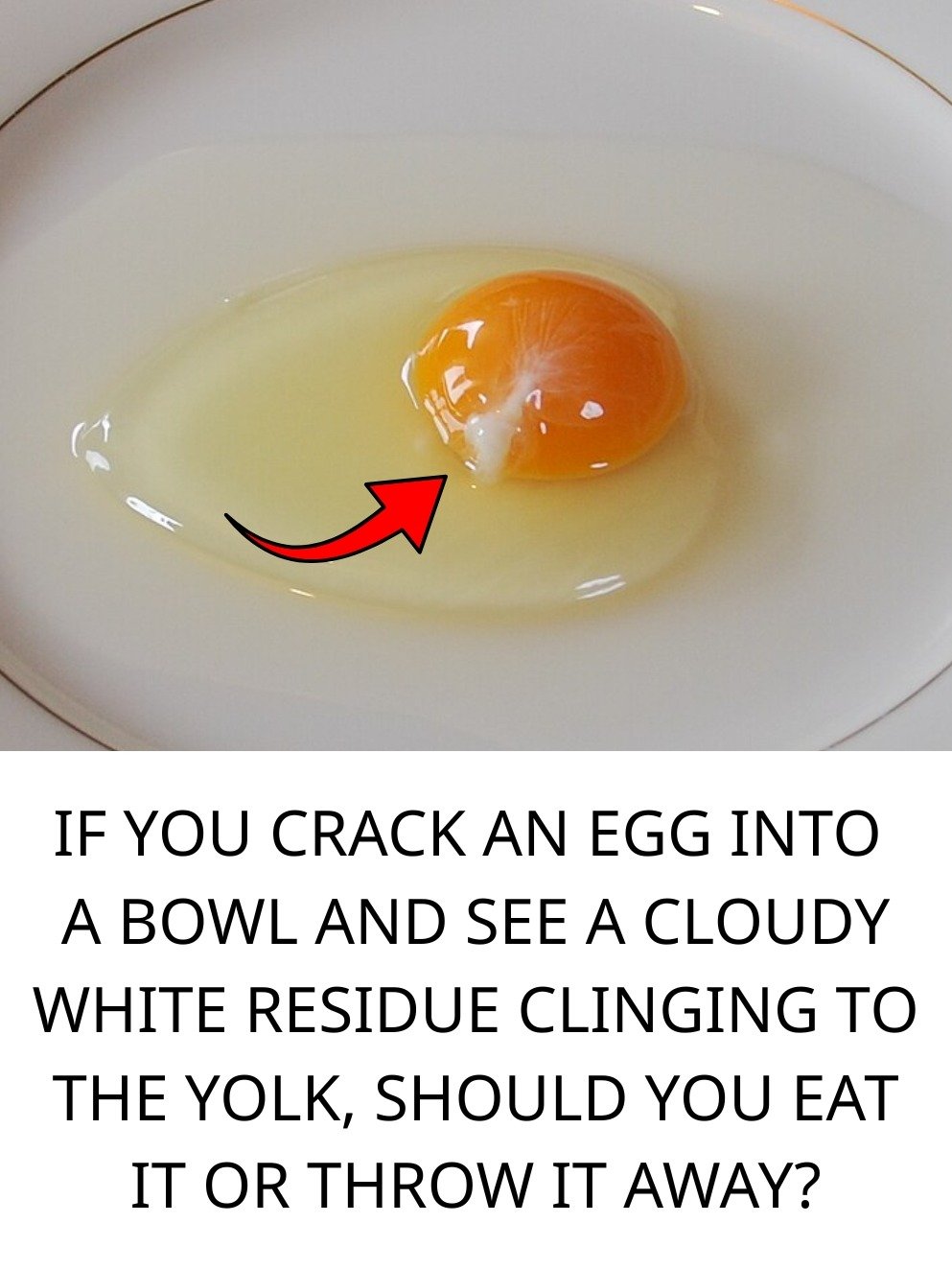
Ever cracked open an egg only to find a mysterious white, string-like strand clinging to the yolk, making you wonder if your egg has gone bad? You’re not alone! Many home cooks instinctively eye this anomaly with suspicion, often assuming it’s a defect or a sign of spoilage and promptly removing it. But here’s the surprising truth: far from being a flaw, this little string is actually a perfectly normal, entirely harmless, and often highly desirable indicator of how fresh your egg truly is.
Meet the Chalaza: The Egg’s Natural Stabilizer
This intriguing white string has a name: it’s called the chalaza (pronounced kuh-LAY-zuh). This isn’t some foreign object; it’s a completely natural protein structure, an integral part of the egg’s internal architecture. Its primary function is quite remarkable: it acts as a natural anchor, diligently holding the yolk securely in the center of the egg white. Picture it as the egg’s very own shock absorber, preventing the delicate yolk from colliding with the shell and sustaining damage as the egg is moved or stored. While most eggs are equipped with two chalazae—one on either side of the yolk—it’s common to only clearly observe one when you crack the shell open.
What the Chalaza Says About Freshness
Believe it or not, the chalaza offers a direct peek into your egg’s freshness levels. When an egg is truly fresh, its chalazae appear robust, thick, and distinctly rope-like, often standing out against the translucent white. As eggs gradually age, these protein strands naturally begin to weaken, thinning out and becoming far less conspicuous. Therefore, if you encounter a prominently visible, firm white strand, you can take it as a reassuring confirmation that your egg is exceptionally fresh and has been stored optimally.
Is It Safe to Eat?
Absolutely—it is 100% safe to eat! The chalaza is composed of the exact same proteins found throughout the egg white, meaning it’s not only edible but completely harmless. When you cook your egg, whether you’re frying it sunny-side up, scrambling it into a fluffy breakfast, or incorporating it into your favorite baked goods, the chalaza will simply cook away, blending seamlessly into the rest of the egg and becoming virtually undetectable. There’s genuinely no need to remove it unless your recipe specifically calls for an impeccably smooth, uniform consistency, like in the case of silken custards, velvety puddings, or very delicate sauces. For all other culinary applications, its presence will not impact the taste, texture, or overall quality of your dish.
A Small Detail with a Reassuring Meaning
Armed with this knowledge, you can approach your egg-cracking moments with newfound confidence and zero stress. What many perceive as an odd imperfection or even a cause for concern is, in reality, a brilliant piece of natural engineering, meticulously designed to safeguard the egg’s most vital component. So, the next time you spot that distinct white strand, you won’t just see a ‘string’; you’ll recognize it for what it truly is: a reassuring testament to freshness and a subtle reminder of nature’s ingenious design at work.
You’ve just read, What Is That White String in an Egg. Why not read Manager Had To Hire A New Employee.