 By admin
 Don’t Overlook Your Vision: 9 Common Eye Conditions and the Power of Early Detection
Our eyes tirelessly navigate the world for us every single day, from decoding text on a screen to marveling at a sunset. Yet, many of us tend to dismiss subtle changes until they escalate into more significant concerns. Whether it’s the minor annoyance of redness and itching or serious conditions that could jeopardize long-term sight, eye problems frequently begin subtly and without pain. Ignoring these initial symptoms can lead to unnecessary discomfort or even irreversible vision changes over time.
The encouraging news is that proactive habits and routine eye examinations can profoundly impact your eye health for years to come. In this comprehensive guide, we’ll delve into common eye conditions, describe their typical manifestations, and outline practical steps you can implement today to safeguard your vision. Stay with us for vital insights that could help you identify potential issues before they worsen.
Why Prioritizing Your Eye Health Is Crucial
Many ocular issues develop gradually, often presenting no pain during their nascent stages. Research from reputable organizations, such as the American Academy of Ophthalmology, consistently highlights that early diagnosis is key to managing conditions effectively before they significantly disrupt daily life. Modern lifestyles, including prolonged screen time and inadequate outdoor protection, are contributing factors to various eye ailments. However, understanding these risks and making minor adjustments can make a substantial difference in maintaining optimal eye health.
But there’s more to learn – let’s explore some of the most prevalent eye conditions so you can recognize their signs promptly.
Understanding Common Eye Conditions: Key Signs to Monitor
Here’s a detailed look at several eye conditions affecting millions globally. Familiarity with their symptoms empowers you to seek intervention sooner.
-
The Healthy Eye – Your Visual Benchmark
A healthy eye is characterized by clear, unobstructed vision, free from unusual redness, discomfort, or blurriness. The sclera (white part of the eye) appears bright white, and the pupil reacts normally to varying light levels. There is no persistent discharge or excessive tearing.
-
Keratitis – Inflammation of the Cornea
This condition involves inflammation of the cornea, the transparent, dome-shaped front surface of the eye. Symptoms often include significant pain, noticeable redness, and heightened sensitivity to light. Potential causes range from infections to complications with contact lenses or physical injury. Studies underscore that swift medical attention is vital to avert serious complications.
-
Pterygium – A Fleshy Growth on the Eye’s Surface
A pterygium manifests as a raised, fleshy growth on the conjunctiva, typically on the white part of the eye. It is frequently associated with prolonged exposure to ultraviolet (UV) radiation and dry environmental conditions. Individuals may experience irritation or the sensation of a foreign object in the eye. In some instances, it can expand and encroaches upon the cornea, potentially impacting vision.
-
Pinguecula – A Yellowish Bump from Environmental Factors
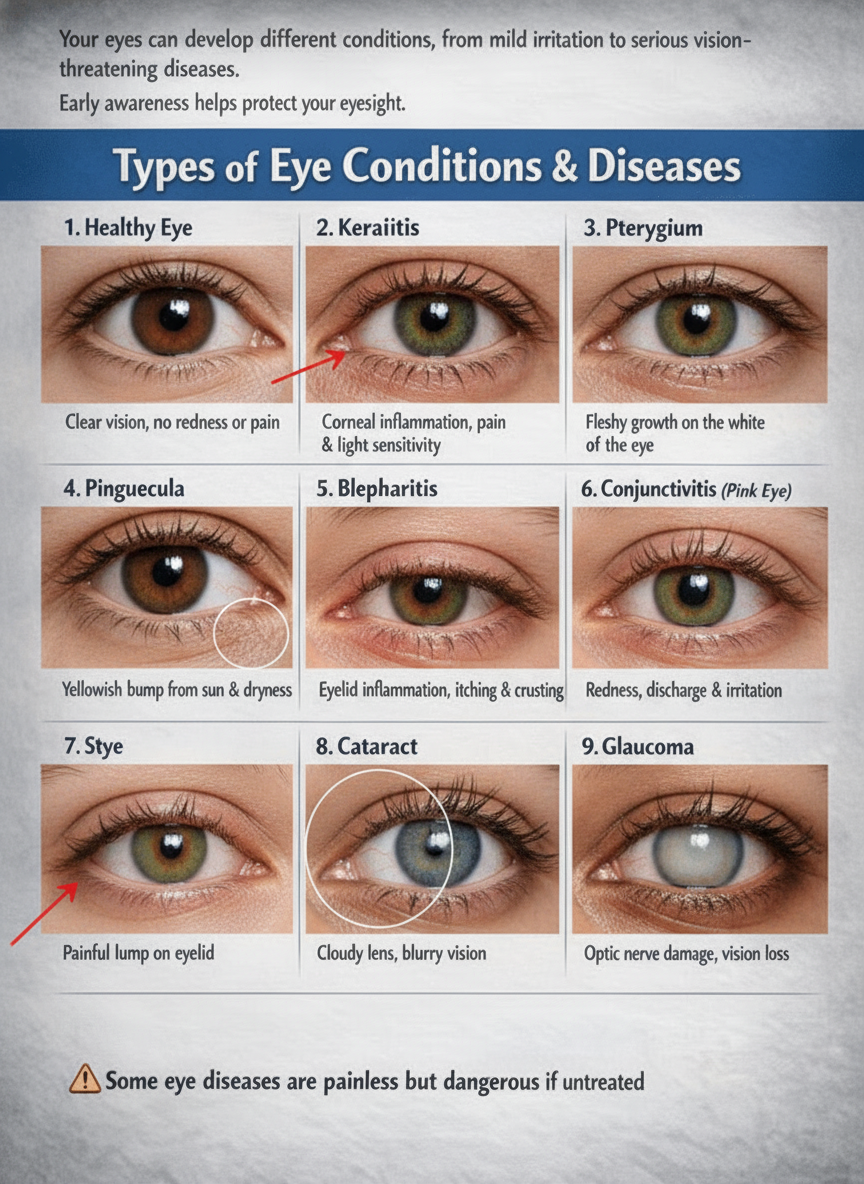
Similar to a pterygium but generally smaller and non-invasive, a pinguecula appears as a yellowish, slightly raised bump on the white of the eye. UV exposure and arid climates are primary contributors, often leading to occasional redness or mild discomfort.
-
Blepharitis – Eyelid Inflammation and Crust Formation
Blepharitis involves inflammation of the eyelids, commonly presenting with itching, crusting along the lash line, and a greasy sensation. It can result from bacterial overgrowth, underlying skin conditions, or blockages in the eyelid’s oil glands. Applying warm compresses and performing gentle eyelid cleaning frequently offers significant relief.
-
Conjunctivitis (Pink Eye) – Redness, Discharge, and Irritation
Commonly known as pink eye, conjunctivitis causes the eyes to become red, watery, and produce a sticky discharge. This highly contagious condition spreads easily through direct contact and can be triggered by viruses, bacteria, or allergic reactions. Maintaining excellent hand hygiene is crucial to prevent its dissemination.
-
Stye – A Painful Eyelid Lump
A stye develops as a red, tender, and often painful lump on the eyelid, originating from an infected oil gland. It often feels like a small pimple on the lid and can cause localized swelling. Warm compresses are typically effective in promoting natural resolution.
-
Cataract – Cloudy Lens Leading to Impaired Vision
Cataracts involve the gradual clouding of the eye’s natural lens, resulting in hazy or blurry vision, increased sensitivity to glare, and faded color perception. While age is a primary risk factor, UV exposure and certain medical conditions can also contribute to their development. Many individuals notice these visual changes progressing slowly over time.
-
Glaucoma – The Silent Threat to the Optic Nerve
Often dubbed the “silent thief of sight,” glaucoma causes damage to the optic nerve, typically due to elevated intraocular pressure. Its early stages are usually asymptomatic, meaning individuals experience no noticeable symptoms until significant peripheral vision loss has occurred. Regular comprehensive eye screenings are paramount for early detection and intervention, as consistently emphasized by leading eye health professionals.
Quick Comparison: Identifying Key Differences
- Painful/Irritating Conditions: Keratitis, Stye, Blepharitis, Conjunctivitis – frequently present with immediate, noticeable discomfort.
- More Gradual or Painless Onset: Pterygium, Pinguecula, Cataract, Glaucoma – may progress subtly without obvious early warning signs.
- Outdoor-Related: Pterygium and Pinguecula – strongly linked to sun and wind exposure.
- Infection-Related: Conjunctivitis, Stye, and some forms of Keratitis – can be contagious or prone to recurrence.
Staying vigilant about your eye health is a powerful step towards preserving your vision. Don’t wait for significant symptoms; prioritize regular eye check-ups and respond to any changes promptly. Your eyes are invaluable – treat them with the care they deserve.