 By admin
 Often referred to as “silent strokes,” lacunar strokes present a unique challenge, particularly for individuals over 60. Unlike their more dramatic counterparts that cause obvious paralysis or speech loss, these subtle cerebrovascular events quietly affect the brain’s deep structures. Their symptoms are frequently dismissed as mere signs of aging, such as minor clumsiness or fleeting discomfort. However, these small vessel incidents can gradually accumulate, leading to significant long-term impacts on mobility, cognitive function, and overall independence.
Extensive research, including advanced MRI studies, reveals a concerning prevalence of silent lacunar infarcts within the older adult population, with incidence rates increasing sharply past the age of 60. The encouraging news is that heightened awareness of these early patterns and proactive management of underlying vascular risks can profoundly influence long-term brain health and quality of life. Stay with us as we delve into seven critical warning signs; one in particular (sign #4) is so frequently attributed to “just getting older” that its connection to serious brain changes is almost universally overlooked – yet it demands immediate medical attention.
Why Lacunar Strokes Are Often Missed in Older Adults
Lacunar strokes, a form of cerebral small vessel disease, arise from blockages in the brain’s minuscule penetrating arteries, typically resulting from chronic conditions like uncontrolled high blood pressure or atherosclerosis. These delicate vessels, often less than a millimeter wide, supply vital deep brain structures critical for motor control, sensory processing, and coordination. Consequently, the initial manifestations of lacunar events are often indistinct or even entirely asymptomatic, a stark contrast to the overt symptoms of a major stroke.
Population-based MRI studies consistently highlight that silent brain infarcts, many of which are lacunar, become increasingly prevalent with age. They are observed in over 20% of ostensibly healthy individuals aged 60 and above, with even higher rates among those with existing vascular risks. The insidious nature of these events means that cumulative damage over years can lead to gradual, yet profound, alterations in gait, equilibrium, or concentration. These changes, affecting critical areas like the basal ganglia or thalamus, are frequently not recognized until significant neurological impairment has already occurred.
The primary diagnostic hurdle lies in their gradual onset; these subtle shifts are readily, and mistakenly, attributed to normal age-related issues such as arthritis, general fatigue, or transient “senior moments.” Nevertheless, a deeper comprehension of these nuanced patterns is paramount, enabling individuals to adopt proactive measures to safeguard their vascular health and neurological well-being.
The 7 Most Overlooked Lacunar Stroke Warning Signs
The following warning signs, compiled from extensive clinical observations and rigorous studies published in leading neurology journals, represent critical indicators of potential lacunar stroke. While these symptoms may not always be dramatic, recognizing their patterns—especially if they are unilateral, sudden in onset, or progressively worsening—is absolutely vital for early diagnosis and intervention.
Warning Sign #7: Unexplained Unilateral Neuropathic Pain
Picture experiencing an abrupt, intense burning, stabbing, or electric-shock sensation localized to one side of your body – perhaps in a hand, foot, or facial region – without any apparent injury or external cause. This type of severe, often debilitating pain can be so profound that even light contact, such as the brush of bedsheets, triggers discomfort, a condition known as allodynia. This highly specific symptom often points to damage within the thalamus, the brain’s crucial sensory relay center.
Such sensations can manifest as central post-stroke pain, affecting a notable subset of individuals following a small vessel stroke. If you or someone you know experiences this kind of sudden, persistent, and unexplained unilateral pain, it warrants immediate medical evaluation to investigate potential neurological origins.
Warning Sign #6: Atypical, Unexplained Abdominal or Flank Pain
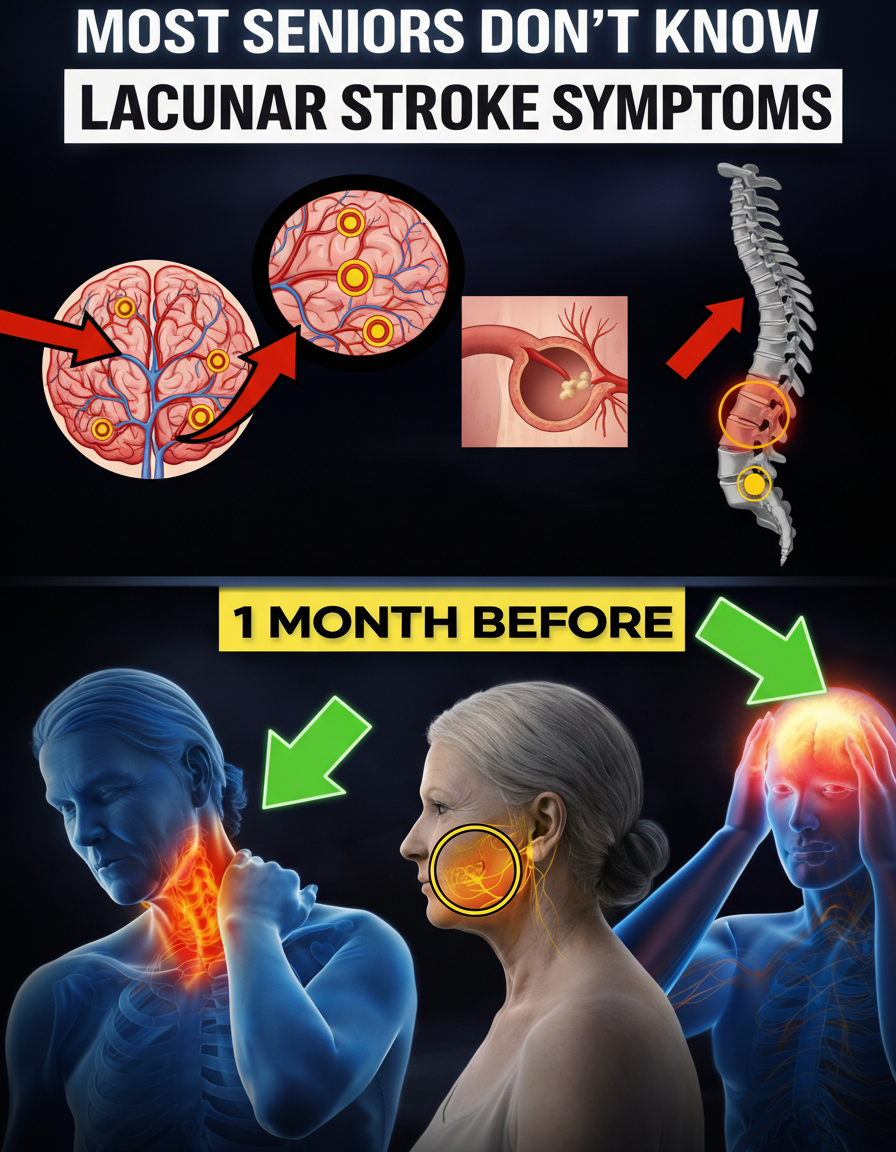
While less common, some individuals with lacunar strokes report experiencing puzzling, severe wave-like cramping or intense pain in the abdomen or flank region. These symptoms can be highly deceptive, often mimicking conditions such as appendicitis, kidney stones, or other gastrointestinal issues. Crucially, in these cases, standard diagnostic tests—like scans for stones or blood work for infections—frequently return entirely normal results.
This unusual manifestation is believed to stem from disrupted pain signaling pathways within the brain, caused by small vessel changes. When conventional medical evaluations fail to identify an abdominal or visceral cause for such persistent and severe pain, a neurological assessment, potentially including brain imaging, becomes essential to uncover the true underlying etiology.
Warning Sign #5: Transient Unilateral Weakness or Impaired Coordination
One of the most frequently dismissed lacunar stroke warning signs involves a sudden, brief episode of weakness or clumsiness affecting just one limb. This might manifest as a hand unexpectedly feeling heavy, making intricate tasks like buttoning a shirt or handling tools challenging, or a leg that subtly drags, causing a slight shuffle in gait. These episodes are often fleeting, lasting anywhere from a few minutes to several hours before seemingly resolving completely – making them easy to attribute to simple fatigue, muscle strain, or even poor sleep.
This distinct pattern is clinically recognized as pure motor lacunar syndrome, often indicating damage within critical brain regions such as the internal capsule. It’s vital to understand that even these temporary neurological events, known as Transient Ischemic Attacks (TIAs), are potent harbingers of a full-blown stroke and signify an elevated risk for more lasting neurological deficits. Prompt medical evaluation and intervention upon experiencing such transient symptoms are paramount for improving long-term outcomes and preserving brain health.
You’re already taking a significant step by recognizing these subtle indicators. While many might overlook these initial signs, the upcoming warning sign (number 4) is arguably the most pervasive yet least recognized in older adults.
Warning Sign #4: Progressive Balance Issues and Unexplained Falls (The Most Overlooked Sign)
This is arguably the most insidious and frequently misattributed warning sign of lacunar stroke in older adults. It involves a gradual, yet noticeable, deterioration in balance and gait that is often dismissed as a normal part of aging. Common manifestations include:
- Shuffling Steps: A reduction in stride length and speed, making walking less fluid.
- “Freezing” of Gait: A sensation of being stuck or unable to initiate movement, especially when starting to walk or turning.
- Difficulty Turning: Needing multiple small steps to pivot or change direction.
- Increased Stumbles and Near-Falls: More frequent instances of losing balance or almost falling, without an obvious external cause.
Often, family members are the first to observe these changes, perhaps remarking, “Mom’s walking has really changed lately.” These symptoms are strongly linked to the vascular impact on deep brain structures, particularly the basal ganglia and white matter tracts, and are often collectively termed vascular parkinsonism. Unlike idiopathic Parkinson’s disease, which often includes a prominent tremor, vascular parkinsonism primarily affects the lower body, characterized by a slow, broad-based, and unstable gait with significant balance impairment and less pronounced tremor.
Extensive neurological research consistently highlights the strong correlation between these specific gait disturbances and underlying small vessel disease in a significant number of older adults. If you or a loved one notice an increase in stumbles, a change in walking pattern, or a general decline in steadiness, it is imperative to seek a comprehensive neurological evaluation, including advanced brain imaging, to identify the precise cause.
Self-check: On a scale of 1 to 5 (1 being very unsteady, 5 being perfectly steady), how would you rate your walking stability and balance recently? Any increasing difficulty warrants professional medical attention.