 By admin
 Imagine a common scenario: a loved one suddenly slurs their words or struggles to stand, and initial reactions are dismissed as fatigue, stress, or even “one too many.” This uncomfortable truth highlights a critical challenge: stroke warning signs often appear subtly, leading to dangerous delays in seeking help.
Yet, there’s a simple, life-saving method doctors teach families to recognize danger early. Understanding these signs can be the difference between a full recovery and lasting disability.
The FAST Method: A Quick Guide to Spotting Stroke
The FAST method is a globally recognized memory tool designed to help anyone quickly identify potential stroke symptoms. It’s especially crucial for those who spend time with older adults or in community settings.
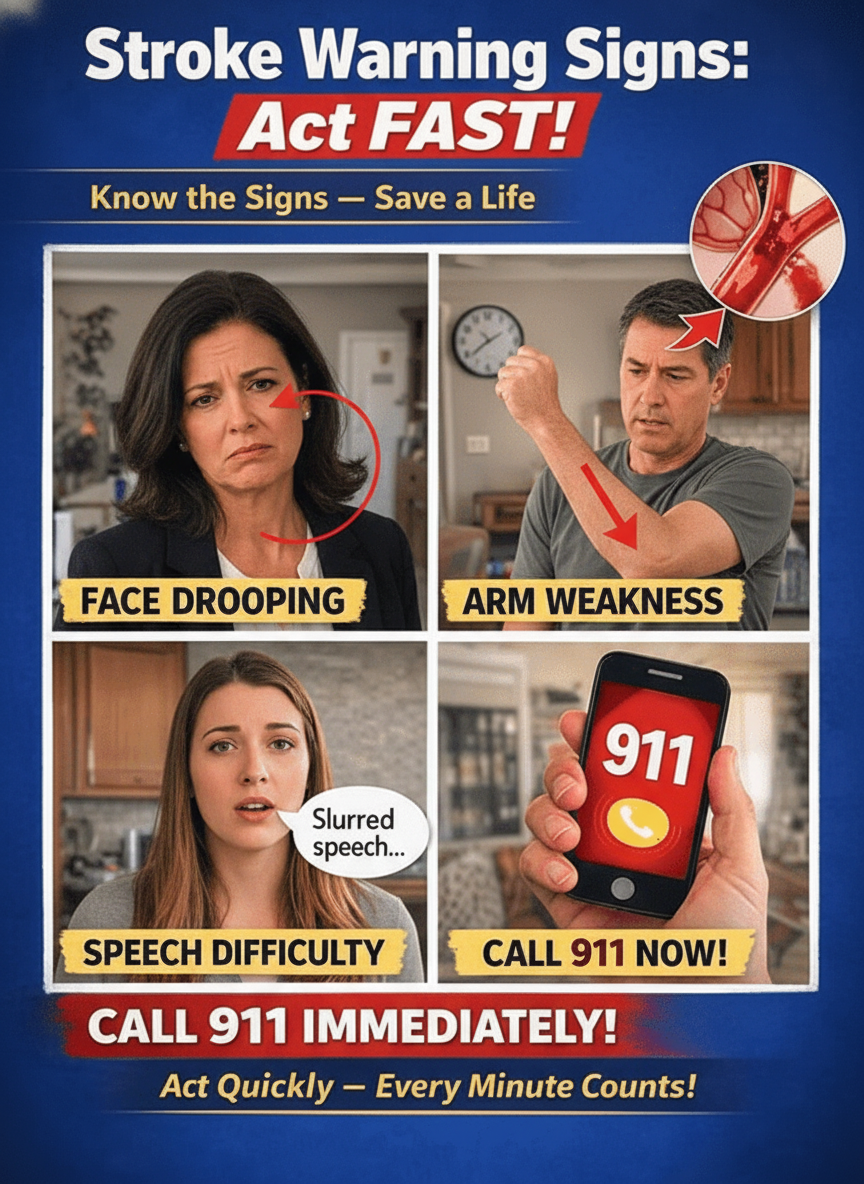
- F – Face Drooping: One side of the face may sag or feel numb. Ask the person to smile. An uneven smile is a key warning sign.
- A – Arm Weakness: One arm may feel weak or numb. Ask the person to raise both arms. If one arm drifts downward, take it seriously.
- S – Speech Difficulty: Speech may become slurred, confused, or hard to understand. The person might struggle to repeat a simple sentence clearly.
- T – Time to Call Emergency Services: If you notice ANY of these signs, act immediately. Time is brain.
Expanding Awareness: Why BE FAST Adds Two Crucial Signs
While FAST is effective, experts discovered additional early symptoms that often precede the classic signs. This led to the expanded BE FAST method, adding two critical indicators:
- B – Balance Problems: A person may suddenly experience dizziness, lose coordination, or struggle to walk normally.
- E – Eye Problems: Sudden trouble seeing in one or both eyes can occur. Vision might appear blurry, dark, or doubled.
These ‘B’ and ‘E’ symptoms sometimes appear before face drooping or speech problems, and are frequently dismissed as normal aging or fatigue. Recognizing them early can dramatically improve response times and outcomes.
Why Early Stroke Signals Are Often Ignored
Many older adults, particularly, grew up in a culture that valued stoicism, often brushing off discomfort with phrases like “It will pass” or “I don’t want to bother anyone.” This mindset, while well-intentioned, can be perilous during medical emergencies. Common reasons for delaying help include:
- Assuming symptoms are merely tiredness or stress.
- Feeling embarrassed, especially in public.
- Not wanting to worry family members.
- Waiting to “see if it goes away.”
The stark truth: waiting rarely helps when the brain is involved. Prompt action is paramount.
Immediate Action: What To Do When You Spot BE FAST Symptoms
When symptoms appear suddenly, panic can cloud judgment. Doctors recommend a clear, simple response plan:
- Notice the Signs: Quickly check for BE FAST symptoms.
- Stay Calm: Speak clearly and reassure the person.
- Call Emergency Services Immediately: Do not wait for symptoms to disappear.
- Note the Time: Record when symptoms first started; this information is vital for medical professionals.
- Ensure Safety: Keep the person seated safely. Avoid giving food or drink.
Stroke Signs vs. Misunderstood Symptoms
It’s common to mistake stroke symptoms for other conditions. The table below clarifies typical differences:
| Possible Stroke Sign (Sudden Onset) | Often Misinterpreted As |
|---|---|
| Sudden face drooping | Fatigue or dental issues |
| Sudden arm weakness | Muscle strain or tiredness |
| Sudden slurred speech | Alcohol or general fatigue |
| Sudden balance problems | Inner ear issues, clumsiness |
| Sudden vision changes | Eye strain, normal aging |
Remember, when it comes to stroke, recognizing the signs and acting fast can save a life and preserve quality of life. Don’t let a stroke hide in plain sight.