 By admin
 Don’t Ignore: 4 Crucial Early Warning Signs of Breast Cancer for Better Health Awareness
Many individuals navigate their daily routines without fully recognizing the subtle shifts occurring within their bodies. Yet, these seemingly minor changes can often serve as vital indicators concerning breast health. Overlooking them might mean missing a critical window for early intervention, potentially leading to unnecessary anxiety or more complex issues later on. By cultivating a heightened awareness of your body’s signals, you empower yourself to take proactive measures toward safeguarding your overall well-being and achieving greater peace of mind. And here’s a crucial point: there’s one particular sign that research highlights as a key, often-overlooked indicator, which I’ll reveal towards the end of this article to ensure you are comprehensively informed.
Why Early Awareness Matters in Breast Health
Breast health is a significant topic that impacts countless lives globally, and staying well-informed can profoundly influence how you approach your regular health check-ups and personal monitoring. According to leading health organizations, such as the Centers for Disease Control and Prevention (CDC), recognizing changes early on empowers individuals to promptly seek professional medical advice. This approach is not about instilling fear; rather, it’s about fostering sustainable habits that support long-term health and vitality.
Furthermore, studies consistently demonstrate that dedicated awareness campaigns have significantly boosted early detection rates. Despite this progress, many still tend to disregard common signals. Research from reputable sources like the American Cancer Society underscores that while not all bodily changes are cause for immediate alarm, understanding precisely what to monitor is absolutely essential. Let’s delve deeper into these crucial insights. In the following sections, we will explore four key early warning signs of breast cancer, supported by general medical understanding, to help you feel more confident and proactive in monitoring your health.
Sign 1: A New Lump or Thickening in the Breast or Underarm Area
One of the most frequently reported and critical changes is the discovery of a new lump or a distinct area of thickening within the breast tissue or in the underarm region. This can manifest as a firm knot, a softer, less defined mass, or even an irregular texture that was not previously present. It’s vital to remember that while not every lump signifies a serious problem—many are benign, such as cysts or fibrous tissue—developing a habit of paying close attention to any new developments is incredibly prudent.
The CDC specifically lists this as a primary warning sign of breast cancer because it often emerges without other noticeable symptoms. Women who regularly perform breast self-exams are generally more likely to detect these changes at an early stage, as advised by general health guidelines. However, there’s more to consider. Sometimes, this thickening might be quite subtle, blending in with the normal texture of the breast, which is precisely why consistent and thorough checking is paramount.
To assist you in initiating or refining your self-examination routine, here are some practical tips:
- Stand before a mirror with your arms relaxed at your sides, carefully observing for any visible changes in contour, size, or skin texture.
- Next, raise your arms high above your head and repeat the visual inspection, checking for symmetry or any subtle pulling of the skin.
- Lie down and use the pads of your fingers to gently but firmly feel the entire breast area, including the underarm, in a systematic circular motion.
- Perform this self-exam monthly, ideally a few days after your menstrual period concludes, to account for natural hormonal fluctuations that can affect breast tissue.
These steps are straightforward and require only a few minutes, making them easy to integrate into your regular health regimen.
Sign 2: Changes in Breast Size or Shape
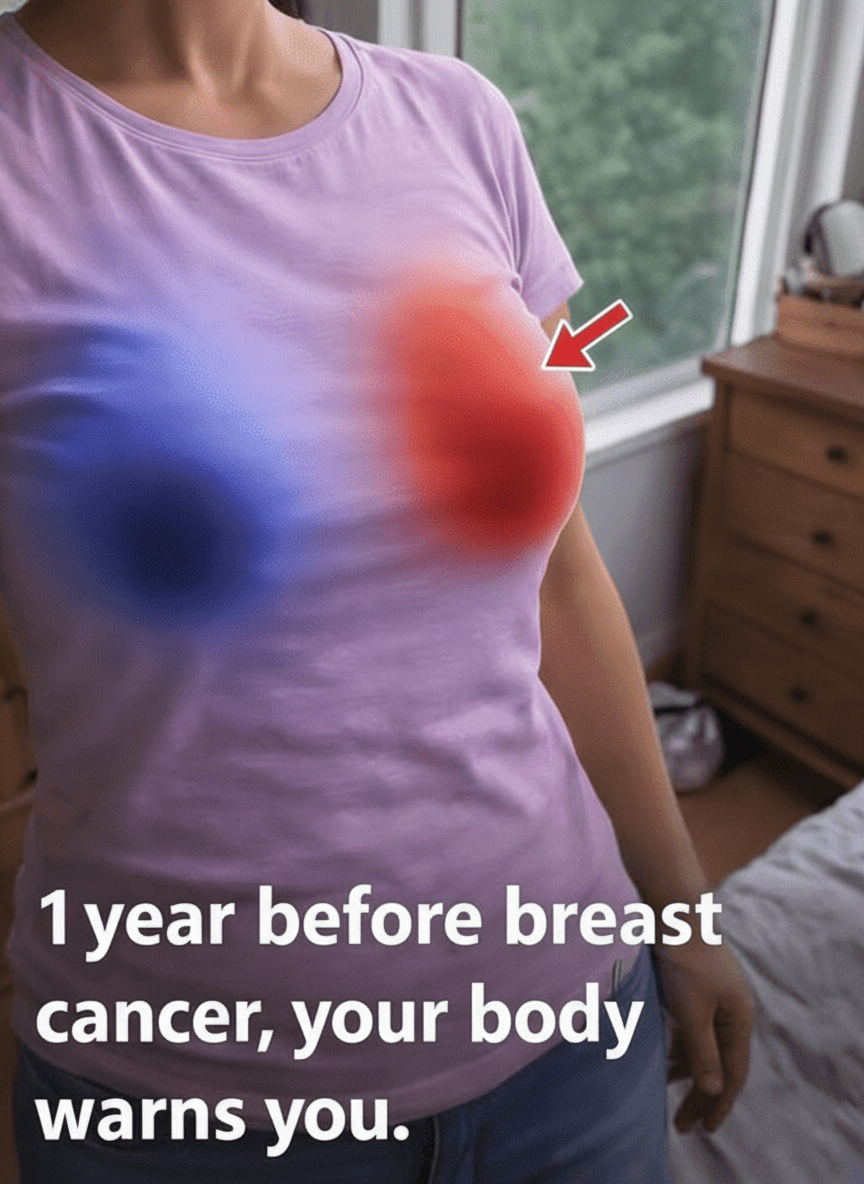
Have you ever noticed one breast appearing subtly different from the other? Sudden, unexplained changes in breast size or shape can serve as another important early indicator to monitor closely. This might involve noticeable swelling, an unexpected reduction in size, or an uneven contour that develops relatively quickly. While it’s natural for breasts to have some degree of asymmetry, abrupt and significant alterations warrant immediate attention.
Consistency in monitoring is crucial here. The Mayo Clinic points out that such changes can stem from various causes, but they are always worth discussing with a healthcare professional. Research indicates that factors like hormonal shifts or weight fluctuations can play a role, but persistent or new differences should never be dismissed without medical evaluation. An interesting aspect to note is that, in some instances, these changes might be more apparent during specific phases of the menstrual cycle, so tracking them over several cycles can provide valuable clarity.
For practical guidance in observing these changes, consider these steps:
- Maintain a journal to record any observed differences, noting specific dates and detailed descriptions.
- Compare recent observations or photos with those from previous months to help identify any emerging patterns.
- If these changes persist beyond one menstrual cycle, promptly schedule a professional check-up with your doctor.
This systematic approach not only enhances your personal awareness but also provides concrete, documented information to share with your healthcare provider, aiding in an accurate assessment.
Sign 3: Skin Changes on the Breast
Alterations to the skin on the breast can be subtle yet highly indicative of underlying issues. Be vigilant for signs such as dimpling or puckering of the skin, areas of persistent redness, or a texture that resembles the peel of an orange—medically referred to as peau d’orange. Flakiness, scaling, or any form of irritation around the nipple area also falls into this crucial category of breast cancer symptoms. These skin changes might also be accompanied by a feeling of warmth to the touch or appear inflamed.
Sign 4: Nipple Changes (The Often-Overlooked Indicator)
This brings us to the key, often-missed indicator I mentioned earlier: changes affecting the nipple itself. Nipple alterations can be among the most subtle yet significant early warning signs of breast cancer, frequently going unnoticed or being dismissed as minor irritation. Be attentive to any new inversion of the nipple (where it turns inward), any unexpected discharge (fluid that isn’t breast milk, particularly if it’s bloody, clear, or occurs without squeezing), persistent soreness or tenderness, or the development of a rash, redness, or scaly skin around the nipple. While some nipple discharge can be benign, any new or unusual fluid, especially if it’s spontaneous or bloody, warrants immediate medical investigation. These changes can signal underlying concerns and should always prompt a discussion with a healthcare professional.
In conclusion, being proactive about your breast health is paramount. Regular self-awareness, coupled with routine clinical examinations, forms the cornerstone of early breast cancer detection. If you notice any of these warning signs or any other unusual changes in your breasts, do not hesitate to consult a doctor. Early detection significantly improves treatment outcomes and is your best defense in maintaining long-term health and peace of mind.