 By admin
 You likely glance at your hands multiple times a day, yet how often do you truly observe your fingernails? These small, often-overlooked details can serve as powerful indicators of your overall health, reflecting changes happening deep within your body. It’s remarkably easy to miss subtle shifts in their appearance, especially amidst a busy life, which means potentially overlooking crucial early clues about your well-being. The good news is that with a bit more attention, you can learn to spot potential issues sooner. This guide will reveal exactly what to look for, including surprising signs that many people completely disregard.
While healthy fingernails are typically smooth, consistently colored, and strong, any alterations in their hue, texture, or shape can signal various factors—ranging from harmless daily habits to more significant underlying health concerns. Dermatological research, including insights from organizations like the American Academy of Dermatology, has long recognized nail changes as valuable indicators of systemic health. It’s important to remember that not every nail variation points to a serious problem; many are benign or simply a result of aging and lifestyle choices. However, understanding these common fingernail health indicators can empower you to decide when it’s appropriate to consult a healthcare professional.
What Do Healthy Nails Look Like?
Before delving into potential changes, let’s establish the baseline for what constitutes healthy fingernails. Typically, normal nails exhibit the following characteristics:
- Smooth Surface: Free from any prominent pits, ridges, or grooves.
- Consistent Color: Often a uniform pinkish hue, transitioning to white tips.
- Firm Yet Flexible: Strong enough to resist easy breakage but with a slight degree of flexibility.
- Visible Lunulae: Featuring distinct, lighter-colored half-moons at the base, which are the visible part of the nail matrix. The size and visibility of these lunulae can naturally vary among individuals.
11 Nail Changes and What They Could Indicate
Let’s explore some of the most frequently observed fingernail changes and their potential implications for your health. Keep in mind these are general observations, and individual experiences can differ widely.
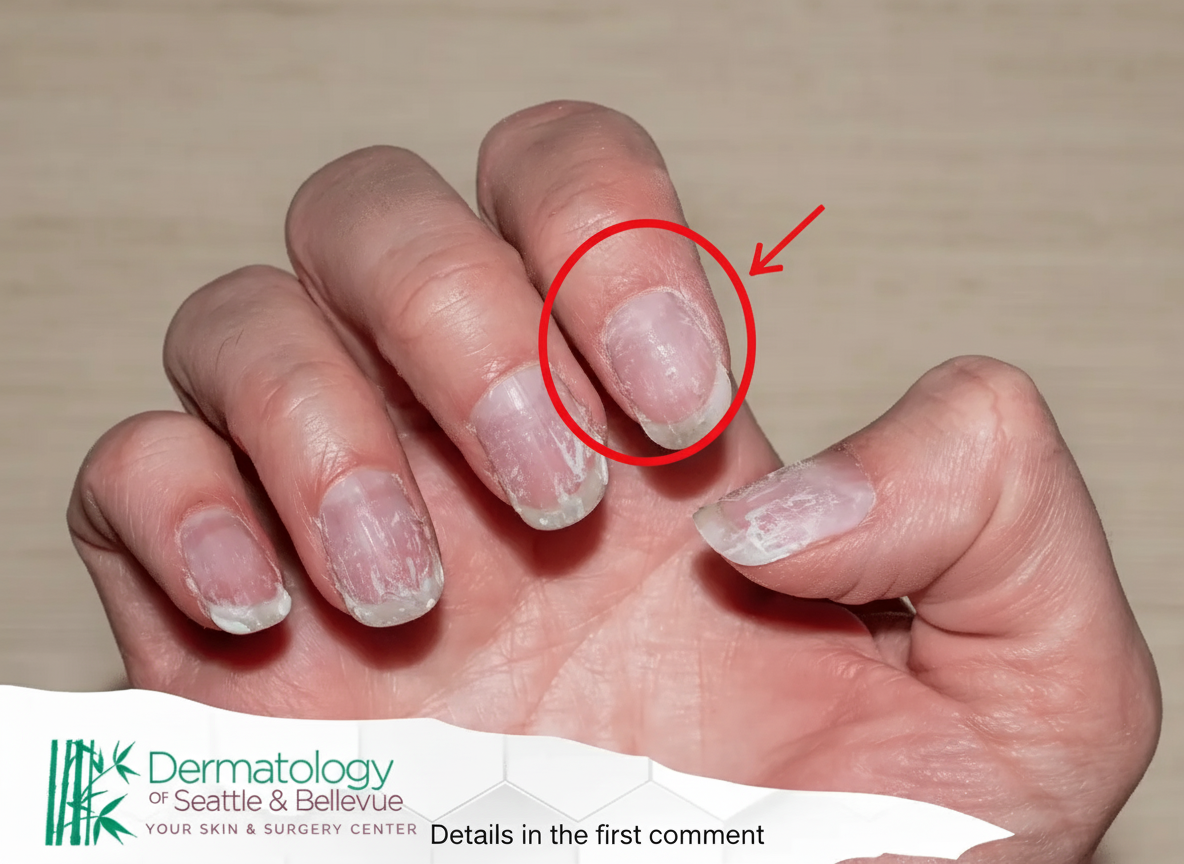
1. Brittle or Crumbly Nails
If your nails are prone to splitting, chipping, or developing a crumbly texture, this could be a symptom of frequent exposure to water, harsh cleaning agents, or even excessive use of nail polish. Aging also contributes significantly to nail fragility. Beyond these common factors, however, persistent brittle nails have been medically linked to conditions such as thyroid imbalances or dermatological issues like psoriasis, as noted in various dermatology journals.
2. Discolored Nails
Changes in nail color are among the most noticeable nail health signs. Here’s a breakdown of what different hues might suggest:
- Yellowish Tint: Often caused by staining from nail polish or fungal infections. Less commonly, it can be associated with respiratory illnesses or psoriasis.
- Bluish Hue: A blue discoloration of the nails can be a telltale sign of reduced oxygen saturation in the blood, indicating potential circulatory or respiratory problems.
- White Nails (Leukonychia): Could be related to the natural aging process or indicate certain nutrient deficiencies.
- Brown or Half-Brown/Half-White Nails: Occasionally observed in individuals with kidney concerns or following specific medical treatments.
Given the diverse range of potential causes, experts recommend closely monitoring any persistent nail discoloration and seeking professional advice if it doesn’t resolve.
3. Thickened Nails
Nails that gradually become unusually thick, especially if accompanied by a yellowish discoloration, might point to fungal infections (onychomycosis) or skin conditions like psoriasis. Yellowish thickening has also been observed in some cases related to lung conditions.
4. Loose or Lifting Nails (Onycholysis)
When a fingernail begins to detach from the underlying nail bed, it’s known as onycholysis. This condition can follow a physical injury, an allergic reaction to nail products, or even certain medications. Other potential associations include circulation issues or changes in thyroid function.
5. Spoon-Shaped Nails (Koilonychia)
These distinctive nails develop a noticeable upward curve at the edges, creating a spoon-like dip that could theoretically hold a drop of water. This shape, medically termed koilonychia, is sometimes linked to iron deficiency anemia or, in some medical literature, heart-related concerns.
6. Pits or Dents on the Surface
Tiny depressions or irregular pitting on the nail surface often appear in characteristic patterns and are commonly associated with inflammatory skin conditions such as psoriasis or eczema. These nail surface changes can vary in depth and distribution.
7. Horizontal Grooves (Beau’s Lines)
Prominent horizontal indentations or grooves running across the nail plate, known as Beau’s lines, typically indicate a temporary interruption in nail growth. They can result from a significant illness, a severe injury to the nail matrix, or substantial nutritional shifts. These lines will gradually grow out as the nail renews itself.
8. Clubbed Nails
Clubbing occurs when the fingertips appear enlarged and the nails curve significantly downwards around the fingertip, resembling the round part of a club. While this can sometimes be a harmless, hereditary trait, a sudden onset of nail clubbing warrants medical investigation as it can be related to chronic low oxygen levels or underlying heart and lung conditions.
9. White Lines Across the Nails (Muehrcke’s Lines)
Distinct parallel white bands that appear across the nail (not to be confused with white spots or the lunula) could signal lower protein levels in the body. This can sometimes be attributed to dietary deficiencies or impaired liver function, which affects protein synthesis.
10. Dark Vertical Stripes (Melanonychia)
Vertical dark lines, often brownish or black, are frequently observed in individuals with darker skin tones and are usually benign, representing normal pigment variations. However, the appearance of a new, single dark vertical stripe that is widening or changing in appearance warrants immediate professional checking to rule out rare but serious concerns like subungual melanoma.
11. Small Red or Brown Streaks Under the Nails (Splinter Hemorrhages)
These tiny, splinter-like lines beneath the nail resemble small splinters and are typically caused by minor damage to the capillaries (blood vessels) beneath the nail plate. While often harmless, especially if resulting from trauma, widespread or recurring splinter hemorrhages without obvious injury can sometimes be associated with underlying systemic conditions, including certain heart infections or vasculitis.
Simple Steps to Check Your Nails at Home
Ready to make nail observation a part of your regular health routine? Here’s a straightforward process you can adopt today:
- Clean Your Hands: Ensure your hands are thoroughly washed and dried to get a clear view.
- Find Good Light: Hold your hands up to natural light, if possible, or a well-lit area, and examine each nail closely from various angles.
- Gentle Pressure: Gently press on your nails to check for firmness and observe how quickly the color returns after pressure is released.
- Feel the Surface: Run your finger across the nail surface to detect any ridges, pits, or unusual textures.
By regularly performing these simple checks, you can become more attuned to your body’s subtle signals and proactively address any potential health concerns your fingernails might be revealing.