 By admin
 After a long day, as you kick off your shoes, do you ever notice something amiss with your feet? Perhaps they feel swollen, the skin seems unusually tight, or there’s an inexplicable tingling sensation. It’s common to dismiss these changes, blaming fatigue or the natural process of aging. Yet, your feet are often the body’s earliest and most honest messengers, signaling deeper health issues long before other symptoms appear.
Ignoring these subtle warnings can turn minor clues into significant health challenges. The good news? By understanding what your feet are trying to communicate, you can take proactive steps to protect your well-being. And as you read on, you’ll discover a simple, doctor-recommended daily habit for tuning into these vital early alerts.
Diabetes: Early Signals from Your Soles
Many individuals experience unusual foot sensations long before they’re aware of elevated blood sugar levels. Prolonged high blood sugar can damage nerves in the feet, a condition known as diabetic neuropathy. Initial symptoms are often mild:
- A “pins and needles” or tingling sensation.
- Reduced sensitivity to pain or temperature.
- Gradual numbness, often starting in the toes or soles.
What’s critical here is that decreased nerve sensitivity means minor cuts, blisters, or injuries might go unnoticed, significantly increasing the risk of infection. This is precisely why healthcare professionals emphasize regular foot examinations for those monitoring their blood sugar.
Kidney Health: When Swelling Speaks Volumes
Do your socks leave deep, persistent indentations around your ankles by evening? This might be more than just tiredness. Your kidneys play a crucial role in regulating the body’s fluid balance. When they struggle to efficiently remove excess fluid, swelling — or edema — can manifest in the lower legs and feet. Look out for:
- Visibly swollen feet or ankles.
- Skin that appears shiny or stretched.
- Puffiness that tends to worsen as the day progresses.
While occasional swelling after prolonged standing is normal, persistent, regular swelling warrants attention and a conversation with a healthcare provider.
Heart Health: The Circulation Connection
Robust circulation is essential for delivering oxygen-rich blood throughout your body. When this flow is compromised, your feet can offer subtle indicators. Some common signs include:
- Feet that consistently feel unusually cold.
- Skin taking on a bluish or purplish tint.
- Weak or absent pulses detectable in the feet.
These changes often suggest reduced blood flow to the lower limbs. A key point often missed is that circulatory issues tend to develop gradually, making them easy to dismiss as “just aging.” However, recognizing these signals early can prompt timely medical evaluation.
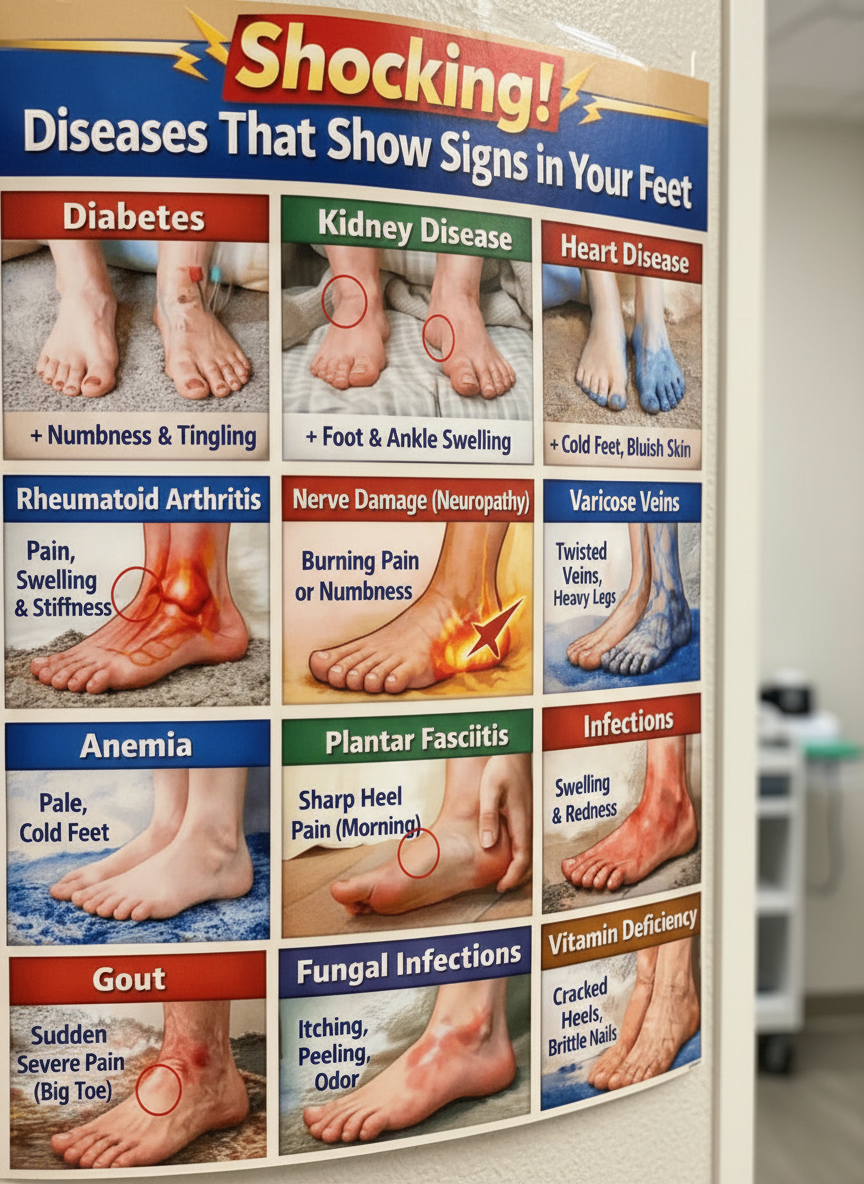
Rheumatoid Arthritis: Joint Pain’s First Footprint
Rheumatoid arthritis (RA) is an autoimmune condition that frequently targets smaller joints first, and the feet are a common initial site for discomfort. Individuals often describe:
- Pain experienced during walking.
- Swelling around the joints of the toes.
- Morning stiffness that typically improves later in the day.
Intriguingly, research indicates that many people report foot pain even before other joints become affected. Ignoring early stiffness can lead to reduced mobility over time, highlighting the importance of early detection.
Beyond Diabetes: Other Forms of Nerve Damage
Nerve-related symptoms in the feet aren’t exclusively tied to blood sugar levels. Peripheral nerve irritation can stem from various causes, including nutritional deficiencies, excessive alcohol consumption, or nerve compression. Typical sensations may include:
- A burning pain in the feet.
- Sudden, electric shock-like sensations.
- Numbness that intensifies at night.
Nighttime symptoms are particularly common because, during quiet rest, nerve signals become more pronounced, making sensations that felt mild during the day suddenly feel stronger.
Varicose Veins: A Heavy Feeling and Visible Clues
Have you noticed twisted, prominent veins becoming more visible around your feet or lower legs? These are often varicose veins, which occur when small valves inside the veins weaken or fail, leading to blood pooling and a “heavy” or aching sensation in the legs. While often considered a cosmetic concern, severe cases can indicate underlying circulatory stress.
Listen to Your Feet: A Simple Daily Habit
Your feet are constantly communicating with you. Paying attention to their subtle messages can be a powerful tool for early health detection. The simple daily habit many doctors recommend? A quick, regular self-inspection of your feet. Take a moment each day to look for any new swelling, discoloration, cuts, sores, changes in sensation, or persistent discomfort. Early detection allows for earlier intervention, helping you maintain your overall health and mobility. Don’t let your feet’s warnings go unheard.