 By admin
 Understanding the Viral Toothpaste and Vaseline Skincare Hack
The Quest for Radiant Skin: A Common Scenario
Waking up to discover dull skin, noticeable dark spots, or rough textures can often leave us feeling self-conscious and older than our years. Perhaps a special event, like a family gathering or social occasion, is approaching, intensifying the desire for a revitalized complexion. It’s no wonder, then, that a viral social media claim — suggesting a simple concoction of toothpaste and petroleum jelly can transform your skin overnight — becomes incredibly appealing. Indeed, this popular internet skincare hack has reportedly been attempted by countless individuals, particularly across Mexico and Latin America. However, before you consider applying these household items to your face, it’s crucial to understand the underlying facts. This article will guide you through the implications of this trend and, ultimately, reveal much safer, dermatologist-approved methods for achieving healthier-looking skin from the comfort of your home.
The Rise of the Toothpaste and Petroleum Jelly Skincare Trend
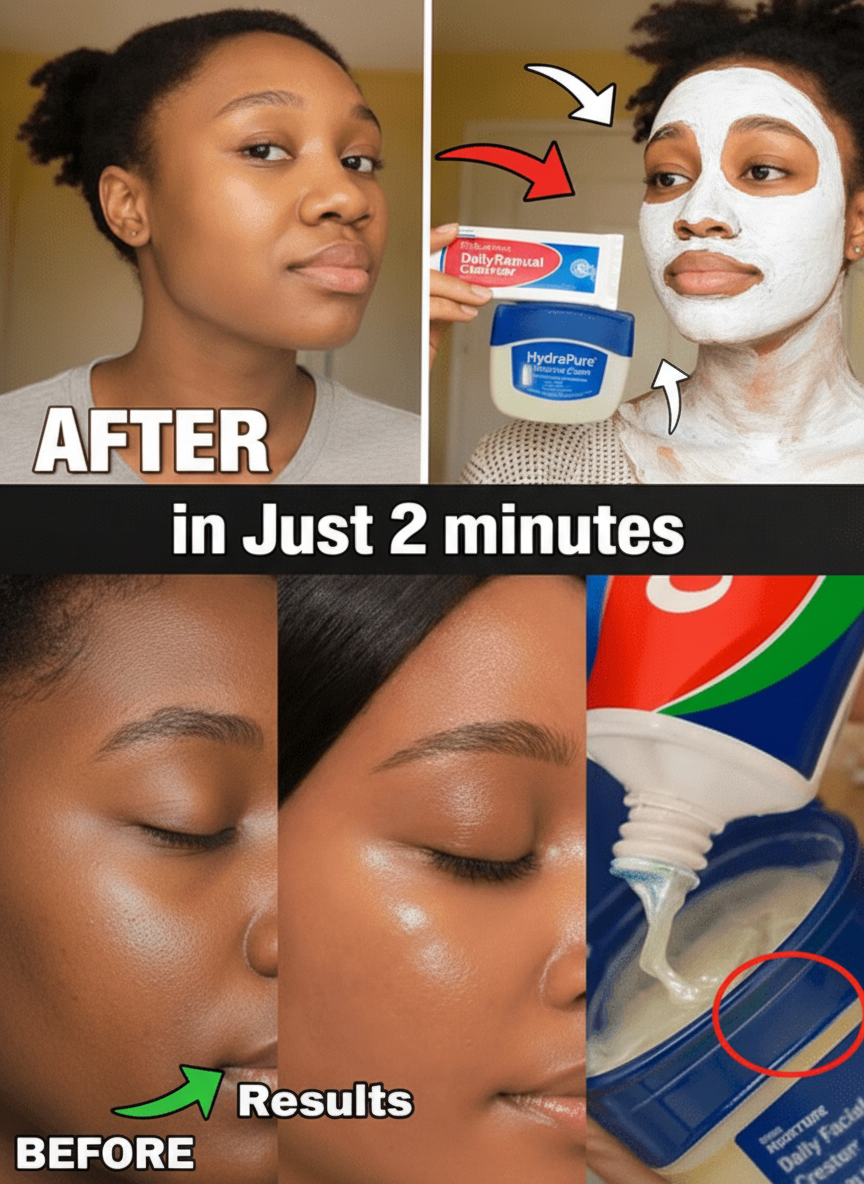
In recent years, social media platforms have become fertile ground for the rapid spread of unconventional beauty trends. Among the most widely discussed is the application of a mixture of toothpaste and petroleum jelly to the face. Proponents of this viral skincare hack often assert its efficacy in addressing various skin concerns, citing benefits such as:
- Achieving smoother skin texture
- Minimizing the visibility of blemishes and imperfections
- Enhancing radiance in dull complexions
- Imparting a transient, healthy glow
However, a closer examination reveals a critical distinction. Toothpaste, by its very formulation, is engineered for dental hygiene, not for the sensitive skin of the face. Its common constituents, including menthol, baking soda, and potent whitening agents, can prove excessively harsh for delicate facial tissue. Conversely, petroleum jelly, often recognized by its brand name Vaseline, is a staple in skincare, prized for its ability to form an occlusive barrier that effectively seals in moisture. This fundamental divergence in intended use and chemical composition is precisely what fuels the controversy surrounding this mixture. While some individuals might observe a fleeting improvement, others frequently report adverse reactions, including significant skin irritation. This brings us to a crucial discussion about each ingredient’s actual impact on the skin.
Deconstructing the Ingredients: What Petroleum Jelly and Toothpaste Do to Your Skin
To fully grasp the potential risks and purported benefits of this viral concoction, it’s essential to analyze each component individually and understand its specific interaction with the skin.
Petroleum Jelly (Vaseline)
Petroleum jelly, a venerable staple in skincare, boasts a history of over a century. Extensive dermatology research consistently highlights its efficacy in fortifying the skin’s natural barrier and profoundly locking in moisture. Its well-documented advantages encompass:
- Alleviating persistent skin dryness
- Shielding against minor irritations and abrasions
- Effectively preventing transepidermal water loss
- Contributing to a visibly smoother and more supple skin appearance
Consequently, it comes as no surprise that numerous dermatologists frequently endorse petroleum jelly for intensely dry or compromised skin regions, such as chapped lips, rough elbows, and cracked heels.
Toothpaste
In stark contrast, toothpaste is formulated with potent cleansing and antibacterial agents specifically engineered for oral hygiene. Its typical composition often features ingredients such as:
- Fluoride, for enamel protection
- Baking soda, known for its abrasive and whitening properties
- Menthol, which provides a cooling sensation
- Peroxide or other strong whitening compounds
While these components are highly effective for maintaining dental health, their direct application to delicate facial skin can lead to significant adverse effects, including severe dryness, redness, and irritation. The critical insight here is that simply combining petroleum jelly with toothpaste does not somehow transform it into a safe or beneficial skincare treatment. There’s a deeper reason why this mixture might seem to work temporarily, which we will explore next.
The Illusion of Efficacy: Why Some Perceive Results
Individuals who experiment with this viral mixture occasionally report a fleeting, superficial enhancement in their skin’s appearance. This temporary effect can be attributed to a combination of factors. Firstly, the occlusive nature of petroleum jelly effectively traps existing moisture within the outermost layer of the skin. This immediate hydration can temporarily smooth fine lines and impart a glossy, more reflective sheen. Secondly, abrasive ingredients commonly found in toothpaste, such as baking soda, may provide a very mild, superficial exfoliation of the skin’s surface. Collectively, these transient effects can foster the misconception of a brighter, more even-toned complexion. However, it is imperative to heed a crucial caution: any perceived improvement is almost invariably short-lived. Furthermore, consistent or repeated application of this mixture carries a high risk of compromising the skin’s delicate barrier, leading to chronic dryness, persistent irritation, and heightened sensitivity. Dermatological studies consistently underscore the fragile nature of the skin barrier, a vulnerability that becomes