 By admin
 Decoding the Dimples of Venus: What Those Lower Back Indentations Really Mean
Have you ever spotted two subtle indentations on your lower back and wondered about their origin or what they signify? These intriguing dimples often spark curiosity, prompting questions about genetics, fitness, or even overall health. While they might seem mysterious, these common anatomical features, often referred to as Dimples of Venus, are entirely normal and widely present across various body types. This article will demystify these lower back indentations, explaining their true meaning, why they appear, and debunking common myths surrounding them. Prepare to gain clarity and reassurance about this unique aspect of human anatomy.
Understanding Your Lower Back Dimples: What Are They?
To begin, let’s clarify what these intriguing features truly are. The two subtle indentations you might observe on your lower back are scientifically known as sacral dimples or, more famously, Dimples of Venus. Positioned symmetrically just above the buttocks, where the pelvis connects to the spine, these are not actual ‘holes’ but rather shallow depressions in the skin. Their poetic name, derived from the Roman goddess of beauty, reflects their historical association with aesthetic appeal in various cultures. Anatomically, these distinctive lower back dimples form where a short ligament connects the skin directly to the posterior superior iliac spine (PSIS), a prominent bony landmark on the pelvis. This connection gently pulls the skin inward, creating the characteristic dimple. Furthermore, their visibility can vary significantly among individuals, often becoming more pronounced in those with lower body fat percentages or well-developed lower back muscles. This explains why they are frequently noticed on athletes or individuals with a toned physique.
The Anatomy and Genetics of Sacral Dimples
Delving further into the biology, the formation of these sacral dimples is intricately linked to the complex architecture of the human back. Specifically, these indentations are situated directly over the sacroiliac joints, crucial structures that provide stability and facilitate movement between the sacrum and the ilium. As detailed in authoritative anatomical texts such as Gray’s Anatomy, these joints are reinforced by strong ligaments that extend to the skin, subtly drawing it inward to create the visible depressions. Beyond mere anatomy, scientific investigations into body composition, including studies published in reputable journals like the American Journal of Physical Anthropology, consistently highlight a significant genetic component. If your biological parents possess these dimples, there’s a higher likelihood you will too. Furthermore, gender can influence their prominence; Dimples of Venus are often more distinct in women, a factor potentially attributable to variations in fat distribution and pelvic bone structure. While less common, men can also exhibit these features, sometimes referred to as Apollo’s dimples. It’s worth noting that these harmless, purely cosmetic traits are present in approximately 20-30% of the global population, with prevalence varying across different ethnicities and individual body types.
Lower Back Dimples: A Health Indicator or Just Cosmetic?
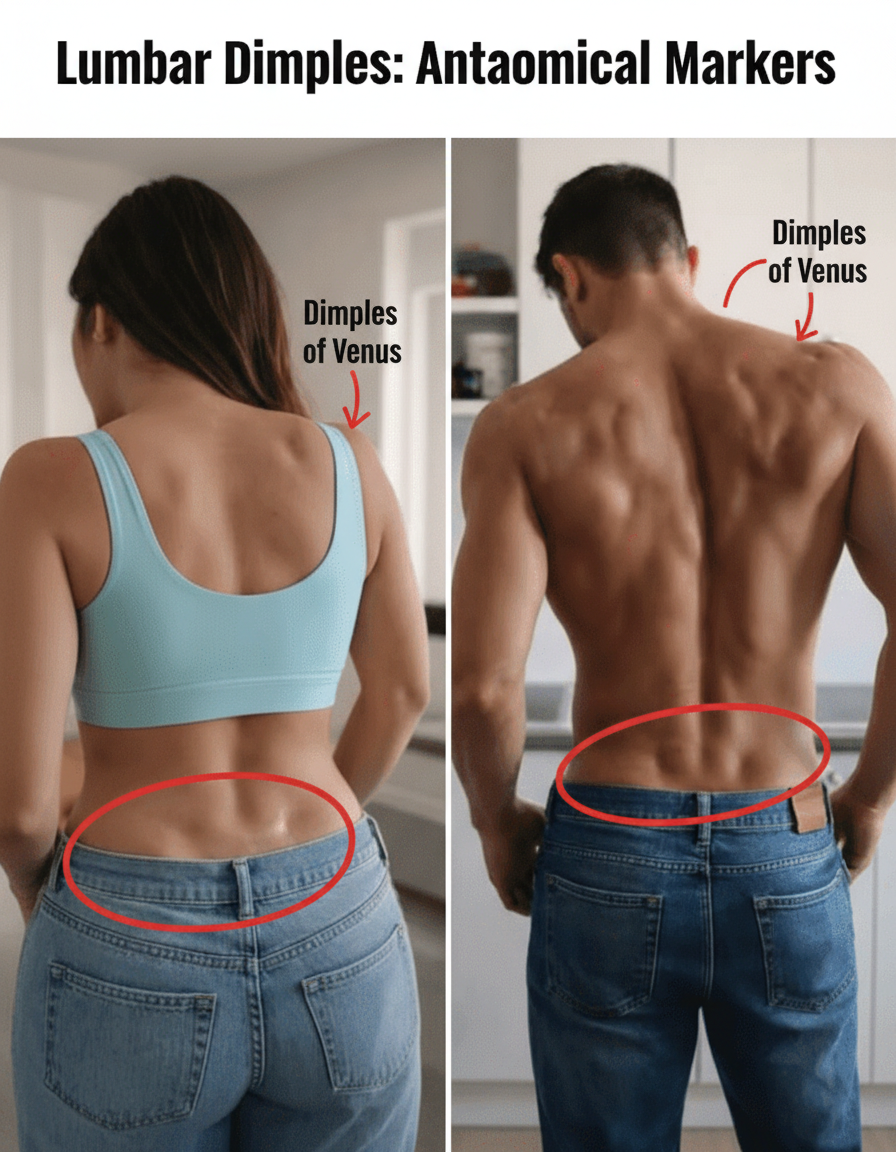
The presence of these lower back dimples frequently leads to associations with peak fitness or enhanced attractiveness. However, it’s crucial to understand their actual physiological significance. While visibly pronounced Dimples of Venus can indeed correlate with lower levels of subcutaneous fat in the lumbar region, they are not a direct marker of health or a diagnostic tool for any medical condition. Instead, their increased visibility often reflects a leaner body composition and well-defined muscle tone in active individuals. Engaging in exercises that strengthen the core and back muscles can certainly accentuate the natural contours of this area, making the dimples more noticeable. Essentially, they serve as a subtle highlight of your body’s inherent structure. Reputable health organizations, such as the Mayo Clinic, consistently affirm that such anatomical variations are entirely normal and generally pose no cause for concern. Nevertheless, if you observe sudden changes in your back’s appearance accompanied by other unusual symptoms, seeking guidance from a healthcare professional for a personalized assessment is always recommended.
Dispelling Common Myths and Misconceptions About Lower Back Dimples
In today’s digitally connected world, body features are often subject to widespread speculation and misinformation. Several myths surrounding lower back dimples have gained traction, and it’s important to separate fact from fiction. One prevalent misconception suggests that these dimples are indicators of superior circulation or enhanced flexibility. While some anecdotal accounts might claim improved blood flow in the pelvic region, there is currently limited scientific evidence to support such assertions. Research in biomechanics, often found in publications like the Journal of Orthopaedic Research, primarily concentrates on joint function rather than the cosmetic presence of dimples. Another enduring myth is that these features are exclusive to the ‘genetically blessed.’ In reality, factors like weight fluctuations, changes in body composition, or even posture can significantly influence their visibility for any individual. Lastly, a common cultural folklore posits that Dimples of Venus are predictors of fertility or physical strength. This notion, however, lacks any foundation in evidence-based science. Understanding the true nature of these dimples allows for a more realistic appreciation of your body’s unique characteristics.
Ultimately, those distinctive indentations on your lower back, whether you call them Dimples of Venus or sacral dimples, are a fascinating yet entirely normal aspect of human anatomy. They are a product of genetics, underlying bone structure, and factors like body fat percentage and muscle tone, rather than a direct indicator of health, fitness, or any mystical quality. By understanding the science behind these intriguing features and dispelling common myths, you can appreciate your body’s natural diversity with confidence and accurate knowledge. Embrace these unique contours as a testament to the intricate and varied nature of the human form.