 By admin
 Decoding Small Breasts: Health, Hormones, and Cultivating Body Confidence in Women
In a world saturated with diverse beauty standards, many women grapple with feelings of inadequacy concerning their breast size. Social media and popular culture often propagate conflicting messages, leading to a pervasive belief that smaller breasts might signal underlying issues with hormones, fertility, or even femininity itself. Such persistent doubts can fuel anxiety and unhealthy self-comparison. However, the reality behind breast size is far simpler and more reassuring than commonly perceived, and uncovering these truths can profoundly transform how you view your own body.
Understanding the True Determinants of Breast Size
The primary factors influencing breast size are unequivocally genetics, overall body composition, and the hormonal shifts experienced during puberty. It’s crucial to understand that breast size is not a reflection of personality, fertility, or general health in the vast majority of cases. Breasts are composed of three main elements: glandular tissue, connective tissue, and adipose (fatty) tissue. The volume of fatty tissue is a significant contributor to the overall size. Consequently, women with naturally lower body fat percentages often have smaller breasts, whereas those with higher body fat may observe fuller breasts.
Extensive research in human biology consistently highlights genetics as the most powerful predictor of breast size. If your mother, grandmother, or other close female relatives have smaller breasts, it is highly probable that you will too. This is not a deficiency; it is simply a matter of inherited traits. Yet, this genetic predisposition is just one part of the story.
Do Smaller Breasts Indicate Low Hormone Levels? Addressing a Common Misconception
One of the most pervasive myths suggests that having smaller breasts automatically implies low estrogen levels. In truth, the vast majority of women with smaller breasts maintain entirely normal hormone levels. While estrogen plays a pivotal role in stimulating breast development during puberty, once this developmental phase concludes, breast size in adulthood does not serve as a reliable indicator of current hormone levels.
According to endocrinology experts, hormone levels naturally fluctuate throughout the menstrual cycle for all women, irrespective of their breast size. Therefore, small breasts do not intrinsically signal a hormonal imbalance. Instead, genuine indicators of hormonal health include:
- Regular and predictable menstrual cycles
- Consistent energy levels throughout the day
- Stable mood and emotional well-being
- Strong bone health
- Optimal overall reproductive function
Noticeably, breast size is absent from this list. Thus, if your menstrual cycles are regular and you generally feel healthy, your breast size alone is not a meaningful metric for assessing your hormonal status.
The Interplay of Body Fat, Genetics, and Life Stages
As breasts contain a substantial amount of fatty tissue, your overall body fat percentage significantly impacts their size. This means that women who are naturally lean or have a lower body mass index (BMI) may possess smaller breasts without any underlying health concerns. Furthermore, breast size is not static; it can evolve throughout a woman’s life due to various influences, including:
- Your unique genetic blueprint
- Age-related changes
- Significant fluctuations in weight
- History of pregnancy and breastfeeding
- The natural aging process
For instance, during menopause, breast composition often changes as glandular tissue diminishes and fat distribution shifts. This can lead to either an increase or decrease in size, depending on the individual. This inherent variability underscores a crucial point: breast size is dynamic and deeply personal, not a fixed medical score or a judgment of health.
Dispelling Persistent Myths About Small Breasts
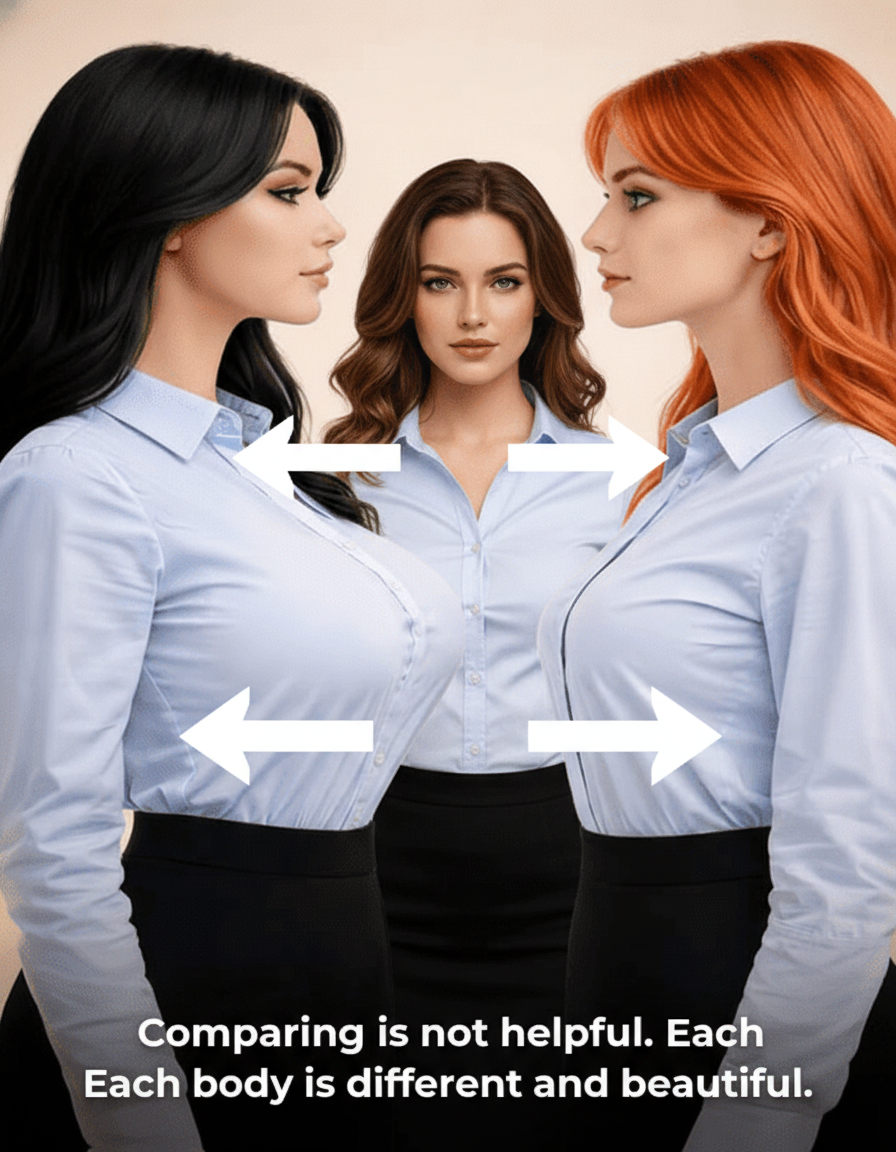
Let’s address and dismantle some common, yet unfounded, misconceptions:
Myth 1: Small breasts signify lower fertility.
Scientific evidence unequivocally refutes this notion. Fertility is determined by complex factors such as consistent ovulation, a balanced hormonal profile, and the health of reproductive organs. Breast size is simply not a clinical measure used to assess a woman’s fertility potential.
Myth 2: Small breasts indicate poor nutrition.
While severe malnutrition during critical developmental stages like puberty can impact breast development, in otherwise healthy adults, breast size alone offers no insight into one’s nutritional status. A balanced diet supports overall health, not necessarily breast size.
Myth 3: Small breasts are inherently less feminine.
Femininity is a fluid cultural construct, not a biological measurement. Throughout history and across diverse cultures, beauty ideals have varied dramatically. The undeniable truth is straightforward: breast size does not define a woman’s identity, her attractiveness, or her health.
The Profound Psychological Impact of Body Image
Beyond the biological facts, the psychological dimension of body image warrants significant attention. Studies in body image psychology consistently demonstrate that dissatisfaction with breast size can profoundly impact a woman’s self-esteem and overall well-being, even when her physical health is impeccable. Social comparison plays a potent role in shaping self-perception, especially with constant exposure to idealized images in media. As this exposure increases, so too does the propensity for body dissatisfaction, affecting women of all sizes, not exclusively those with smaller breasts.
Recognizing the signs that body image concerns might be impacting your emotional health is the vital first step toward fostering a healthier self-perception. These signs can include:
- Actively avoiding specific types of clothing or swimwear
- Frequently comparing your body to others you see in person or online
- Experiencing anxiety or discomfort in intimate situations
- Engaging in negative self-talk about your physical appearance
The encouraging news is that cultivating and strengthening body confidence is entirely possible, regardless of your inherent body shape or breast size. Embracing self-acceptance and focusing on overall well-being are far more empowering than adhering to narrow, often unrealistic, societal standards.