 By admin
 Ever found yourself wondering why some meals leave you feeling light and energized, while others result in a heavy, sluggish sensation? You’re not alone. Many people experience varying reactions to everyday staples like a bowl of rice, a hearty lentil dish, or a creamy yogurt. The speed at which your body processes food isn’t uniform; it’s a complex interplay influenced by the specific ingredients, your individual metabolism, and even the size of your meal. The good news is that by understanding these digestive timelines, you can make more informed dietary choices that enhance your comfort and sustain your energy throughout the day.
Here’s a crucial insight often overlooked: the duration food spends in your stomach—a process known as gastric emptying—is merely the initial phase of digestion. Grasping the distinction between foods that digest quickly and those that take their time can profoundly impact how you feel from morning to night. Stay with us, and by the end of this guide, you’ll be equipped with practical knowledge to optimize your daily eating habits.
What Exactly Happens During Digestion?
The intricate journey of digestion commences the very moment food enters your mouth. Chewing mechanically breaks down food, while saliva begins the chemical breakdown. This softened mass then travels to your stomach, where powerful acids and enzymes transform it into a semi-liquid mixture called chyme. From the stomach, chyme progresses into the small intestine, where the majority of nutrient absorption occurs. Finally, the large intestine processes remaining waste before elimination. Scientific research indicates that this entire process—from the first bite to complete elimination—typically spans anywhere from 24 to 72 hours.
However, for most individuals, the most relevant phase is gastric emptying: the period food resides in the stomach before moving into the intestines. This critical stage usually lasts between 2 to 6 hours for a typical mixed meal, though simpler foods can clear much more rapidly. A key takeaway from nutrition experts is this: simpler carbohydrates tend to exit the stomach faster, whereas foods rich in fiber, protein, or fat require a longer processing time. This isn’t about labeling foods as “good” or “bad,” but rather understanding how your body utilizes them for consistent energy and digestive comfort.
Key Factors Influencing Digestion Speed
Several variables contribute to how swiftly your body digests food. Recognizing these can help you anticipate your body’s response to different meals:
- Food Composition: The macronutrient breakdown is paramount. Carbohydrates, particularly simple ones, generally digest more quickly than proteins, which in turn are processed faster than fats.
- Fiber Content: Foods abundant in dietary fiber, both soluble and insoluble, tend to slow down the digestive process. This extended transit time allows for better nutrient release and contributes to a feeling of fullness.
- Fat Levels: Higher fat content in a meal significantly delays gastric emptying. This is why fatty foods often leave you feeling satiated for longer, but can also cause a heavier sensation.
- Meal Size and Liquid Intake: Larger meals naturally take more time to digest than smaller portions. Similarly, the amount of liquid consumed with a meal can influence the speed at which it moves through the stomach.
- Individual Metabolic Differences: Factors like age, activity level, stress, and underlying health conditions (such as irritable bowel syndrome or gastroparesis) all play a significant role in an individual’s unique digestive efficiency.
Beyond these general principles, the real differences become apparent when we examine specific, commonly consumed foods.
How Long Do Common Foods Take to Digest? A Detailed Guide
While individual gastric emptying times can vary, the following provides a realistic overview based on general guidelines from leading digestive health sources. These figures represent the approximate duration food typically remains in the stomach before advancing further into the digestive tract (note that full digestion through the entire gut takes considerably longer).
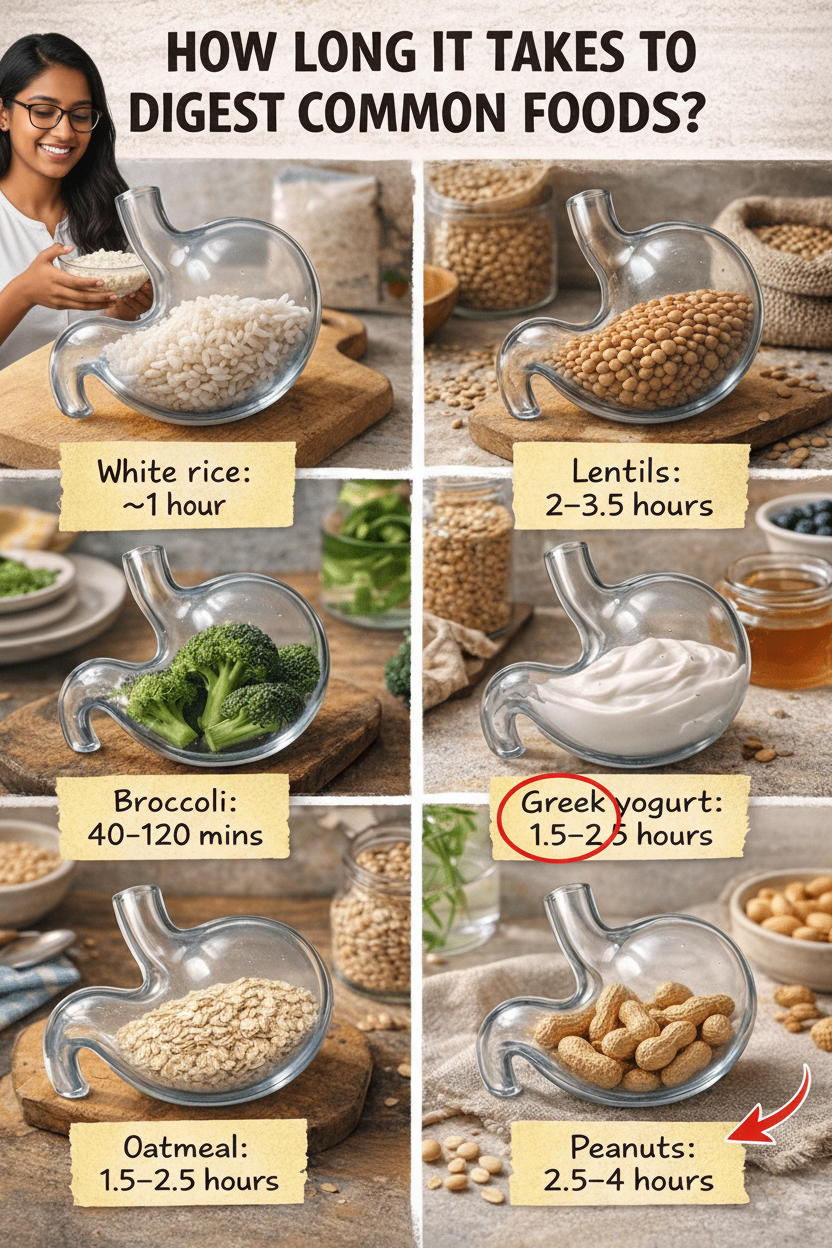
- White Rice: Approximately 30–60 minutes (or up to about 1 hour). As a refined carbohydrate, white rice is quickly broken down, offering a rapid source of energy.
- Broccoli: Roughly 40–120 minutes. This cruciferous vegetable is rich in water and fiber, allowing it to clear the stomach relatively quickly, though preparation methods (e.g., raw vs. well-cooked) can influence this.
- Greek Yogurt: Around 1.5–2.5 hours. Thanks to its higher protein content and often some fat, Greek yogurt takes longer to digest compared to simple carbohydrates, providing more sustained satiety. Lower-fat varieties may process slightly faster.
- Oatmeal: Typically 1.5–2.5 hours. Oats are an excellent source of complex carbohydrates and soluble fiber, ensuring a gradual release of energy without causing a rapid spike or crash.
- Lentils: Generally 2–3.5 hours. These legumes are powerhouses of both protein and fiber, requiring your stomach to work harder and longer to break them down effectively.
- Peanuts: Between 2.5–4 hours. High in healthy fats and protein, peanuts and other nuts tend to linger in the stomach for the longest duration among these examples, contributing to extended feelings of fullness.
Quick Reference: Food Digestion Time Categories
For a simplified overview, here’s how common foods can be categorized by their gastric emptying rates:
| Category | Gastric Emptying Range | Examples |
|---|---|---|
| Fastest | Under 1–2 hours | Simple carbs like white rice, certain water-rich vegetables |
| Moderate | 1.5–3 hours | Yogurt, oatmeal, broccoli |
| Slower | 2+ hours | Lentils, peanuts, higher-fat or protein-rich foods |
These timelines are derived from studies on gastric emptying and general digestive transit patterns; your individual experience might vary slightly due to personal physiology and other factors. However, understanding how different foods combine can offer even more control over your digestive comfort.
The Impact of Food Combinations on Digestion
While assessing single food items provides a baseline, real-world meals often involve a blend of various ingredients. Combining carbohydrates with protein or fat—such as pairing lentils with rice, or enjoying yogurt with fruit and nuts—significantly influences overall gastric emptying. This strategic combination can help stabilize blood sugar levels, preventing rapid spikes and crashes, and prolong feelings of satisfaction.
Research consistently suggests that meals balanced with fiber and protein promote a more gradual and sustained nutrient release. Many individuals find this approach highly beneficial for maintaining steady energy levels throughout the day without experiencing the post-meal slump often associated with unbalanced eating.
Practical Tips for Optimizing Your Digestive Comfort
Armed with this knowledge, you can make conscious choices to support more comfortable and efficient digestion:
- Balance Your Meals: Incorporate a mix of macronutrients—carbohydrates, proteins, and healthy fats—to regulate gastric emptying and promote sustained energy.
- Prioritize Fiber: Include plenty of fruits, vegetables, and whole grains to aid digestive transit and enhance satiety.
- Chew Thoroughly: Digestion begins in the mouth; proper chewing reduces the workload on your stomach.
- Stay Hydrated: Adequate water intake is essential for smooth digestive processes.
- Listen to Your Body: Pay attention to how different foods and combinations make you feel to personalize your eating habits.
Ultimately, understanding how long it takes for food to digest empowers you to tailor your diet for optimal energy, comfort, and overall digestive health. By being mindful of food composition and combination, you can transform your relationship with eating and unlock a greater sense of well-being.