 By admin
Embark on a journey into the captivating realm of Datura stramonium, a plant renowned for its striking beauty yet infamous for its inherent toxicity. Known by a multitude of evocative names such as Devil’s trumpet, Jimsonweed, thorn apple, or devil’s snare, this extraordinary member of the nightshade family has intrigued botanists, historians, and curious onlookers for centuries.
Adorned with dramatic, trumpet-shaped flowers and distinctly spiky seed pods, this plant frequently draws attention in natural landscapes and along roadsides. However, beneath its alluring facade lies a potent chemical composition that serves as a powerful reminder of nature’s formidable power. Join us as we delve into the fascinating history, unique characteristics, and crucial safety considerations associated with this remarkable botanical specimen.
🌸 A Visually Striking Plant with Concealed Dangers
Upon initial observation, Datura stramonium presents an elegant and almost decorative appearance. Its prominent trumpet-shaped flowers, which typically display hues of white or pale purple, commonly unfurl in the evening, releasing a sweet and pervasive fragrance into the surrounding air.
Nevertheless, every single part of this plant contains naturally occurring compounds that can be profoundly detrimental if mishandled or ingested. Its leaves, flowers, seeds, and roots all harbor substances capable of affecting the nervous system. Consequently, the plant is universally recognized as highly toxic and must never be consumed under any circumstances.
Though originally native to the Americas, Datura has successfully spread and established itself across vast regions of the globe. It frequently flourishes in disrupted or disturbed soils, commonly found in environments such as:
-
Roadsides
-
Fields and pastures
-
Vacant lots
-
Edges of farmland
Its inherent capacity to thrive even in challenging environmental conditions underscores its resilience and contributes to its widespread prevalence.
🌱 Distinctive Botanical Features of Datura Stramonium
The ability to accurately identify this plant is crucial for preventing accidental exposure. Here are some of its key distinguishing characteristics:
Height
Datura plants can attain an impressive height, typically growing between 1.5 and 2 meters tall, making them quite conspicuous within open landscapes.
Leaves
The leaves are notably large, possess a deep green color, and feature irregularly lobed margins, lending the plant a somewhat wild and jagged aesthetic.
Flowers
The renowned trumpet-shaped blossoms grow in an upright orientation and can measure up to 15–20 cm in length. They are predominantly white or violet and characteristically open during nighttime hours.
Fruit (Seed Pods)
The plant produces distinctive round, spiny capsules which are sometimes referred to as thorn apples. Upon reaching maturity, these pods naturally split open, releasing dozens of small, black seeds.
These easily recognizable features ensure that Datura can be identified with relative ease once you are familiar with its characteristic appearance.
⚗️ Potent Natural Chemical Compounds
The formidable potency of Datura stramonium is attributed to several naturally occurring chemical compounds, specifically a group known as tropane alkaloids, which include:
-
Atropine
-
Scopolamine
-
Hyoscyamine
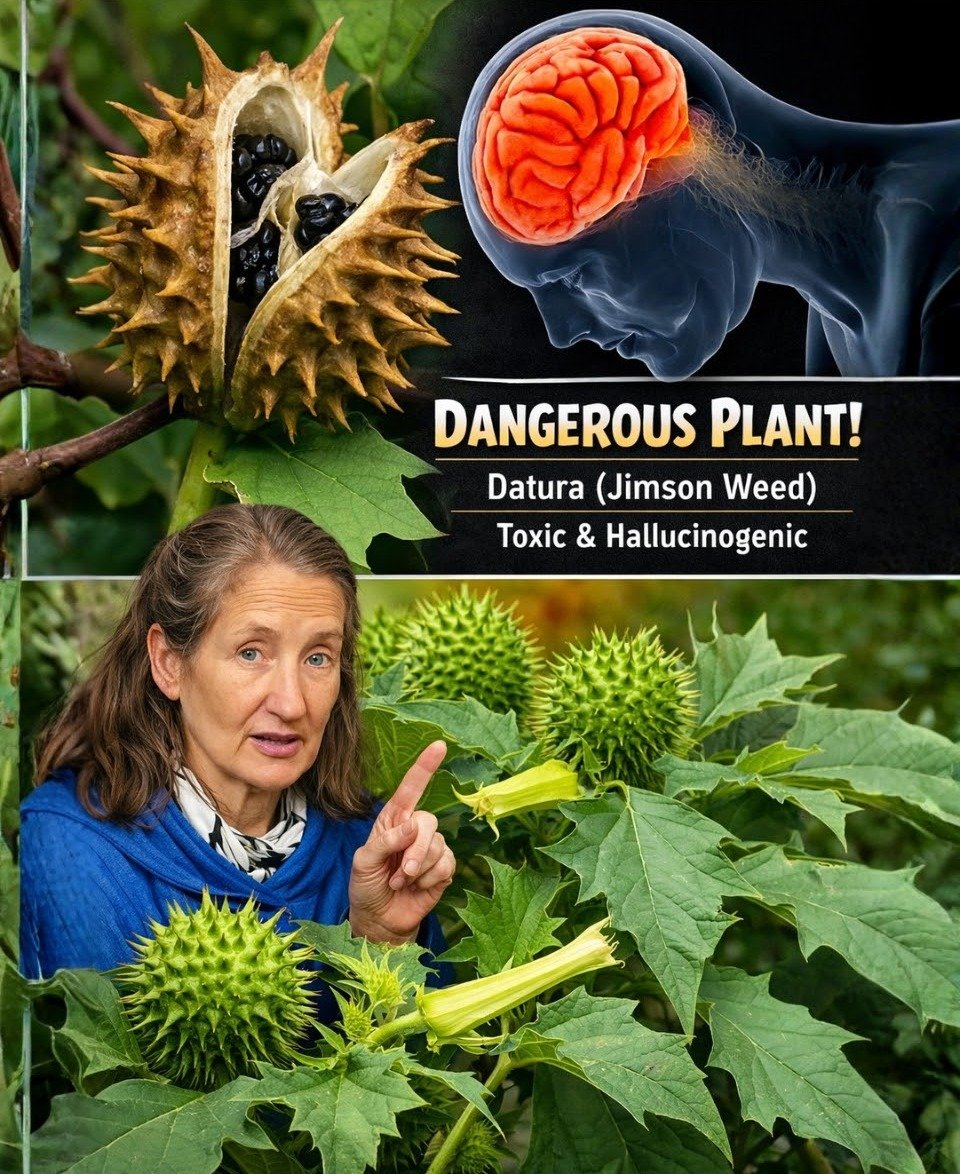
These powerful substances exert their influence on the nervous system by altering the function of specific neurotransmitters. While similar compounds have been rigorously studied and even utilized in pharmaceutical applications within strictly controlled medical environments, the concentrations present in wild Datura plants are highly variable and inherently dangerous.
For these critical reasons, Datura should never be consumed or applied without direct medical supervision.
📜 A Rich History in Culture and Traditional Narratives
Throughout the annals of history, Datura has woven itself into the fabric of stories, ceremonial rituals, and traditional practices across diverse cultures worldwide.
Indigenous Traditions
Certain Indigenous communities historically incorporated preparations derived from the plant into their spiritual ceremonies or significant rites of passage.
Traditional Medicine
In ancient herbal traditions, carefully controlled preparations of Datura were occasionally employed to alleviate symptoms of asthma, mitigate muscle spasms, or manage pain.
Folklore and Mythology
The plant’s striking appearance and powerful psychotropic effects led to its evocative naming as “Devil’s trumpet” or “Hell’s fig”, symbols that embody both profound fascination and inherent peril.
In contemporary times, modern medicine places a strong emphasis on meticulous caution and a thorough scientific understanding when interacting with any plants containing potent alkaloids.
⚠️ Significant Health Risks and Toxicity
Despite its undeniable aesthetic appeal, Datura stramonium is classified as highly poisonous. Even accidental ingestion of any part of the plant can precipitate severe and potentially life-threatening symptoms, including:
-
Confusion or delirium
-
Rapid heart rate
-
Blurred vision and profound dry mouth
-
Severe agitation or restlessness
-
Seizures or unconsciousness in extreme instances
Children, domestic pets, and livestock are particularly susceptible and vulnerable to its toxic effects, especially since the seeds or plant parts might appear appealing or unfamiliar to them.
🛡️ Essential Safety Tips and Preventative Measures
Should you encounter Datura either in its natural habitat or within your own property, it is imperative to observe these crucial precautions:
Learn to Identify the Plant
Familiarize yourself with its distinctive trumpet-shaped flowers, jagged leaves, and characteristic spiky seed pods.
Avoid Cultivating It Near Homes
Refrain from growing Datura in areas accessible to children or pets, such as gardens or play zones.
Wear Protective Gloves When Handling
If it becomes necessary to remove the plant, always use heavy-duty gloves to prevent any direct skin contact.
Educate Others on Its Dangers
Inform all family members, particularly children, about the plant’s inherent toxicity and potential risks.
Seek Immediate Medical Attention
In the unfortunate event of accidental ingestion, promptly contact poison control or emergency medical services without delay.
By adhering to these safety guidelines, you can significantly mitigate the risks associated with this beautiful yet dangerous plant.