 By admin
 You’ve likely encountered stories, perhaps in films or news reports, of long-term partners passing away within a short period of each other. This phenomenon, often termed “broken heart syndrome,” is not just a romantic or tragic notion but a medically recognized condition.
Have you ever pondered whether the profound anguish of losing a loved one could genuinely impact your cardiac health? While such narratives might seem too poignant to be true, medical science confirms that a distinct condition underlies many of these instances. Known medically as stress cardiomyopathy or takotsubo cardiomyopathy, broken heart syndrome is a temporary heart condition primarily triggered by intense emotional or severe physical stress.
This condition can strikingly mimic a heart attack. However, a crucial distinction is that it typically doesn’t involve blocked coronary arteries and often resolves with appropriate care and time. The emotional toll can be immense. Imagine the sudden, overwhelming grief following the loss of a spouse after five or six decades of shared life—the shock, the profound loneliness, and the crushing sadness. For some individuals, this surge of stress hormones can so intensely flood the body that it temporarily weakens the heart muscle, leading to alarming symptoms like chest pain and difficulty breathing.
Leading institutions such as the Mayo Clinic and Cleveland Clinic have extensively researched and explained the mechanisms behind this condition. Stories shared in both medical studies and public news highlight its prevalence, particularly among older adults, often surprising many. Yet, there’s a vital, hopeful aspect often overlooked: understanding this condition enables early recognition of warning signs and empowers individuals to take proactive steps to protect their heart during emotionally challenging periods. Continue reading to delve into what truly transpires within the body and discover practical strategies to build resilience against life’s most significant stressors.
What Exactly is Broken Heart Syndrome?
Broken heart syndrome manifests when a sudden, severe stressor causes a specific part of the heart—most commonly the left ventricle—to temporarily weaken and alter its shape. This primary pumping chamber balloons outwards, adopting a distinctive form reminiscent of a traditional Japanese octopus trap, known as a “takotsubo”—hence one of its medical appellations.
Studies indicate that this condition accounts for approximately 2% of all suspected heart attack cases presenting in hospitals. It predominantly affects women, particularly those in postmenopausal stages, although men can also experience it. When men are affected, they often face a higher risk of complications. Unlike a classic heart attack, which involves permanent damage from blocked blood flow, takotsubo cardiomyopathy typically results in no lasting harm. The heart’s impaired function is usually reversible.
However, this reversibility does not render the condition harmless. In rare instances, serious complications such as life-threatening heart rhythm disturbances or cardiogenic shock can arise, and the recovery trajectory can vary considerably among individuals.
Common Triggers: Why Stress Overwhelms the Heart
The precise physiological mechanism behind broken heart syndrome is still being fully elucidated, but medical experts generally concur that a massive, acute release of stress hormones, particularly adrenaline, temporarily overwhelms heart cells. This hormonal surge effectively ‘stuns’ the heart muscle, disrupting its normal contractile function.
Emotional triggers frequently include:
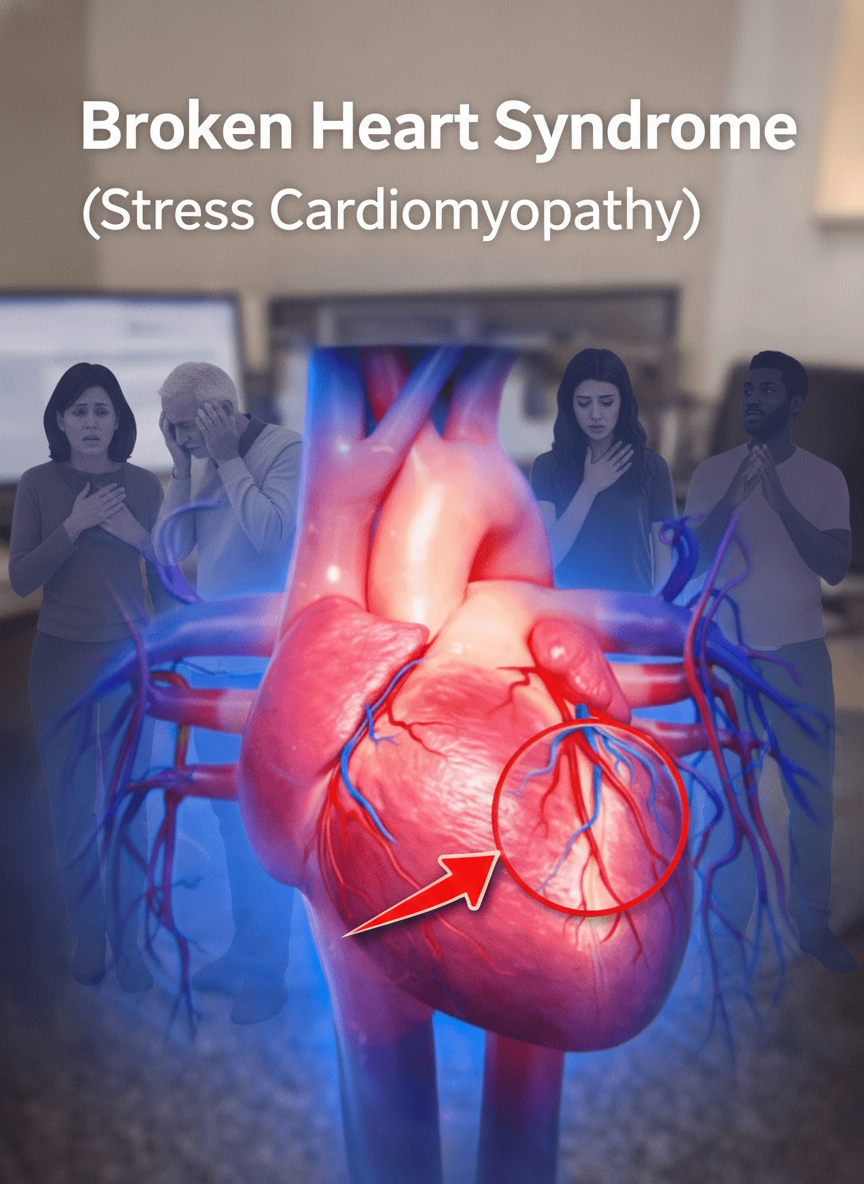
- The death of a beloved family member or close friend
- Divorce or the end of a significant relationship
- Intense arguments or interpersonal conflict
- Significant financial losses or instability
- Receiving devastating or shocking news
Physical triggers might involve:
- Suffering from a serious illness or undergoing major surgery
- Experiencing severe, acute pain
- Acute asthma attacks or other respiratory crises
- Involvement in a severe accident or physical trauma
Intriguingly, while negative stressors are the most common culprits, reports suggest that even intensely positive shocks, such as winning a substantial lottery prize, can occasionally trigger the syndrome, though these instances are far less frequent.
Recognizing the Symptoms: Often Mistaken for a Heart Attack
Symptoms of broken heart syndrome typically manifest suddenly, often within minutes to a few hours following the stressful event. Many individuals experiencing these signs rush to the emergency room, convinced they are having a heart attack, due to the striking similarity of the sensations.
Common indicators include:
- Sudden, severe chest pain or pressure
- Acute shortness of breath or difficulty breathing
- Irregular heartbeats or palpitations
- Profound fatigue or unexplained weakness
- Fainting or syncope in some severe cases
Diagnostic blood tests may reveal elevated cardiac markers, similar to those seen during a heart attack, and imaging studies like an echocardiogram will show the characteristic ballooning of the left ventricle. Crucially, however, a coronary angiogram typically reveals clear arteries with no blockages, which is the key differentiator from a true heart attack. This diagnostic overlap underscores why immediate medical attention is paramount. Swift evaluation helps rule out more dangerous cardiac issues and ensures prompt initiation of supportive care.
How Doctors Diagnose and Treat Broken Heart Syndrome
The diagnostic process for broken heart syndrome typically involves a comprehensive approach:
- Reviewing Symptoms and Recent Stressors: A detailed patient history is taken to understand the onset of symptoms and any preceding emotional or physical triggers.
- Electrocardiogram (ECG): To assess the heart’s electrical activity and identify any abnormalities.
- Blood Tests: To measure cardiac enzyme levels, which can be elevated in both heart attacks and stress cardiomyopathy.
- Echocardiogram or Other Imaging: To visualize the heart’s structure and function, specifically looking for the characteristic ventricular ballooning.
- Cardiac Catheterization: Occasionally performed to definitively confirm the absence of coronary artery blockages, thus distinguishing it from a heart attack.
Treatment is primarily supportive, aimed at helping the heart recover its normal function, which usually occurs within days to several weeks. Doctors may prescribe medications to manage symptoms, reduce the workload on the heart, or prevent potential complications. Initial hospital monitoring is common to ensure stability and observe the heart’s recovery trajectory. Most individuals experience a full recovery of heart function, though some may report lingering fatigue. Recurrence is relatively rare, with long-term studies indicating a rate of approximately 1-2% per year.