 By admin
 In the rhythm of daily life, many women tend to overlook minor changes in their breasts, often attributing them to typical hormonal fluctuations, the natural aging process, or everyday stresses. Yet, these seemingly insignificant alterations can sometimes be critical indicators of a more serious underlying health issue. Delaying attention to such changes might mean missing a crucial window for early detection and intervention. The empowering news is that by cultivating a deeper awareness of your body, you can identify these differences sooner—and we’re here to guide you on how to do just that.
Why Vigilance Over Breast Changes Is Paramount
Breast cancer remains one of the most prevalent cancers affecting women globally. Projections from the American Cancer Society indicate that approximately 316,950 new cases of invasive breast cancer are anticipated in women in 2025 in the United States alone. When detected in its localized stages, the five-year relative survival rate for breast cancer soars to nearly 99%. However, a stark reality persists: many cases are only diagnosed once symptoms become more pronounced.
Extensive research underscores the vital role of understanding your breasts’ normal appearance and feel. This personal knowledge can be instrumental in identifying potential concerns between scheduled clinical screenings. While it’s true that the vast majority of breast changes are benign—stemming from hormonal shifts, benign conditions, or even ill-fitting garments—it’s never advisable to ignore persistent or unusual changes. This is precisely why recognizing these lesser-known signs is incredibly powerful and can significantly influence your health journey.
10 Crucial Warning Signs to Monitor
These indicators, highlighted by leading health organizations such as the American Cancer Society and Mayo Clinic, aren’t always characterized by a palpable lump. Here’s what every woman should be aware of:
- A New or Unusual Lump or Thickening: While many breast lumps are benign, any newly discovered mass, whether firm, soft, irregular, or rounded, warrants immediate medical evaluation. It’s often painless, but its presence is a key indicator never to ignore.
- Changes in Breast Size or Shape: One breast might inexplicably become heavier, noticeably larger, or alter its contour without any clear explanation. A sudden onset of asymmetry can be an important early clue.
- Skin Texture Alterations, Such as Dimpling or Puckering: This phenomenon is sometimes referred to as “peau d’orange” due to its resemblance to an orange peel. It occurs when underlying tissue pulls on the skin, creating visible indentations.
- Persistent Redness, Rash, or Itching: Pay particular attention if these symptoms affect only one breast and do not respond to typical treatments for irritation or allergies.
- Nipple Changes, Including Inversion or Flattening: A nipple that suddenly turns inward (if it was previously outward) or noticeably flattens can be a red flag.
- Skin on the Nipple or Areola Becoming Red, Flaky, or Thickened: This can mimic eczema but typically affects only one side and shows no improvement with standard topical creams.
- New Nipple Discharge: Especially concerning if it’s clear, bloody, or appears spontaneously from a single breast without squeezing.
- Constant Breast or Nipple Pain: Pain that is not connected to your menstrual cycle and remains localized to one specific area should be investigated.
- Swelling in Part or All of the Breast: Even in the absence of a distinct lump, the affected breast might feel unusually tight, warm, or full.
- Swollen Lymph Nodes Under the Arm or Near the Collarbone: The sudden appearance of firm, painless nodes in these areas warrants medical attention.
Understanding Inflammatory Breast Cancer: A Rare but Aggressive Form
Inflammatory Breast Cancer (IBC) accounts for a small percentage (1-5%) of all breast cancer cases, yet it is frequently overlooked because it rarely presents with a traditional lump. Instead, IBC manifests through rapid and distinct changes, including:
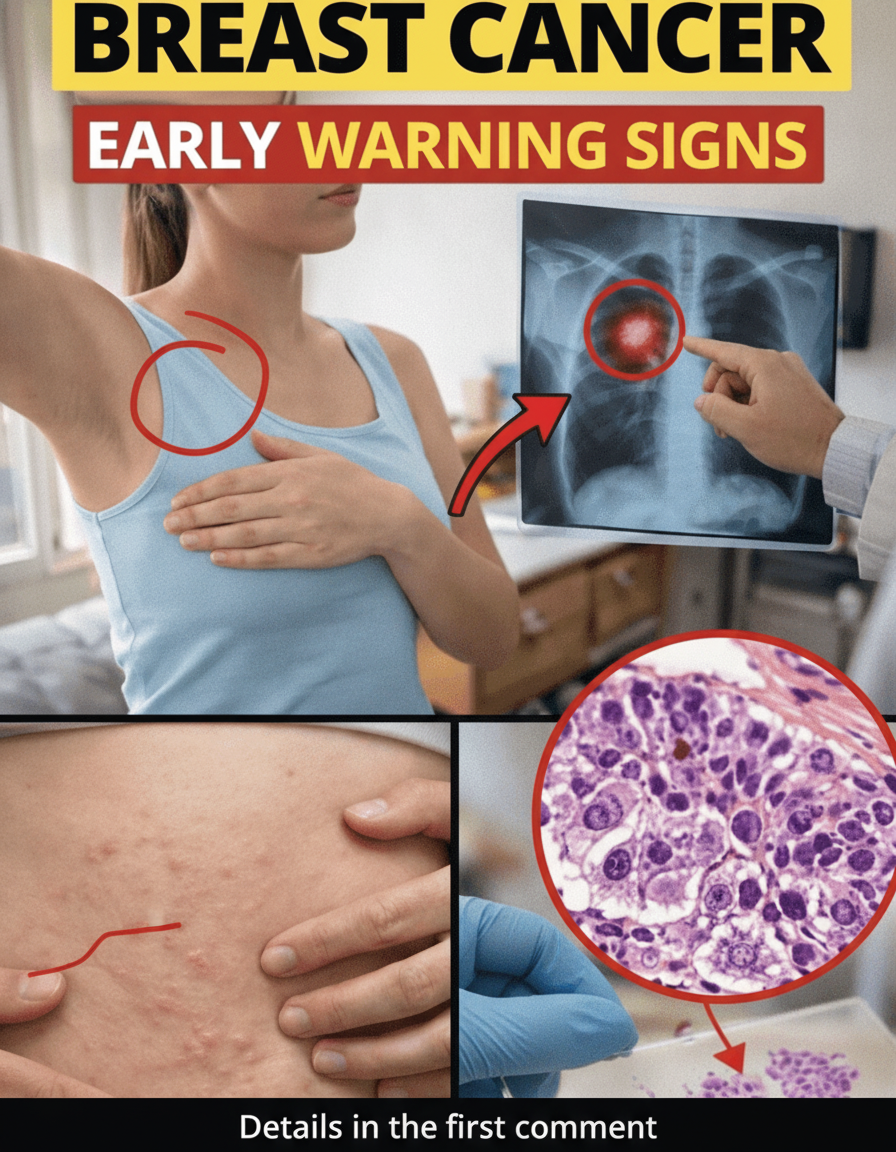
- Sudden, widespread redness and swelling across the breast.
- A sensation of warmth or unusual heaviness in one breast.
- Skin that develops a pitted, bruised, or orange-peel-like appearance.
These symptoms can progress quickly, sometimes within a few weeks or months, and are often initially misdiagnosed as an infection. Experts from institutions like the Mayo Clinic and the American Cancer Society emphasize that immediate medical evaluation is critical if these symptoms emerge suddenly.
Initial Clues: A Quick Comparison of Common Signs
Based on general research observations, here’s an overview of how frequently certain signs are the first indication of a potential issue, along with notes on their importance for early attention:
| Sign | How Often It’s the First Noticed Change | Notes on Early Attention |
|---|---|---|
| Lump or thickening | Most common (approx. 70-80%) | Often painless, but any new lump requires prompt investigation. |
| Skin dimpling or texture change | Around 20% | Can be very subtle initially, watch for persistent changes. |
| Swelling or redness | Varies, significantly higher in IBC cases | Can progress rapidly; urgent evaluation is crucial. |
| Nipple changes or discharge | Less common | One-sided or spontaneous discharge is a key concern. |
Simple Steps for Monthly Breast Self-Awareness
While a formal clinical exam isn’t necessary every month, developing an intimate familiarity with your breasts is incredibly beneficial. Here’s an easy routine recommended by health organizations to foster self-awareness:
- In Front of a Mirror: Stand with your arms resting at your sides, then raise them overhead. Observe your breasts closely for any changes in shape, skin texture, or nipple appearance.
- Lying Down: Using the pads of your three middle fingers, gently feel your entire breast area and armpit in circular motions. Apply varying levels of pressure—light, medium, and firm—to detect any abnormalities at different depths.
- In the Shower: Soapy skin can make it easier to glide your fingers and detect subtle changes.
Aim to perform this self-check once a month, ideally a few days after your menstrual period concludes (or on the same designated day each month if you are postmenopausal). If you notice anything new or unusual, consider making notes or taking photos for future reference. Remember, this practice of self-awareness is a complementary tool and should never replace regular professional medical screenings and consultations.