 By admin
 Beyond Lumps: Subtle Breast Changes You Shouldn’t Overlook
Many of us are familiar with the advice to check for breast lumps, but what about other, less obvious changes? A woman I once met at a community clinic shared a common experience: she’d noticed a strange breast change months prior but dismissed it, assuming it was just a natural part of aging. Like many, she didn’t want to “make a big deal” out of something personal. Yet, the persistent worry grew, proving that uncertainty can often be worse than the symptom itself.
The truth is, while many breast changes are harmless, ignoring unusual signals from your body can lead to unnecessary anxiety and potentially delay important care. Public health research consistently shows that early awareness of changes often leads to better outcomes and greater peace of mind. This article will highlight several lesser-known signs many people overlook, empowering you to feel more confident about your health. By the end, you’ll also discover a simple habit many doctors recommend for staying body-aware without anxiety.
Subtle Breast Changes Many People Ignore
Most people primarily focus on lumps as the only warning sign. However, breast tissue can change in various subtle ways that warrant attention. These changes don’t automatically signal something serious, but they are signals worth noticing. Here are a few often-overlooked signs:
- A firm area that feels distinct from surrounding tissue.
- Thickened skin or areas that feel slightly swollen.
- Persistent tenderness in one specific location.
- A lump located under the arm, rather than directly in the breast.
Crucially, many assume these changes must be painful. In fact, some of the most commonly reported breast changes are entirely painless, which is precisely why they often go unnoticed. Organizations like the American Cancer Society emphasize that paying attention to any new or unusual changes is a vital step adults can take for early awareness.
Skin Changes That Can Be Easy to Miss
Sometimes, the earliest visible changes manifest on the skin, not deep within the breast. This can be confusing, as skin alterations are easily mistaken for irritation, allergies, or normal aging. Keep an eye out for:
- Skin dimpling that resembles the texture of an orange peel.
- Persistent redness or warmth on the breast.
- Areas of thickened or puckered skin.
- Unusual swelling in just one breast.
It’s important to understand that skin changes can stem from various causes, including infections, inflammation, or benign conditions. However, if these changes persist for several weeks, healthcare professionals typically advise discussing them with a doctor. Unfortunately, many individuals wait for months, hoping the issue will resolve on its own. But there’s more to consider – the nipple area itself can also undergo significant changes.
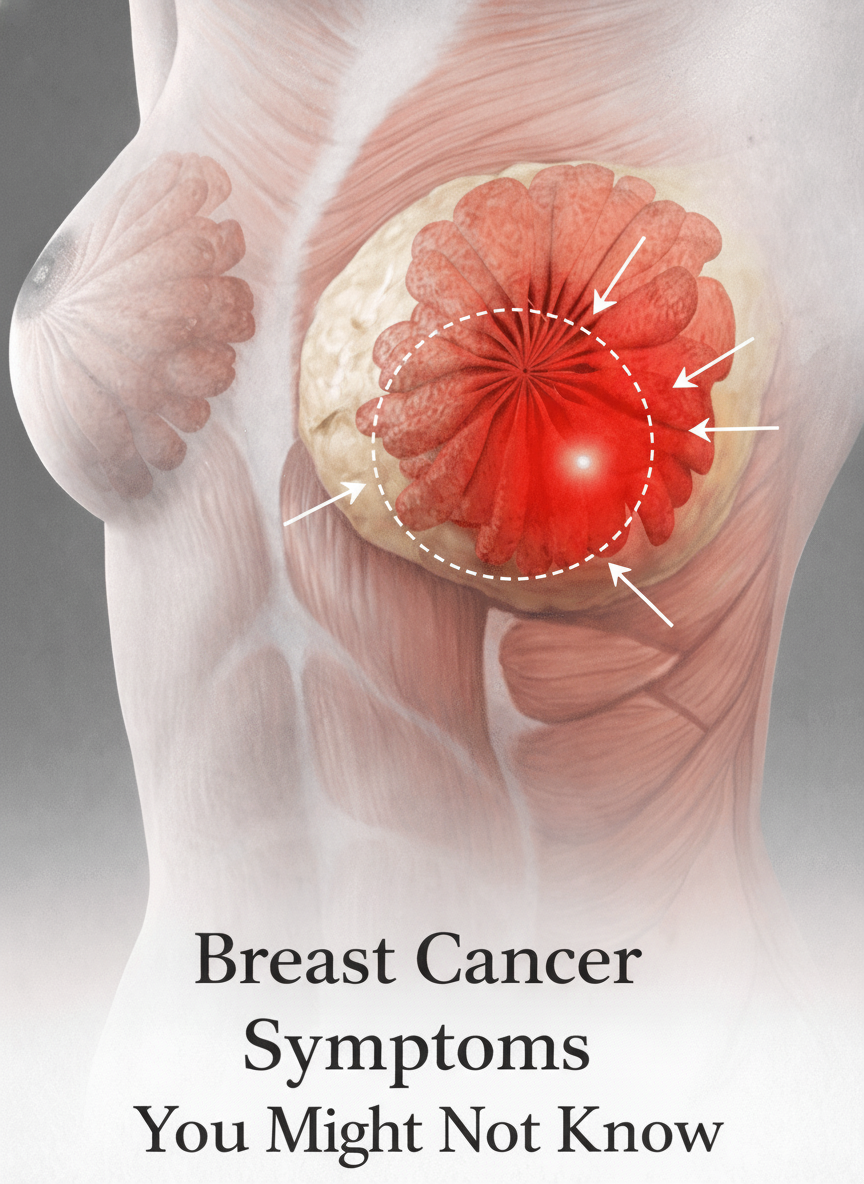
Nipple Changes That Should Not Be Ignored
Nipple changes are another frequently overlooked sign. While often attributed to aging or hormonal shifts (which can be true in many cases), persistent changes should always be evaluated. Potential changes include:
- A nipple turning inward (inversion) when it previously pointed outward.
- Unusual discharge not related to breastfeeding.
- Dryness, flaking, or irritation around the nipple.
- Ongoing sensitivity or discomfort.
The key takeaway here: occasional irritation is common. However, any nipple changes lasting longer than a few weeks warrant a conversation with a healthcare professional. Surprisingly, one of the most misunderstood symptoms isn’t visual at all; it’s how the breast feels.
Changes in Breast Shape or Size
Many adults assume breast shape remains stable throughout life. However, subtle shifts in shape or contour can appear gradually. For instance, notice if:
- One breast appears noticeably larger than the other.
- The overall contour or curve of the breast changes.
- Swelling appears in a specific area.
- The breast feels heavier or firmer than usual.
What many don’t realize is that these changes can develop slowly, making them easy to overlook. To help distinguish, here’s a comparison between common, harmless changes and those that deserve medical attention:
- Common, Harmless Changes: Temporary swelling before menstrual cycle, mild tenderness affecting both breasts, slight asymmetry that has always existed, skin irritation from clothing.
- Changes Worth Discussing With a Doctor: Swelling lasting several weeks, pain or firmness in one specific area, sudden change in size or shape, skin dimpling or puckering.
According to population studies, many breast changes reported in clinics turn out to be benign. However, proactive awareness and timely consultation remain your best tools for peace of mind and optimal health outcomes. The simple habit doctors quietly recommend? Regularly familiarizing yourself with your own breasts – knowing what’s “normal” for you – so you can quickly identify and address any new or persistent changes without undue alarm.