 By admin
 Beyond a Simple Twist: Why Your Ankle Stays Weak & What Older Adults Must Know
It starts innocently enough: a misstep, a slight roll of the ankle, a quick laugh to brush it off. But for many older adults, that “simple twist” can evolve into weeks of lingering pain, swelling, and a disheartening sense of instability. What seems like a minor incident often masks a deeper issue, quietly setting the stage for long-term ankle weakness if ignored.
The good news? Understanding why these sprains become persistent problems and adopting a few easy daily habits can make all the difference in regaining stability and confidence. Let’s uncover the overlooked steps that support lasting recovery.
Why Ankle Sprains Are More Than Just a Moment of Pain for Older Adults
An ankle sprain occurs when the ligaments – the strong, fibrous bands holding bones together and stabilizing joints – are stretched beyond their normal limits. As we age, these vital tissues naturally lose some of their elasticity and strength. This means movements that were once harmless, like stepping on uneven ground, can suddenly lead to a painful twist.
Most sprains happen when the foot rolls inward (an “inversion injury”), straining the outer ankle ligaments, especially the anterior talofibular ligament. However, outward rolls or quick directional changes can also cause injury. The critical takeaway: a sprain isn’t just fleeting pain. It’s a signal that your ankle’s foundational stabilizing structures have been compromised. Without proper recovery, these structures may not regain their full strength and coordination, leaving your ankle vulnerable long after the initial swelling subsides.
Understanding the Levels of Ankle Sprain Severity
Not all ankle sprains are created equal. Medical professionals categorize them into three grades, which helps explain why recovery times vary so widely:
| Sprain Grade | Ligament Damage | Typical Experience |
|---|---|---|
| Grade I (Mild) | Ligament stretched | Mild pain, slight swelling, walking usually possible with minor discomfort. |
| Grade II (Moderate) | Partial ligament tear | Noticeable swelling, bruising, moderate pain, difficulty walking comfortably. |
| Grade III (Severe) | Complete ligament tear | Significant swelling, severe pain, inability to bear weight, requiring medical attention. |
A common misconception is that pain directly correlates with severity. Many moderate sprains might feel manageable initially, leading individuals to skip essential rehabilitation. This decision, unfortunately, is a primary driver of chronic ankle weakness and recurrent sprains later in life, as highlighted by sports medicine research. Incomplete recovery leaves the joint unstable and prone to re-injury.
Key Symptoms Older Adults Should Never Ignore
Your body sends clear signals after an ankle twist, but these are often underestimated. Pay close attention to:
- Persistent pain around the ankle joint
- Swelling that doesn’t resolve within a few days
- Unexplained bruising or discoloration
- Difficulty walking normally or a limp
- A feeling that your ankle might “give way”
- Morning stiffness that lasts beyond initial movement
Lingering stiffness or instability isn’t just “part of getting older.” It often indicates that your joint hasn’t fully recovered its normal movement patterns and, crucially, its proprioception.
The Overlooked Factor: Proprioception
Proprioception is your body’s innate ability to sense the position and movement of your joints without looking. When ligaments are stretched or torn during a sprain, this vital sensory system can become impaired. Essentially, your brain receives slower or less accurate signals from your ankle, making you more susceptible to another misstep or fall. This is why effective rehabilitation goes beyond just strengthening; it rigorously focuses on restoring balance, coordination, and proprioceptive awareness.
Gentle Exercises to Rebuild Ankle Mobility and Stability
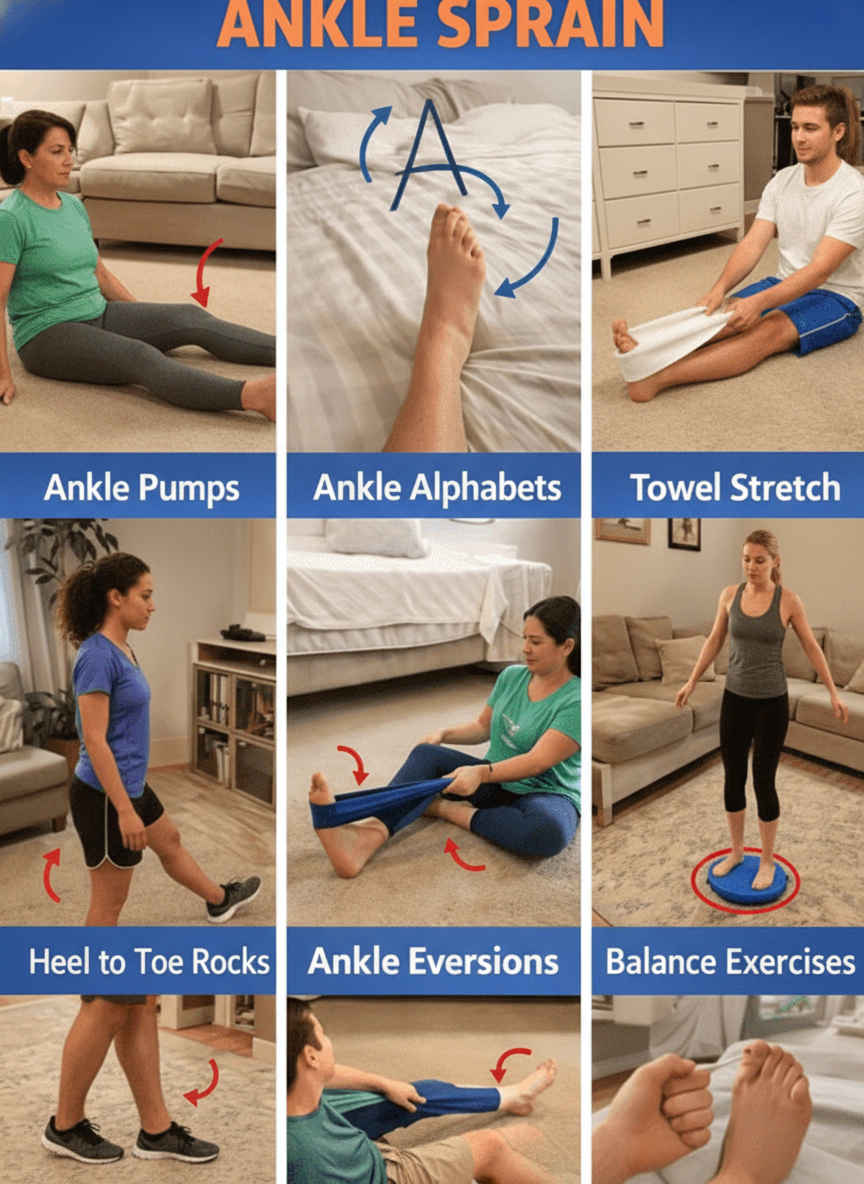
Once initial pain and swelling subside, incorporating gentle, movement-based exercises is crucial for restoring circulation, flexibility, and coordination. These are commonly recommended by physical therapists:
- Ankle Pumps: While seated with your leg extended, slowly point your toes towards your body, then away. Repeat 10-15 times. This boosts blood flow and reduces stiffness.
- Ankle Alphabet: Lift your foot slightly off the floor and, using your big toe, “write” each letter of the alphabet in the air. This gently activates various ankle muscles and improves range of motion.
- Heel-to-Toe Rocking: Standing near a sturdy chair or wall for support, slowly rock your weight forward onto your toes, lifting your heels. Then, rock back onto your heels, lifting your toes. Perform 10-15 gentle repetitions to improve balance and ankle strength.
- Single-Leg Stand (Advanced): Once comfortable, try standing on the injured leg for 30 seconds, holding onto support if needed. Gradually increase time and reduce support. This directly targets proprioception and balance.
Remember, a “simple twist” can have complex consequences if not addressed properly. By understanding the risks, recognizing the signs, and consistently engaging in gentle rehabilitative habits, older adults can actively prevent chronic weakness and maintain robust ankle health for years to come.