 By admin
 Achieve Perfect Hard-Boiled Eggs: Unraveling the Mystery of the Green Yolk Ring and Simple Prevention Tips
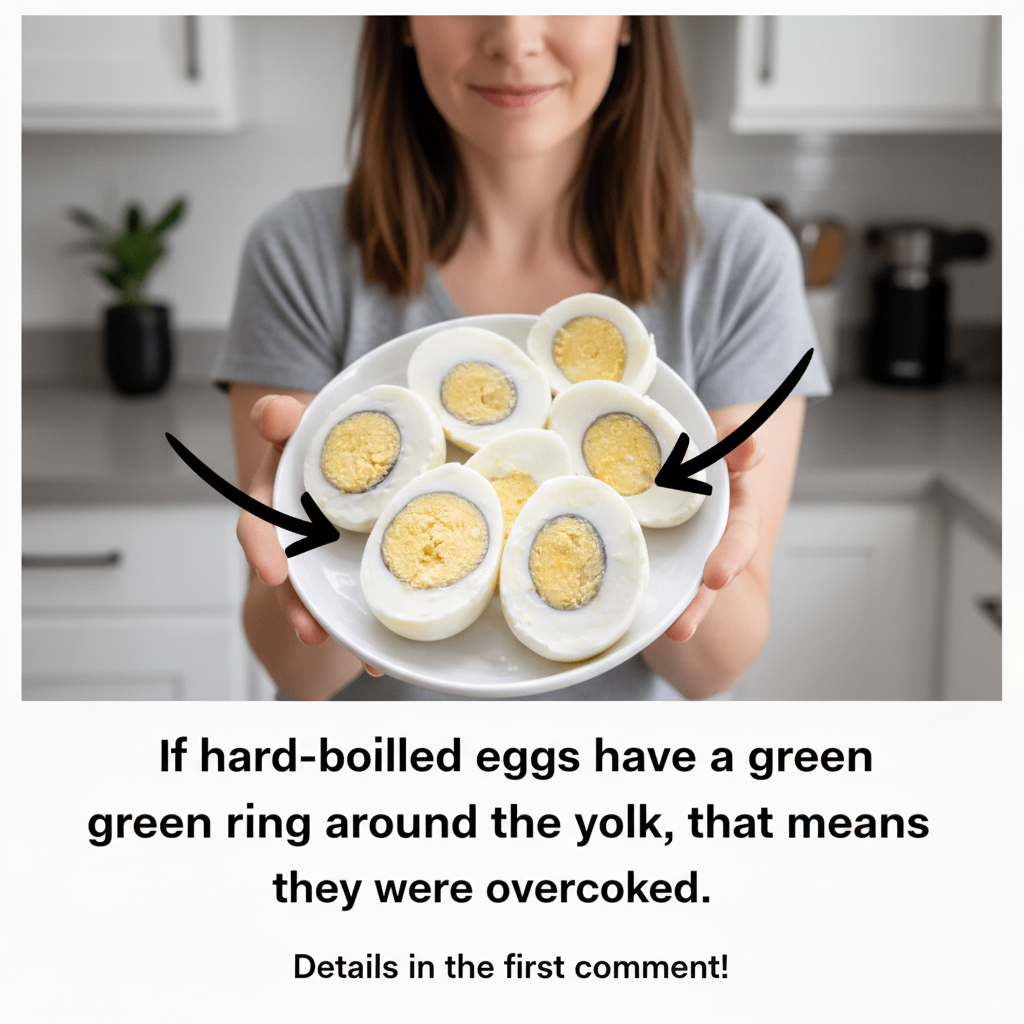
Ever cracked open a hard-boiled egg, only to be met with a disappointing greenish-gray halo surrounding the yolk instead of that vibrant, sunny yellow? This common kitchen dilemma can certainly detract from the appeal of your healthy lunch or a beautifully prepared family brunch. It’s a frequent source of frustration, making you wonder if your culinary skills are failing you, especially when aiming to serve appealing, nutritious meals to family and friends. The good news is, this unsightly discoloration is entirely harmless and stems from a straightforward chemical process that’s incredibly easy to prevent. By the end of this guide, you’ll master the simple, science-backed techniques to banish that green ring for good, ensuring perfectly cooked hard-boiled eggs every single time. 🥚
🥚 What Exactly is the Green Ring in Hard-Boiled Eggs?
Encountering that distinctive greenish discoloration around the yolk of your hard-boiled eggs can be quite disheartening, particularly when you’re meticulously preparing appealing snacks or salads for guests. Rest assured, this visual alteration is a natural occurrence during the cooking process and is in no way indicative of spoiled or unsafe ingredients. Many home chefs find this phenomenon frustrating, as it can make even the most basic, protein-rich dish appear less appetizing. However, the most crucial takeaway is this: the green ring is completely safe to consume and offers a fascinating glimpse into the interplay of heat and food chemistry.
🔬 The Culinary Chemistry: Why the Green Ring Forms
Food scientists universally agree on the precise reason behind the formation of the green ring in hard-boiled eggs. This common phenomenon occurs due to a chemical reaction involving two key elements: sulfur, primarily found in the egg white, and iron, which is abundant in the yolk. When eggs are subjected to excessive heat or cooked for too long, these elements react to form a compound known as ferrous sulfide. This harmless compound manifests as the greenish-gray layer you see. This very reaction is a staple topic in introductory food chemistry courses worldwide.
If you’ve ever felt a moment’s hesitation before serving hard-boiled eggs with this discoloration at a gathering, you’re certainly not alone; it can instantly make a perfectly good, healthy food option appear unappetizing or overcooked. The duration of heat exposure directly correlates with the prominence of the green ring. Crucially, extensive research consistently confirms that this chemical change is purely cosmetic. The presence of ferrous sulfide never indicates that your eggs are unsafe to eat.
🍳 Key Factors Contributing to the Green Yolk Ring
The primary culprit behind the unsightly green ring in hard-boiled eggs is almost always overcooking. This becomes particularly frustrating when you’re preparing a large batch for meal prep, only to find them visually unappealing. Unlike soft-boiled or medium-boiled eggs, hard-boiled eggs require a longer exposure to heat. This extended cooking time provides ample opportunity for the sulfur in the whites and the iron in the yolks to react and form ferrous sulfide. Several factors can exacerbate this issue:
- Excessive Heat: Boiling eggs at a vigorous, rolling boil rather than a gentle simmer accelerates the chemical reaction.
- Prolonged Cooking Time: Leaving eggs in hot water for too long after they’re “done” continues the sulfur-iron reaction.
- Inadequate Cooling: Failing to rapidly cool the eggs immediately after cooking allows residual heat to prolong the chemical process, intensifying the green ring.
- Egg Age: While less common, very fresh eggs can sometimes be more prone to the green ring due to slight differences in pH and gas exchange, though overcooking remains the dominant factor.
Essentially, the longer an egg remains hot, the greater the likelihood of encountering that disappointing greenish discoloration when you finally slice it open.
✅ Your Foolproof Guide to Perfect Hard-Boiled Eggs (No Green Ring!)
If that pesky green ring has consistently marred your quest for perfectly cooked hard-boiled eggs, these straightforward steps are about to revolutionize your kitchen routine. Follow this guide for consistently beautiful results:
- Start Cold: Place your eggs in a pot and cover them with cold water, ensuring they are submerged by about an inch.
- Gentle Heat: Bring the water to a gentle simmer, not a vigorous, rolling boil. This controlled, lower-temperature approach minimizes the rapid protein denaturation and subsequent sulfur-iron reaction that causes the green ring.
- Precise Timing: Once the water reaches a gentle simmer, cover the pot, remove it from the heat, and let the eggs sit for precisely 10-12 minutes for large eggs. Adjust timing slightly for smaller or extra-large eggs.
- Immediate Cooling: The moment your timer goes off, transfer the eggs immediately to an ice bath. This crucial step halts the cooking process and prevents further chemical reactions.
🧊 The “Ice Bath” Secret: Your Ultimate Weapon Against the Green Ring
The single most effective strategy for preventing the green ring in hard-boiled eggs is the immediate transfer to an ice bath after cooking. This rapid cooling technique is your secret weapon. By plunging the hot eggs into ice-cold water, you instantly halt the cooking process and, more importantly, stop the chemical reaction between sulfur and iron from progressing further. This ensures your egg yolks remain a vibrant, appealing yellow.
Beyond aesthetic perfection, this quick cool-down offers another significant benefit: it makes peeling hard-boiled eggs remarkably easy. The sudden temperature change helps the egg white contract, separating it from the shell membrane. For optimal results, ensure the eggs remain in the ice water for at least five minutes, or until they are completely cool to the touch. This step is indispensable for truly perfect hard-boiled eggs.
🥗 Does the Green Ring Impact Taste, Safety, or Nutritional Value?
A common concern for many home cooks upon encountering the green ring is whether it compromises the egg’s taste, safety, or nutritional content. Let’s set the record straight: the presence of ferrous sulfide, the compound responsible for the green discoloration, is purely a cosmetic issue. It has no discernible impact on the flavor of your hard-boiled egg. You won’t detect any metallic or off-taste.
Furthermore, and perhaps most importantly for food safety, the green ring does not indicate spoilage or any health risk. As discussed, it’s a natural chemical reaction, not a sign of bacterial contamination. From a nutritional standpoint, the green ring also has no impact on the protein, vitamins, or minerals present in the egg. You are still consuming a highly nutritious, protein-packed food. So, while it might not win any beauty contests, an egg with a green ring is perfectly fine to eat and just as healthy as its bright yellow counterpart.