 By admin
 It’s a familiar scenario for many older adults: the subtle frustration of not quite catching a conversation, having to ask for repetitions, or simply smiling politely while hoping no one notices your struggle to hear. This feeling intensifies when everyday sounds begin to seem muffled, dull, or distant. What often goes unrecognized is that this sensation of diminished hearing isn’t always a sign of serious auditory decline. Instead, it can frequently stem from a much simpler, often overlooked cause.
Intriguingly, a gentle, time-honored practice involving common natural oils has been employed for generations to promote ear comfort and cleanliness. However, there’s a crucial detail often missed by many – the most vital step for effective and safe ear care, which we will unveil towards the conclusion of this comprehensive guide.
Why Ears Can Feel Blocked as We Age
Just like our joints, skin, and eyes, our ears undergo natural transformations as we advance in years. Within the ear canal, tiny glands produce earwax, scientifically known as cerumen. Despite its often-negative perception, earwax plays a vital protective role. Extensive research in ear health underscores its function in trapping dust, minute particles, and microorganisms, preventing them from penetrating deeper into the delicate structures of the ear. Furthermore, it helps maintain a healthy level of moisture within the ear canal.
However, with the aging process, several factors can alter this natural balance:
- Earwax may become drier and harder in consistency.
- The ear’s inherent self-cleaning mechanism tends to slow down.
- The frequent, improper use of cotton swabs can inadvertently push wax further into the ear canal.
Over time, these changes can lead to sensations commonly reported by seniors, including:
- A persistent feeling of muffled hearing.
- A noticeable sense of fullness or blockage in the ear.
- Occasional, mild ringing or buzzing sounds.
- Sounds generally feeling less distinct or sharp.
Here’s a key insight: the problem isn’t always the sheer quantity of earwax, but rather its texture – specifically, its dryness. When earwax hardens, it becomes less mobile and can accumulate within the ear canal instead of naturally migrating outwards. This is precisely where gentle softening techniques can be beneficial. Yet, there’s more to understand about this approach.
The Traditional Oil Method: What People Are Saying
For centuries, various cultures have embraced the practice of using small quantities of natural oils to help soften earwax and promote overall ear comfort. Commonly referenced oils in traditional remedies include:
- Olive oil
- Mineral oil
- Almond oil
The principle behind this age-old method is straightforward: the oil works to lubricate and soften dry, hardened earwax. This action can facilitate the ear’s natural self-cleaning process, making it easier for the wax to gradually move out of the canal over time. Numerous ear health organizations acknowledge that carefully applied, gentle wax-softening methods can contribute positively to ear hygiene.
It is, however, critically important to clarify one point: oil drops are not a permanent cure for hearing loss. Their purpose is to alleviate discomfort and the sensation of blockage caused by dry earwax. Understanding this distinction is vital to setting realistic expectations and ensuring proper use. Now, let’s delve into the practical application many readers are eager to learn about.
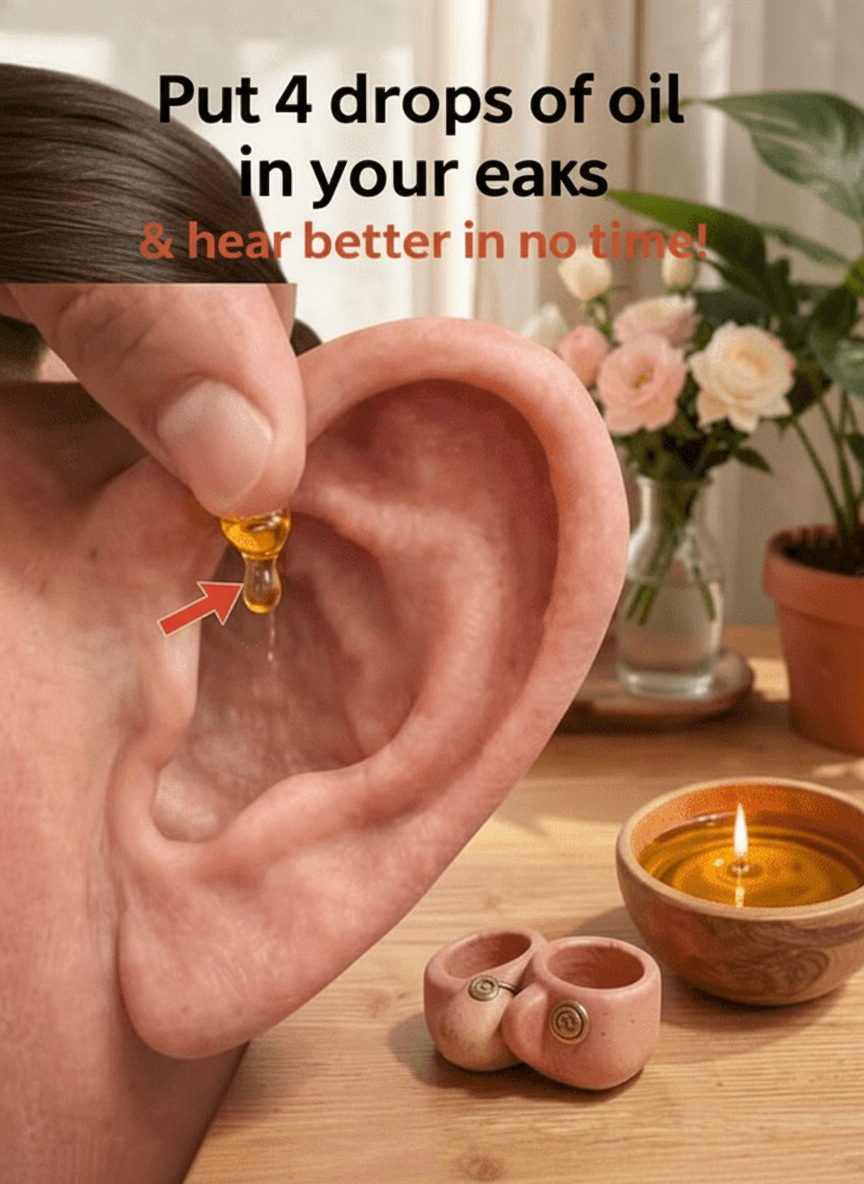
A Gentle, Step-by-Step Routine for Ear Comfort
For individuals considering a gentle, oil-based approach to ear care, health educators frequently recommend adhering to a cautious and methodical routine:
- Slightly Warm the Oil: The oil should be comfortably warm, never hot. A simple way to achieve this is by placing the sealed oil bottle in a bowl of warm water for a few minutes.
- Position Yourself: Lie on your side, gently tilting your head so the ear you intend to treat is facing upwards.
- Apply with Care: Using a clean dropper, slowly place a few small drops of the warmed oil into the ear canal.
- Remain Still: Stay in this position for several minutes. This allows the oil ample time to thoroughly coat the inner canal and begin its softening action.
- Allow Natural Drainage: After the recommended time, sit upright. Gently wipe away any excess oil that may drain from the ear.
This routine is typically performed occasionally, rather than on a daily basis, as part of a general ear maintenance strategy. But before proceeding, it’s imperative to address a crucial safety detail that is often overlooked in online discussions, and which, if ignored, could potentially lead to more harm than good.
When Oil Drops Should NOT Be Used
While oil-based ear care can be beneficial for some, it is by no means suitable for every situation. Healthcare professionals consistently advise against this method if any of the following conditions are present:
- Experiencing ear pain or symptoms indicative of an ear infection.
- Noticing any fluid or discharge leaking from the ear.
- A history of eardrum perforation or injury.
- Having undergone recent ear surgery.
- Experiencing sudden or severe changes in hearing ability.
In any of these circumstances, the most responsible and safest course of action is to promptly consult a qualified healthcare professional. The ear is an incredibly delicate organ, and deeper underlying issues cannot and should not be managed with home remedies. Therefore, responsible ear care emphasizes gentle, preventative maintenance over aggressive or inappropriate self-treatment.
Speaking of habits, let’s discuss a common practice that often exacerbates ear problems.
The Habit That Often Makes Ear Problems Worse
A piece of advice frequently reiterated by medical professionals to their patients is simple yet critical: refrain from inserting any objects into the ear canal. While cotton swabs might provide a momentary sensation of cleanliness, their actual effect is often counterproductive. Instead of removing earwax, they tend to push it further down the canal, compacting it against the eardrum.
Over time, this common habit can lead to the formation of a dense, impacted wax plug, which can significantly contribute to muffled hearing, discomfort, and other ear-related issues.