 By admin
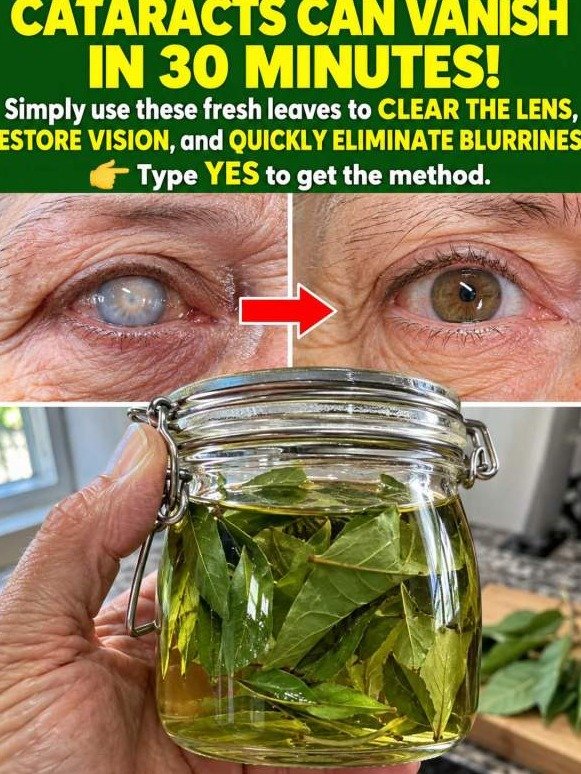
 The green leaf feels cool. Your cataract doesn’t care.
Imagine seeing the world through a frosted window, then hearing about a simple ‘hack’ to make it crystal clear. Millions are falling for a viral trend claiming a humble leaf can magically ‘cure’ cataracts, but the shocking truth is, this seemingly innocent trick does absolutely nothing for your vision — and could be putting your precious eyesight in serious jeopardy.
What those trending videos never reveal is the critical distinction: while a cool leaf might offer a fleeting sensation of calm around tired eyelids, the actual cataract remains untouched, stubbornly smearing your vision into a milky, frustrating blur. One action provides superficial comfort; the other directly impacts your ability to see.
This profound disconnect is precisely why such posts explode across social media, misleading countless individuals. They dangle the promise of a miraculous fix for impaired vision, only to offer a simple leaf and a dangerous illusion. What this ‘remedy’ actually targets is merely the surface of your eye, completely missing the lens, and understanding this difference is absolutely crucial.
Why cloudy vision feels so alarming
When the delicate lens within your eye begins to thicken due to a cataract, your world doesn’t simply become blurry; it transforms into a distorted, frustrating mess. Ordinary bright windows erupt into blinding flares, oncoming headlights dissolve into disorienting starbursts, and even simple tasks like reading a menu feel like peering through a heavily steamed-up shower door.
This isn’t merely eye fatigue; it’s a profound, progressive loss of clarity in the lens, deteriorating layer by excruciating layer, much like a high-quality camera lens slowly encrusted with dried soap film. Once this internal obstruction solidifies, no amount of external rubbing or surface treatment will ever restore its original function.
It’s understandable why individuals grappling with diminishing vision desperately grasp at quick fixes; the loss of clear sight can rapidly erode confidence and independence. However, the fundamental issue with cataracts isn’t a superficial irritation; it’s a deep-seated opacification of the lens itself. And this critical distinction is precisely where the entire premise of the viral leaf trick utterly collapses.
What the leaf is really doing inside the eye
Let’s be absolutely clear: the leaf functions solely as a temporary cool compress. Its only effect is to momentarily soothe any superficial warmth or irritation around the eyelids, offering a fleeting sense of relief, much like applying a chilled spoon to a puffy area. Nothing more, nothing less.
However, cataracts are not located on the surface of your eyelid. They reside deep within the eye’s natural lens, an internal structure that no external application — be it a leaf, a concocted juice, a plant mash, or any “natural press” — can possibly access or influence. This cloudy core is as inaccessible to external remedies as a fogged-up window securely sealed behind a solid wall.
The core deception of this viral trick lies in its ability to market transient comfort as a genuine correction. This is the insidious trap. A cool sensation on the surface can indeed feel beneficial, even as the insidious internal haze continues to worsen, unchecked. And this is precisely why the narrative seems so plausible until you pose the single, undeniable question: how could any leaf possibly clear something it is fundamentally incapable of reaching?
The clouding process nobody sees coming
Deep within the eye, the natural lens is designed to remain perfectly transparent, allowing light to pass through unimpeded and focus sharply on the retina. However, when the delicate proteins within this lens begin to aggregate, clump, and harden, the outcome is a pervasive ‘dirty-window’ effect, scattering incoming light haphazardly in all directions. Envision a pristine pane of glass gradually transforming into opaque, frosted plastic.
This insidious process is what I term the Lens Fog Flush — a vivid description because the true challenge isn’t external irritation, but rather an escalating, internal accumulation of cloudiness. Your vision progressively forfeits its crisp definition, then its vital contrast, and eventually, the essential sharpness that makes recognizing faces, reading signs, and navigating stairs feel effortlessly natural.
This fundamental understanding reveals precisely why a leaf placed on the eyelid cannot possibly resolve the issue. It’s akin to diligently wiping the exterior of a heavily fogged bathroom mirror and then expecting your reflection to miraculously sharpen from the inside. Most individuals are swayed by the immediate, albeit superficial, soothing sensation. Yet, it’s the profound, underlying truth that truly counts, a truth that social media narratives conveniently overlook.
The online ecosystem thrives on dramatic before-and-after transformations, particularly when the promised “after” is utterly unattainable through the methods promoted. You won’t find massive advertising campaigns built around the straightforward truth that genuine cataracts demand professional medical evaluation and intervention — primarily because there’s no financial incentive in urging people to abandon the pursuit of appealing, yet ineffective, shortcuts.
Why the blur shows up in daily life first
The initial signs of cataracts rarely manifest as a complex medical symptom. Instead, they appear as frustrating, everyday inconveniences: the struggle to decipher a menu in a dimly lit restaurant, the blinding glare reflecting off a car windshield, or the subtle, washed-out appearance of a familiar face across a crowded room.
This is the insidious impact of clouded lenses — they systematically strip the crisp definition and vibrancy from your everyday experiences. A bright morning window might appear perpetually hazy. Your phone screen could seem inexplicably dimmer. Even a pristine white shirt might lose its dazzling brightness, as if the world’s contrast knob has been subtly, yet significantly, turned down.
Once this visual degradation begins, the resulting frustration is profoundly real. You find yourself constantly adjusting your glasses, squinting with increasing effort, blinking repeatedly, yet the pervasive fog stubbornly remains. This deep-seated helplessness is precisely why the viral leaf trick ensnares so many: it dangles the illusion of control and immediate action when the genuine issue feels elusive, overwhelming, and inherently unjust.
Why the comfort trick can fool you
A simple, cool leaf can indeed alleviate the sensation of heavy, fatigued eyelids, much like pressing your forehead against a cold countertop can offer a brief, refreshing reset. The delicate skin around your eyes calms, and the area might feel less irritated. For that fleeting moment, it creates a powerful, deceptive impression that a real solution has been found.
However, superficial relief on the exterior of your eye is fundamentally distinct from actual repair within the lens. This is the stark, crucial difference that many overlook. One offers a temporary physical sensation; the other represents a profound, irreversible structural alteration occurring deep inside your eye.
Therefore, these viral posts do more than just exaggerate; they intentionally exploit and confuse your body’s natural responses. They offer a fleeting, temporary cooling sensation and cunningly mislabel it as a definitive cure. Crucially, they omit the most vital piece of information: your clouded lens remains entirely unaffected by anything occurring on your eyelid.
What actually needs attention
If you’re experiencing vision that’s progressively cloudier, dimmer, or simply less reliable, the immediate and correct action is not to reach for a leaf. Your next essential step is a comprehensive eye examination by a qualified professional. Cataracts frequently develop so subtly and slowly that individuals often unconsciously adjust to the worsening blur, unaware of the profound degree of clarity they have already sacrificed.
This gradual decline explains why navigating roads at night can begin to feel like peering through a perpetually smeared windshield. It’s also why colors might appear muted and lifeless, as if a fine layer of dust has settled over the entire world. Your eye continues to function, but it’s doing so through a progressively fogged lens that relentlessly robs your vision of crucial detail.
Herein lies the true danger: engaging in a seemingly innocuous home ritual can provide a false sense of security, inadvertently delaying the actual, necessary medical intervention. The quicker the underlying cause of your vision problems is accurately diagnosed, the sooner an effective treatment pathway can be initiated. However, this critical progress hinges entirely on your willingness to cease mistaking a fleeting surface sensation for a genuine, lasting solution.
The safest role a leaf can play
Should the sensation of a cool compress offer genuine soothing, ensure it remains strictly external, impeccably clean, and applied for only brief durations. Under no circumstances should you use crushed plant material, any form of homemade liquid, or allow plant juices to come into contact with the delicate surface of your eye.
This strict adherence to safety is paramount because the eye is an incredibly delicate, moist, and remarkably unforgiving organ. Introducing any dirty or non-sterile material, even as part of a seemingly benign ritual, can quickly escalate into severe redness, irritation, or a dangerous infection. Imagine intentionally rubbing garden debris over a contact lens and expecting comfort — that chilling level of risk is precisely what individuals disregard when swayed by the deceptive allure of a “natural” viral post.
Therefore, leverage any cooling sensation purely for temporary comfort, never as a means of correction. The ongoing struggle with cataracts demands a legitimate, medical solution, and the following section will expose the most significant trap that catches so many.
Why people keep falling for the same promise
The persistent allure of such viral promises stems from their emotional perfection. They skillfully tap into a deep human desire, suggesting that something profoundly frightening can be effortlessly resolved with a remarkably simple, instant fix. No cumbersome appointments, no tedious waiting rooms, and crucially, no uncomfortable medical truths to confront.
This potent emotional appeal is precisely why such claims proliferate at lightning speed across social platforms: they brilliantly flatter our inherent hope for easy solutions. However, hope devoid of a credible mechanism is merely an empty embellishment. A leaf placed on a closed eyelid possesses no more power to dissolve a cloudy lens than a damp cloth has to miraculously repair a scratched camera sensor.
What this trick *can* achieve is to lull you into a false sense of accomplishment, making you feel proactive while the genuine underlying problem continues its silent, relentless progression. And it is precisely this perilous chasm between temporary comfort and actual medical correction where individuals tragically squander invaluable time, potentially compromising their long-term vision.
The part that protects your sight
When you detect any changes in your vision, the most intelligent and protective course of action is to address these symptoms with serious medical attention, rather than resorting to theatrical, unproven remedies. Pay close attention to when blurriness appears, observe any new glare or halos, note if colors seem faded, or if you experience that unsettling sensation that one eye isn’t performing as it should.
Following these observations, schedule a comprehensive eye examination without delay. This is the sole pathway that truly distinguishes fleeting, superficial comfort from genuine, restored clarity — and it represents the only approach that respects the complex, internal processes occurring within your eye’s lens.
While a cool leaf might offer a momentary soothing sensation to your eyelid, it possesses absolutely no power to clear the pervasive fog that has settled inside your eye.
P.S. There’s a particular habit that completely sabotages any potential benefit and introduces severe risk: crushing the leaf, saturating it in an unknown liquid, or allowing any plant juice to directly contact the delicate eye surface, leading to a slick, irritated mess. This isn’t a remedy; it’s a direct path to exchanging a cloudy lens for a painful, burning, and dangerously red infection. What’s even more critical to understand is that the fine line between a harmless, soothing compress and a perilous eye habit hinges on one crucial detail in its preparation.
“This article is provided strictly for informational purposes and should never be considered a substitute for professional medical advice. Always consult your qualified healthcare provider for personalized guidance and treatment concerning your specific health conditions.”