 By admin
 What if the ‘miracle’ skincare hack you heard about is actually sabotaging your skin? Many reach for that familiar white powder in the yellow box, believing it’s a simple solution for a brighter complexion. While it might seem to offer a quick fix, that household staple—baking soda—aggressively strips away the outermost layer of dead skin cells, creating a fleeting illusion of smoother fine lines, diminished rough patches, and a less dull appearance. When combined with water, it forms a gritty paste that feels like tiny grains of sand scouring your facial surface, often leaving your skin with a deceptively squeaky-clean and tight sensation.
However, this very sensation of tightness is precisely where the hidden problems begin. That same face, which initially reflected a slightly brighter glow, can swiftly transform into a hot, parched, and uncomfortably raw canvas just an hour later. This isn’t merely about scrubbing away surface debris; baking soda actively compromises your skin’s vital, natural acidic shield, initiating a cascade of unwelcome reactions.
While these immediate effects are concerning, the true drama unfolds beneath the surface, where a much more significant disruption occurs within your skin’s delicate barrier.
The Alkaline Shock That Changes the Skin Barrier
Imagine your skin as a meticulously constructed brick wall, expertly fortified by a thin, protective acidic film on its outermost layer. This essential film acts as your skin’s primary defense, diligently locking in crucial moisture while simultaneously fending off harmful irritants, much like a resilient coat of wax on a wooden table prevents liquids from seeping in and causing damage.
The moment baking soda makes contact with this vital surface, it triggers a dramatic chemical shift. It rapidly elevates your skin’s pH level, pushing it into an alkaline state. When this occurs, your protective barrier begins to falter, akin to the mortar disintegrating between the bricks of a wall, leaving it vulnerable and structurally compromised.
This explains why many individuals experience a fleeting “glow” immediately after use, only to be confronted with uncomfortable redness, persistent itching, or a dry, papery texture by the time they prepare for bed. While the skin might appear temporarily polished, the underlying, crucial layers are left exposed and defenseless—a troubling consequence that is rarely discussed.
It’s a harsh reality that this seemingly innocuous, cheapest face scrub found in your kitchen can act like a miniature power washer on your delicate skin, stripping away its natural defenses. Once this critical barrier is compromised and stressed, the subsequent observation isn’t a radiant brightness; instead, it’s a stark intensification of dark marks and under-eye shadows, making them appear far more prominent and noticeable.
Why Dark Spots and Dark Circles Seem to Stand Out More
Let’s be clear: baking soda does not possess the ability to erase dark spots. Its effects are far more restricted and superficial. What you observe is merely the powder sloughing off the very top layer of surface cells, which can make the skin directly above a pigmented patch appear momentarily less dull for a brief period.
To illustrate, imagine wiping a layer of dust from a window that already has a deep stain. The glass itself might look cleaner for a moment, but the stubborn discoloration behind it remains completely untouched.
Addressing under-eye darkness with baking soda presents an even greater challenge. This particular area of the face is exceptionally thin, fragile, and highly reactive, making it particularly susceptible to damage. Applying a gritty, alkaline paste here can easily result in puffiness, irritation, or an exacerbated shadowed appearance, rather than the desired refreshed look. You’ll likely experience it firsthand—a subtle sting near the orbital bone that instinctively makes you blink harder or rub the area, inadvertently intensifying the problem.
What’s truly infuriating is how widely the internet promotes this as a miraculous, inexpensive beauty hack, all while your skin quietly bears the brunt of the damage. You’ll never see a glossy advertisement touting a common pantry powder that irritates the very complexion it purports to “fix”—yet, the misinformation persists.
However, the critical inquiry isn’t simply whether this substance can physically scrub your skin. The more pressing concern lies in understanding the consequences when this aggressive exfoliation encounters existing wrinkles, and why certain individuals report their faces appearing to age prematurely after consistent application.
Why Fine Lines Can Look Worse After the Shine Fades
It’s a well-known fact that fine lines become significantly more pronounced and deeper when your skin is dehydrated, and unfortunately, baking soda, especially with overuse, acts as a potent moisture thief. When your skin’s natural protective oils are aggressively stripped away, those delicate creases around your eyes and mouth begin to prominently catch the light, resembling unsightly cracks on a parched, sunbaked road.
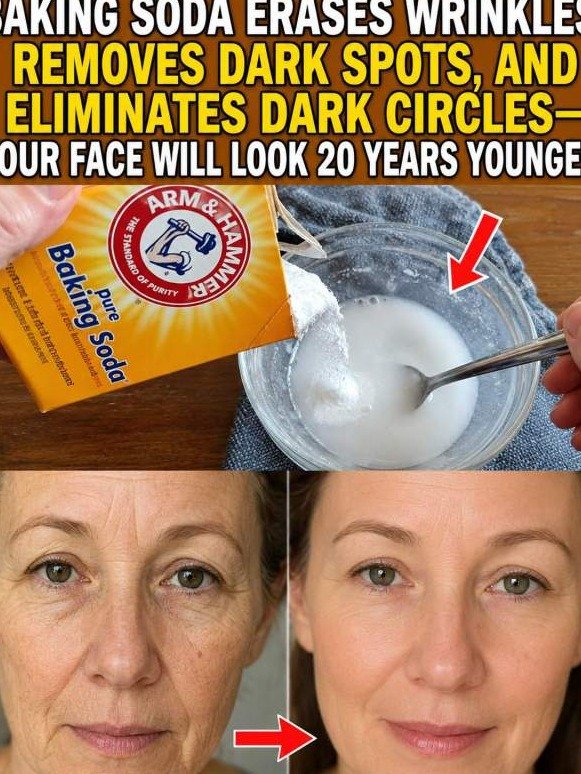
This creates an unwelcome paradox: your face might appear momentarily smoother immediately after rinsing, yet hours later, it can paradoxically look more lined. This occurs because your skin has been robbed of the vital plumpness and cushioning that typically helps to soften and prevent those folds from becoming so starkly visible.
Imagine stepping out of the shower and experiencing an uncomfortable tightness, a sensation where your cheeks feel like they’re pulling taut when you try to smile. This unpleasantly taut, almost cardboard-like feeling is your skin’s barrier desperately signaling for help, certainly not an invitation for yet another session of harsh exfoliation.
Initially, what people observe is that fleeting, superficial polish. However, this is inevitably followed by the inevitable rebound effect: an overwhelming tightness, noticeable redness, and a complexion that feels as though it has endured a full day exposed to harsh, dry winds.
Alarmingly, what might be perceived as “clarity” on your skin’s surface is often a profound moisture collapse occurring deep within. The truly perplexing aspect is that the more frequently individuals pursue that instant, superficial brightness, the more they inadvertently contribute to and exacerbate the very dullness they were so eager to eliminate.
What Actually Happens When Skin Is Starved of Its Natural Shield
For truly healthy skin to thrive, it absolutely requires its own inherent protective film, much like a cast-iron pan depends on its seasoning to maintain its integrity and function. If this crucial barrier is repeatedly stripped away, your skin’s surface becomes highly susceptible, instantly reacting to irritants from virtually every source—be it your daily cleanser, exposure to sunlight, makeup products, or even the fabric of your pillowcase.
This compromised state clarifies why some individuals experience a persistent burning sensation on their face after washing, or a subtle, uncomfortable warmth near the delicate corners of their nose and mouth. This isn’t evidence of “deep cleansing”; it’s a clear indication that your skin’s protective barrier is under relentless siege.
The uncomfortable truth is that even the most seemingly innocuous household ingredient can provoke the most severe reactions when applied to unsuitable skin types. Those with dry skin, individuals prone to rosacea, or anyone already experiencing skin irritation absolutely do not require a rough, alkaline scrub; what they desperately need is for their delicate barrier to be left undisturbed, allowing it sufficient time to naturally repair and rebuild itself.
Remarkably, after just a few days of ceasing this abrasive treatment, your skin often signals its recovery in clear, unmistakable ways: you’ll notice significantly less stinging when water touches your face, a reduction in flaking around the nose, and a visible decrease in that tight, over-processed appearance you once saw in the mirror.
Therefore, while it’s true that baking soda can impart a sensation of temporary smoothness to your skin, this certainly doesn’t imply it’s a viable solution for wrinkles, dark spots, or under-eye circles. Instead, it simply indicates that the superficial top layer of your skin has been aggressively exfoliated just enough to create a momentary visual deception.
Crucially, there’s one pivotal detail that determines whether this common ingredient acts as a mild, somewhat tolerable scrub or morphs into an absolute face-drying disaster, and this critical factor is established long before it ever makes contact with your skin.
The Part That Quietly Ruins the Whole Thing
A common mistake many make is applying baking soda directly to dry, sensitive, or already irritated skin, then questioning why it results in a burning sensation. Dragging that dry, chalky powder across an already flushed or compromised cheek is a guaranteed method to transform a seemingly quick kitchen remedy into a painfully red, inflamed, and angry patch of skin.
Furthermore, if you combine baking soda with acidic ingredients like lemon juice, vinegar, or any other harsh acid, your skin is subjected to a dual assault: first aggressively stripped, then intensely shocked by the chemical reaction. Our upcoming article will delve into the specific pairings that dramatically alter its impact, revealing how certain ingredients can mitigate damage while others merely ignite further irritation.
Please be advised: This article is intended solely for informational purposes and should not be considered a substitute for professional medical advice. Always consult with your healthcare provider for personalized guidance regarding your specific skin concerns and health needs.