 By admin
 What if that relentless exhaustion, the baffling brain fog, or the strange pins-and-needles sensation in your feet isn’t just ‘a part of getting older’ or ‘too much stress’? These seemingly disconnected symptoms—from a lingering soreness in your tongue to an inexplicable pounding heartbeat—are often your body’s urgent signals, flashing like warning lights on a dashboard, indicating a deeper issue.
This widespread distress across multiple bodily systems is frequently the unmistakable signature of a vitamin B12 deficiency. Often underestimated, B12 serves as a vital catalyst, essential for constructing healthy red blood cells, safeguarding our delicate nerve insulation, and maintaining stable brain chemistry. When its levels plummet, your entire system can begin to malfunction in ways that are surprisingly disparate and often go unrecognized.
The truly insidious aspect of this deficiency is its silent onset. It doesn’t announce its arrival with blaring alarms; instead, it stealthily infiltrates your system, much like a fuse slowly burning behind a wall. By the time the subtle signs become noticeable and the ‘lights’ start to flicker, the underlying damage may already be quietly progressing.
Consider your tongue, your feet, your blood, and your memory not as isolated concerns, but as distinct rooms within the same structure. When they all begin to show signs of trouble, it’s akin to different areas of a house filling with smoke, signaling a single, central issue that is frequently overlooked or misdiagnosed.
The red blood cell shutdown nobody notices first
Vitamin B12 acts as the fundamental biological fuel required for the robust production of red blood cells. In its absence, your body struggles, producing red blood cells that are often weak, abnormally shaped, and critically inefficient at transporting oxygen throughout your system. This is precisely when that pervasive sense of physical and mental drag begins to take hold.
This sensation is often described as trying to walk through wet sand—a constant, heavy resistance. You might wake up feeling unrefreshed and continue through your day with an overwhelming sense that your muscles are perpetually running on fumes, simply because the vital flow of oxygen-rich blood isn’t adequately reaching all your tissues.
The deceptive reality of B12 deficiency is that your body can appear perfectly healthy externally, even as its internal systems are desperately starved for oxygen. This is the cruel irony: you could be sitting calmly at your desk, focused on your screen, yet feel as if your internal battery has been completely drained before noon.
But the narrative doesn’t end there; in fact, it often takes a more concerning turn. The issue with red blood cell production is merely the initial domino to fall. This very same nutrient shortage then begins to compromise the protective insulation surrounding your delicate nerves.
Why the tingling starts in your hands and feet
As B12 levels decline, the crucial myelin sheath—the fatty protective layer encasing your nerves—begins to deteriorate and fray. Picture this as the plastic insulation on an electrical wire cracking open; the vital nerve signals start to leak, stutter, and consequently arrive at their destination damaged or incomplete.
This degradation is precisely what triggers the unsettling pins-and-needles sensation, often manifesting in your toes, fingertips, and the soles of your feet. For some, it’s a persistent, prickling swarm of tiny needles; for others, it’s the peculiar feeling of a limb inexplicably ‘falling asleep’ without any apparent cause.
Many tend to dismiss these early signs as minor annoyances until more pronounced issues emerge: a noticeable shift in balance, an awkwardness climbing stairs, or the strange sensation that the floor feels unusually distant beneath bare feet. Yet, long before these symptoms become undeniable, the nerve damage has already begun its quiet, insidious work.
What often proves most alarming is the realization that the very same deficiency causing numbness in your extremities can simultaneously disrupt your mood and cognitive functions. This isn’t merely ‘stress’ or a figment of your imagination; it’s a tangible breakdown of essential brain chemistry unfolding within your body.
The brain fog and mood crash that feel personal
Vitamin B12 plays a critical role in the brain’s production of neurotransmitters—the chemical messengers essential for maintaining mental stability and clarity. When B12 levels dip, your mind can descend into a state of pervasive fog, heightened irritability, emotional flatness, or increased anxiety, much like a grimy curtain being drawn over your thoughts.
You might find yourself staring blankly into an open refrigerator, unsure of what you needed. You enter a room only to completely forget your purpose. You might lash out at a loved one for a trivial reason, then later ponder the sudden disappearance of your usual patience.
While the supplement industry often promotes elaborate and costly solutions, the most fundamental and cost-effective ‘reset’ for these issues frequently resides in a simple vitamin found at your local grocery store. There’s rarely a glamorous marketing campaign built around a nutrient that merely, yet profoundly, prevents your brain from veering off course.
This is precisely why countless individuals mistakenly attribute these struggles to aging, chronic stress, or ‘poor sleep,’ when the root cause is often a crucial missing nutrient. The solution, in its stark simplicity, can be almost startling: once your body receives the B12 it so desperately needs, that debilitating mental fog begins to lift, transforming from a seemingly permanent fixture into a wonderfully reversible condition.
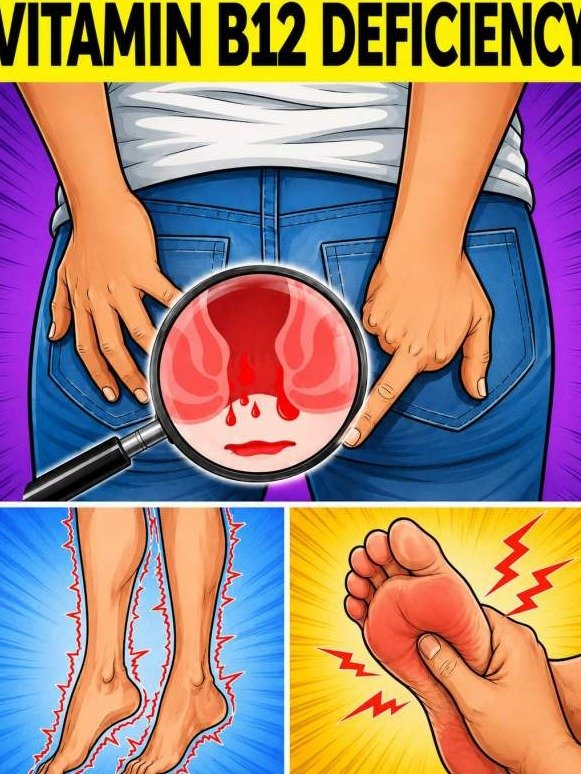
Beyond the internal turmoil, your body often presents another unmistakable clue—one that is difficult to overlook and frequently visible to others.
The skin, tongue, and heartbeat clues that expose the shortage
A noticeable paleness or even a subtle yellowish tint to the skin can emerge when red blood cells prematurely break down, leading to an accumulation of bilirubin. Visualize it as a crisp white shirt inadvertently left in a smoky environment—the color subtly shifts and stains before you even consciously register the change.
Next, consider your tongue: it might appear unusually red, swollen, remarkably smooth, and persistently sore, often taking on an almost glossy sheen. Consuming spicy foods can become an intensely stinging experience, coffee might feel abrasive, and even extended periods of talking can leave your mouth feeling raw and irritated.
This discomfort in your mouth isn’t a random occurrence. It’s a direct message from your body’s delicate internal lining, signaling that its vital supply lines are severely compromised.
Should the deficiency persist unchecked, your heart will be forced to labor significantly harder, striving to circulate oxygen through a system that is increasingly depleted. This heightened effort can manifest as noticeable fluttering, a forceful pounding, or a heartbeat that suddenly seems unnaturally amplified in a tranquil setting.
Interestingly, women often perceive these symptoms differently, frequently dismissing the initial fatigue while attributing skin changes, oral discomfort, and mood shifts to myriad other causes, effectively overlooking the deficiency. Conversely, men often first encounter the impact through their nervous system and a decline in physical performance—their legs feeling ‘off,’ stamina inexplicably vanishing, and their bodies no longer responding with their accustomed vigor.
The truly remarkable aspect is how all these diverse signals can stem from a single, overlooked nutritional component. And once you grasp the profound roles B12 plays within your body, the logical next step is to understand its origins and identify what might be impeding its proper absorption.
Where the fix starts, and why the body needs the right form
Naturally, Vitamin B12 is predominantly found in animal products such as meat, fish, eggs, and liver—that rich, iron-dense cut which often appears almost too substantial to be food. For those adhering to a plant-based diet, this crucial nutritional gap necessitates alternative methods of supplementation, as the human body is simply incapable of producing B12 independently.
Here lies a truth often unspoken: it’s entirely possible to maintain an otherwise ‘healthy’ diet and still suffer from a B12 deficit if your food sources lack it or if your body’s absorption mechanisms are compromised. Your physiology doesn’t respond to good intentions; it demands the actual, tangible compound.
Consider this scenario akin to attempting to replenish a printer with an incompatible ink cartridge. The device might power on, its indicator lights might flash, but the resulting output will inevitably remain a garbled mess.
However, there’s one more critical pitfall that can negate any potential benefits before they even have a chance to take effect.
One kitchen habit can blunt the whole effect
Many individuals, in their pursuit of addressing B12 deficiency, often resort to haphazard supplementation, inadvertently combining it with practices that severely hinder absorption. This includes consuming supplements at inappropriate times, failing to account for interfering medications, or naively believing that a single dose can rectify a deeply entrenched, long-term shortage. Such an approach is comparable to pouring water into a bucket riddled with cracks and then expressing surprise when the liquid pools on the floor.
The aesthetic appeal of a glossy tablet, the vibrant packaging of a bottle, or even a well-intentioned but inconsistent routine—none of these factors hold any significance if your body is ultimately unable to effectively utilize the nutrient you’re providing.
The crucial, often overlooked, next step involves understanding the specific form of B12 that your body can most effectively absorb, especially when your digestive system is already compromised or struggling.
It is important to remember that the information presented in this article is intended for general knowledge and informational purposes only. It is not a substitute for professional medical advice, diagnosis, or treatment. Always seek the personalized guidance of your qualified healthcare provider for any medical concerns or before making any decisions related to your health or treatment.