 By admin
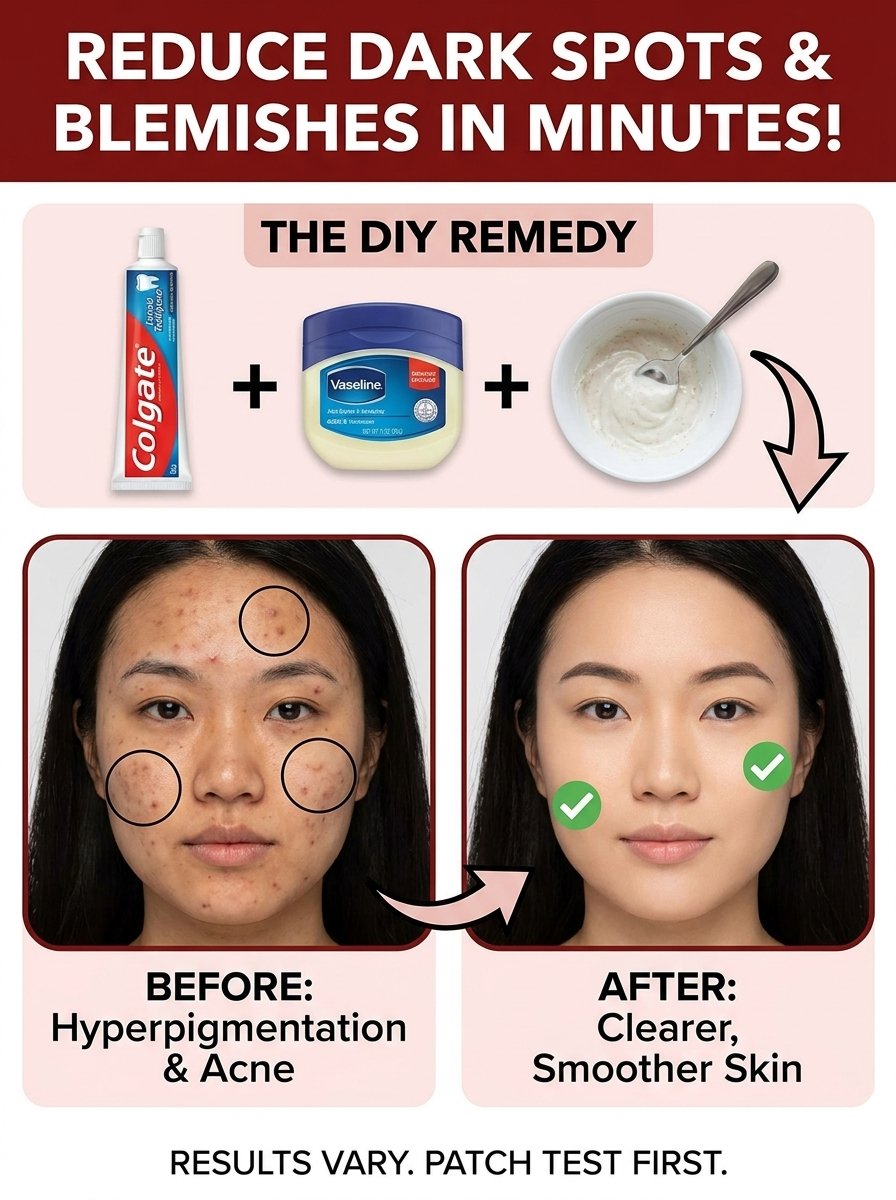
 What if the viral acne hack you saw online, promising a quick fix with Colgate and Vaseline, is actually the fastest way to *ruin* your skin? It’s time to uncover the shocking truth behind this trending beauty disaster. Applying Colgate toothpaste and Vaseline to your face won’t magically clear acne or fade dark spots; instead, it delivers a harsh chemical assault to your delicate skin barrier, then seals that damage under an occlusive, greasy layer. That familiar minty burn, the slick petroleum jelly, and the subsequent tight, fiery sensation? That’s your skin screaming as it endures a double-whammy of irritation.
Those viral videos paint a picture of an effortless shortcut: a quick dab, a short wait, and then, supposedly, waking up to clearer, smoother skin. However, the grim reality is that this concoction severely dries out the skin’s surface, triggers inflammation within your pores, and often leaves users with a furious, red, irritated patch where they desperately hoped for a miracle. What many don’t realize is the insidious nature of this damage—it often begins its destructive work long before any burning sensation even registers.
This trend’s powerful allure lies in its promise of a rapid solution for those grappling with skin frustrations. Whether it’s an unwelcome pimple on the cheek, a stubborn dark mark near the mouth, or a persistent breakout, these issues often feel deeply personal, as if your skin is publicly betraying you. Yet, the internet frequently prioritizes quick, inexpensive fixes over actual, evidence-based truths, transforming common bathroom staples into a perilous trap for unsuspecting users.
The Shocking Truth: What Toothpaste REALLY Does to Your Skin
Designed specifically for strengthening tooth enamel, toothpaste is entirely unsuitable for the delicate epidermis of your face. Within its minty formulation lurk potent foaming agents, abrasive particles, and harsh drying compounds, engineered to scrape and strip just like an overly aggressive sponge scrubbing a pan that didn’t need such vigorous treatment.
While these properties are beneficial for dental hygiene, their impact on facial skin is a completely different and detrimental narrative. Applying toothpaste begins a process of aggressively drawing moisture out of your skin’s surface, resulting in a tight, papery sensation. This often progresses into noticeable redness, uncomfortable peeling, and that peculiar stinging feeling that becomes apparent hours later when you cleanse your face.
Let’s be clear: this isn’t a legitimate acne treatment; it’s a full-blown chemical ambush. Once your skin’s protective barrier is severely compromised and agitated, the pores beneath don’t simply subside or improve; instead, they frequently react with increased inflammation and breakouts, effectively “getting louder” in their distress.
Now, consider the combined assault: the intense minty burn, the abrasive, gritty texture, and the pungent odor that assails your senses even before it dries. It’s easy to understand why many mistakenly interpret this discomfort as a sign of effectiveness. However, the immediate surface reaction is merely part of the problem – the true and more severe damage unfolds when you proceed to seal all that irritation directly onto your skin.
How Vaseline Magnifies the Damage (and Why It’s Worse Than You Think)
By itself, Vaseline (petroleum jelly) isn’t inherently problematic. Its primary function is that of an occlusive, creating a protective barrier akin to plastic wrap stretched over a bowl of warm soup: it effectively locks in whatever substances are already present beneath it, whether beneficial or harmful.
When applied to skin that is clean, calm, and healthy, this occlusive property can be quite advantageous for moisture retention. However, when layered over toothpaste, it transforms into a suffocating lid clamped onto a simmering pan, mercilessly trapping the burning sensation, chemical residues, and intense irritation precisely where your delicate facial skin is forced to endure it.
This potent combination means the toothpaste isn’t merely drying and irritating; it remains in prolonged contact, pressed against already vulnerable skin, intensifying its damaging effects. While many individuals mistakenly believe the petroleum jelly is “protecting” their face, within this disastrous duo, it actually functions as a sealed greenhouse, cultivating and amplifying skin problems.
And here’s a crucial point that truly demands your attention: the inherent sensitivity of your skin directly correlates with how rapidly and severely this situation can escalate. While one individual might experience a fleeting dry-out, another could easily suffer a full-blown inflammatory flare-up, leaving their face looking as if it’s been brutally scrubbed with sandpaper.
So, why did this dangerous hack achieve such viral popularity? It’s simple: it delivers a seemingly dramatic “before-and-after” transformation visible in a bathroom mirror, not through the careful assessment of a dermatologist. The initial shine might vanish, and a bump might appear momentarily smaller, leading many to tragically mistake this temporary reduction for genuine healing. However, the subsequent section will peel back the layers to expose the true, underlying mechanism of damage.
The Invisible Enemy: Barrier Breakdown You Won’t See Until It’s Too Late
Envision your skin barrier as the protective, painted exterior of a house. When this barrier is healthy and intact, it effectively locks in vital moisture while simultaneously keeping environmental irritants at bay. When toothpaste violently scrapes away at this defense and Vaseline then seals in the resulting chaos, it’s akin to crudely slapping tape over cracked siding and absurdly declaring the house fully renovated.
This compromised, cracked barrier is precisely why your face can feel intensely hot, uncomfortably tight, and unusually tender in the aftermath of this so-called “hack.” The immediate observation people make isn’t “clearer skin”; instead, it’s that distinctively stripped, over-processed sensation, as if their face has been aggressively scrubbed raw with a coarse towel.
With ongoing, repeated irritation, acne often spirals into a far worse state, rather than improving. Your skin becomes hypersensitive and reactive, pores grow increasingly agitated, and even previously gentle skincare products can suddenly cause inexplicable stinging and discomfort.
While the beauty industry might not want you to realize this, the most deceptively “cheap” and quick-looking shortcuts frequently incur the highest price in terms of irreversible skin damage. There’s no glamorous marketing campaign or profit to be made from simply advising “keep toothpaste away from your face,” because common sense, unfortunately, isn’t a lucrative commodity.
This explains precisely why so many individuals continue to fall for these trending “hacks.” It’s not a matter of intelligence; it’s a profound sense of frustration, as they gaze at stubborn dark marks and persistent breakouts in the mirror, desperately seeking the quickest possible escape. However, your delicate facial skin demands a genuine reset and proper care, not a harsh, minty smothering. The following section will finally illuminate the safer, more effective path to healthy skin.
Real Solutions: What ACTUALLY Works for Dark Spots and Acne (Ditch the Hacks!)
When it comes to effectively treating acne, the true objectives are to gently unclog pores, soothe inflammation, and fortify the skin’s defenses—never to aggressively scorch its surface. Ingredients like salicylic acid are invaluable because they expertly penetrate the pore like a tiny drain snake, dissolving the oily buildup and dead skin cells that fuel blemishes.
Similarly, benzoyl peroxide actively targets and eliminates acne-causing bacteria, while a gentle, effective moisturizer plays a crucial role in repairing and rebuilding the compromised skin barrier. Once this protective wall is restored, your skin ceases to feel raw and sensitive after every wash, and makeup application becomes smooth and effortless, no longer catching on dry, flaky patches.
Addressing dark patches, or hyperpigmentation, demands consistent care and patience, not aggressive, punitive treatments. Daily application of broad-spectrum sunscreen is essential to prevent existing pigment from darkening and to stop new spots from forming. Furthermore, key ingredients such as niacinamide or azelaic acid function as diligent, steady housekeeping agents, gradually improving skin tone rather than acting like a harsh, emergency cleanup crew.
This positive transformation manifests in countless subtle yet significant everyday moments: you’ll find yourself checking the mirror less anxiously under harsh bathroom lighting, noticing fewer angry-looking spots by midday, and experiencing fewer mornings where your cheeks feel uncomfortably hot before your day even truly begins. Your skin doesn’t require a brutal shock treatment to comply; it simply thrives with the correct tools, applied thoughtfully and in the proper sequence.
And surprisingly, there’s a common, seemingly innocuous “kitchen-style” habit that can completely sabotage even the most meticulously planned skincare routine before it even has a chance to work.
A frequent misstep involves individuals reaching for potent, drying skincare products, only to immediately follow with heavy, occlusive layers, effectively sealing in the very irritation they just created under a glossy film. This practice is comparable to scrubbing a fresh burn with an abrasive pad and then immediately wrapping it in plastic wrap—the redness and damage are merely trapped, not resolved. The strategic pairing of ingredients, and their order of application, holds far greater significance than most people truly comprehend.
Important Disclaimer: This article is provided strictly for informational purposes and should not be considered a substitute for professional medical advice. Always consult with your qualified healthcare provider for personalized guidance regarding your specific skin concerns and health needs.